Toggle light / dark theme

Nanobots will live in our brains in the 2030s, says Google boss

Ray Kurzweil is director of engineering at Google but he is better known for writing best-selling books outlining the future of artificial intelligence.

He has made 147 predictions on the future of technology including the ubiquity of wearable devices and the move from desktops and laptops to smartphones and tablets. In fact, his prediction rate has been rated 86 per cent accurate.

With this in mind, fans were excited to see Kurzweil answer their questions in a live streaming interview session last week where he elaborated on his predictions.

3D printer that turns nano-cellulose into nutritious meals could be part of your kitchen in 5 years

Two researchers at the Hebrew University of Jerusalem claim to have developed food 3D printing technology capable of printing entire meals from nano-cellulose, a naturally occurring fiber that contains no calories.

3D printed food. Do you need it? No. Do you want it? Not especially. Are companies going to continue exploiting the highly novel concept in order to make money? Of course they are. And since it’s going to happen anyway, why not just get on board? From 3D printed pizza to 3D printed candy, these complex treats are here to stay. Yum!

Researchers create new ‘letters’ to enhance DNA functions

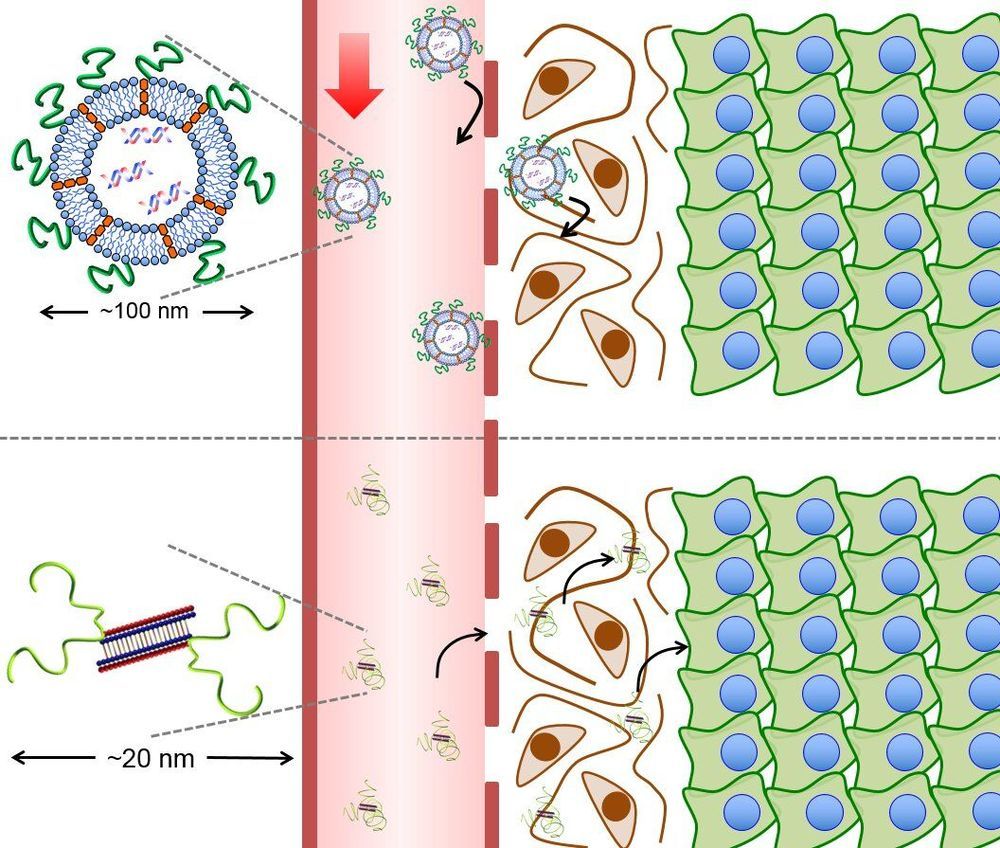
Just like how letters are strung together to form words, our DNA is also strung together by letters to encode proteins. The genetic alphabet contains only 4 natural letters — A, C, G and T, which hold the blueprint for the production of proteins that make our bodies work. Now, researchers from the Institute of Bioengineering and Nanotechnology (IBN) of the Agency for Science, Technology and Research (A*STAR) have created a DNA technology with two new genetic letters that could better detect infectious diseases, such as dengue and Zika.

Genetic alphabet expansion technology is the introduction of artificial base pairs into DNA. The existing four genetic letters are naturally bound together in base pairs of A-T and G-C. These specific base pair formations are essential in DNA replication, which occurs in all living organisms. It is the process by which a DNA molecule is duplicated to produce two identical molecules.

“The expansion of the genetic alphabet is a significant scientific achievement. It sheds insights into DNA’s natural replication mechanism, which will help us to design unique DNA molecules and technologies. For example, our technology can be used to create novel diagnostics and therapeutic agents with superior efficacy,” said IBN Executive Director Professor Jackie Ying.

Chemical treatment improves quantum dot lasers

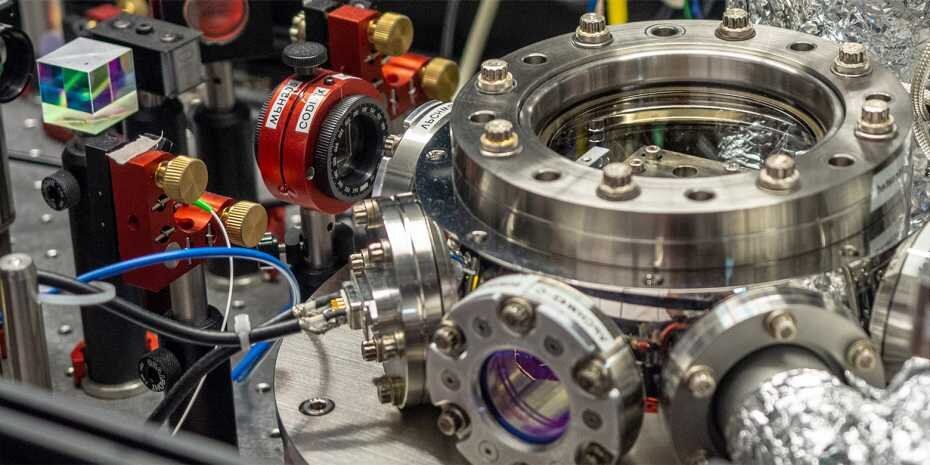
One of the secrets to making tiny laser devices such as opthalmic surgery scalpels work even more efficiently is the use of tiny semiconductor particles, called quantum dots. In new research at Los Alamos National Laboratory’s Nanotech Team, the ~nanometer-sized dots are being doctored, or “doped,” with additional electrons, a treatment that nudges the dots ever closer to producing the desired laser light with less stimulation and energy loss.

“When we properly tailor the compositional profile within the particles during their fabrication, and then inject two or more electrons in each dot, they become more able to emit . Importantly, they require considerably less power to initiate the lasing action,” said Victor Klimov, leader of the Nanotech team.

In order to force a material to emit light one has to work toward a “population inversion,” that is, making the number of electrons in a higher-energy electronic state exceed the number that are in a lower-energy state. To achieve this condition normally, one applies an external stimulus (optical or electrical) of a certain power, which should exceed a critical value termed the “optical-gain threshold.” In a recent paradigm-changing advance, Los Alamos researchers demonstrated that by adding extra electrons into their specially designed quantum dots, they can reduce this threshold to virtually zero.

AI nano-machines could be injected into our brains within 20 years

AI machines injected into our bodies could give us superhuman strength and let us control gadgets using the power of THOUGHT within 20 years…


Humans could be ‘melded’ to machines, giving us huge advancements in brain power, experts told peers at the House of Lords Artificial Intelligence Committee (pictured, stock)

Growing the Artificial Intelligence Industry in the UK, an independent review of artificial intelligence recommended information about people’s health and lifestyles should be opened up to allow major advances to be made in developing artificial intelligence (AI).

It calls for the Alan Turing Institute, named in honour of the wartime codebreaker, to become a national centre for AI and said the Government should expand its support for businesses in the field.

How scientists and supercomputers could make oceans drinkable

Aleksandr Noy has big plans for a very small tool. A senior research scientist at Lawrence Livermore National Laboratory, Noy has devoted a significant part of his career to perfecting the liquid alchemy known as desalination—removing salt from seawater. His stock-in-trade is the carbon nanotube. In 2006, Noy had the audacity to embrace a radical theory: Maybe nanotubes—cylinders so tiny, they can be seen only with an electron microscope—could act as desalination filters. It depended on just how wide the tubes were. The opening needed to be big enough to let water molecules flow through but small enough to block the larger salt particles that make seawater undrinkable. Put enough carbon nanotubes together and you potentially have the world’s most efficient machine for making clean water.

Synthetic organs, nanobots and DNA ‘scissors’: the future of medicine (w/video)

Nanobots that patrol our bodies, killer immune cells hunting and destroying cancer cells, biological scissors that cut out defective genes: these are just some of technologies that Cambridge researchers are developing which are set to revolutionise medicine in the future.

In a new film to coincide with the recent launch of the Cambridge Academy of Therapeutic Sciences, researchers discuss some of the most exciting developments in medical research and set out their vision for the next 50 years.

World’s First ‘Molecular Robot’ Capable of Building Molecules

Scientists at The University of Manchester have created the world’s first ‘molecular robot’ that is capable of performing basic tasks including building other molecules.

The tiny robots, which are a millionth of a millimetre in size, can be programmed to move and build molecular cargo, using a tiny robotic arm.

Each individual robot is capable of manipulating a single molecule and is made up of just 150 carbon, hydrogen, oxygen and nitrogen atoms. To put that size into context, a pile of a billion billion of these robots would still only be the same size (volume/weight) as a few grains of salt.

Nobel Prize in Chemistry 2017 Awarded for Cryo-Electron Microscopy

The Royal Swedish Academy of Sciences has decided to award the Nobel Prize in Chemistry 2017 to Jacques Dubochet (University of Lausanne, Switzerland), Joachim Frank (Columbia University, New York, USA) and Richard Henderson (MRC Laboratory of Molecular Biology, Cambridge, UK) “for developing cryo-electron microscopy for the high-resolution structure determination of biomolecules in solution”.

We may soon have detailed images of life’s complex machineries in atomic resolution. The Nobel Prize in Chemistry 2017 is awarded to Jacques Dubochet, Joachim Frank and Richard Henderson for the development of cryo-electron microscopy, which both simplifies and improves the imaging of biomolecules. This method has moved biochemistry into a new era.

A picture is a key to understanding. Scientific breakthroughs often build upon the successful visualisation of objects invisible to the human eye. However, biochemical maps have long been filled with blank spaces because the available technology has had difficulty generating images of much of life’s molecular machinery. Cryo-electron microscopy changes all of this. Researchers can now freeze biomolecules mid-movement and visualise processes they have never previously seen, which is decisive for both the basic understanding of life’s chemistry and for the development of pharmaceuticals.

Light-activated nanoparticles can supercharge current antibiotics

Light-activated nanoparticles, also known as quantum dots, can provide a crucial boost in effectiveness for antibiotic treatments used to combat drug-resistant superbugs such as E. coli and Salmonella, new University of Colorado Boulder research shows.

Multi-drug resistant pathogens, which evolve their defenses faster than new can be developed to treat them, cost the United States an estimated $20 billion in direct healthcare costs and an additional $35 billion in lost productivity in 2013.

CU Boulder researchers, however, were able to re-potentiate existing for certain clinical isolate infections by introducing nano-engineered dots, which can be deployed selectively and activated or de-activated using specific wavelengths of light.

/* */