Toggle light / dark theme

Nano-Nouvelle Trial Delivers Nanotech Breakthrough

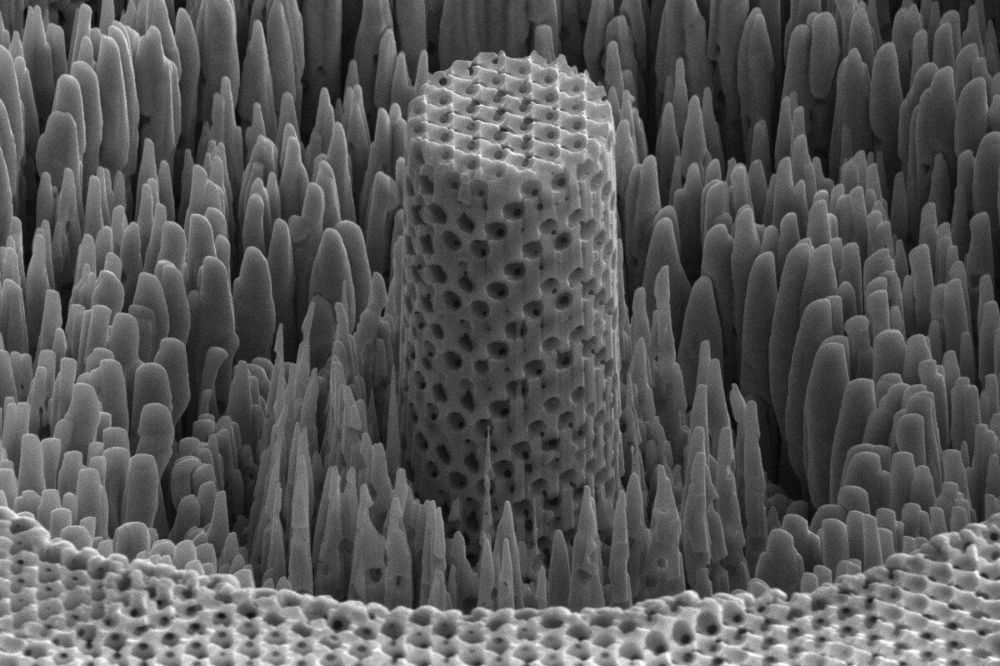
A successful production trial by Australian battery technology innovator Nano-Nouvelle has proved its pioneering nanotechnology ­­­supports industrial-scale manufacture, with output rates 100 times faster.

The Sunshine Coast-based company is developing world-leading nanotechnology that can boost the energy storage capacity of lithium ion batteries by as much as 50 per cent. Lithium ion batteries are used in devices ranging from mobile phones and notebooks to and electric vehicles and home energy storage systems.

As well as proving its technology, Nano-Nouvelle has worked with companies worldwide to ensure its battery-boosting breakthrough is usable with today’s production lines.

Two electrons go on a quantum walk and end up in a qudit: Russian scientists find a way to reliably connect quantum elements

This is a BIG DEAL in QC, and Russian Scientists solved it.


Abstract: Scientists from the Institute of Physics and Technology of the Russian Academy of Sciences and MIPT have let two electrons loose in a system of quantum dots to create a quantum computer memory cell of a higher dimension than a qubit (a quantum bit). In their study published in Scientific Reports, the researchers demonstrate for the first time how quantum walks of several electrons can help to implement quantum computation.

“By studying the system with two electrons, we solved the problems faced in the general case of two identical interacting particles. This paves the way toward compact high-level quantum structures,” comments Leonid Fedichkin, Expert at the Russian Academy of Sciences, Vice-Director for Science at NIX (a Russian computer company), and Associate Professor at MIPT’s Department of Theoretical Physics.

In a matter of hours, a quantum computer would be able to hack through the most popular cryptosystem used even in your web browser. As far as more benevolent applications are concerned, a quantum computer would be capable of molecular modeling that takes into account all interactions between the particles involved. This in turn would enable the development of highly efficient solar cells and new drugs. To have practical applications, a quantum computer needs to incorporate hundreds or even thousands of qubits. And that is where it gets tricky.

A virus-sized computing device

Researchers at University of California, Santa Barbara, have designed a functional nanoscale computing element that could be packed into a space no bigger than 50 nanometres on any side.

red blood cell nanotechnology nanotech future timeline

In 1959, renowned physicist Richard Feynman, in his talk “Plenty of Room at the Bottom” spoke of a future in which tiny machines could perform huge feats. Like many forward-looking concepts, his molecule and atom-sized world remained for years in the realm of science fiction. And then, scientists and other creative thinkers began to realise Feynman’s nanotechnological visions.

Exercise Improves Arterial Resilience to Age-Related Increases in Oxidative Stress

Excercise is the best low cost activity you can do as part of your personal longevity strategy. Here we see data showing it can improve resistance to oxidative stress.


Researchers digging deeper into the mechanisms by which exercise produces benefits have found that it improves the resistance of blood vessels to oxidative stress. With age the presence of oxidizing molecules and oxidative modification of proteins, preventing correct function, increases for reasons that include damage to mitochondria, the power plants of the cell. Oxidative damage to molecular machinery is somewhere in the middle of the chain of cause and effect that starts with fundamental forms of damage to cells and tissues and spirals down into age-related diseases. Near all of this oxidation is repaired very quickly, the damaged molecules dismantled and recycled, but in most contexts more of it over the long term is worse than less of it.

Quote:

NASA’s Working on a Nano-Starship That Travels at 1/5 the Speed of Light

In April, a team of scientists including Stephen Hawking announced a mind-boggling new project to explore interstellar space, using lasers to propel a nano-spacecraft the size of a postage stamp to our nearest star system, Alpha Centauri.

If they could get their little ‘StarChip’ spacecraft to travel at 20 percent the speed of light, it could arrive in just 20 years. But how would the electronics on such a tiny, vulnerable spacecraft survive for 20 years in the hostility of space?

The problem for Hawking’s Breakthrough Starshot project, say researchers at NASA and the Korea Institute of Science and Technology, is radiation.

Ginkgo Bioworks – Nanobots Are Finally Here

We recently wrote an article about how we need to redefine what “nanotechnology” means in the context of looking for “nanotech” companies to invest it. When you can use synthetic biology and gene editing to change the way that bacteria function by genetically modifying them, the result are microscopic biological machines. These tiny biological machines sound a whole lot like the nanobots that we were promised which would go around doing cool things without even being visible to the human eye. Earlier this year we profiled three companies that we claimed were working on building nanobot factories that create designer organisms on demand. Let’s take a closer look at one of these companies called Ginkgo Bioworks.

ginkgo-bioworks-logo

Founded in 2008, Massachusetts based startup Ginkgo Bioworks has taken in a total of $154 million in funding so far with their latest $100 million Series C round closing in summer of this year. The Company refers to themselves as “the organism company” and their value proposition has attracted investment from a whole slew of investors who realize the potential of developing new organisms that can replace technology with biology. In their own words, Ginkgo Bioworks is doing “programming without a debugger, manufacturing without CAD, and construction without cranes” which requires a whole lot of intellectual firepower and may be why they have 5 founders:

Nanotero raises another $21 million to commercialize nanotube memory

Nantero Inc., the nanotechnology company developing next-generation memory using carbon nanotubes, today announced the closing of an over $21 million financing round. The lead investor in the round was Globespan Capital Partners and also included participation from both new and existing strategic and financial investors. Nantero currently has more than a dozen partners and customers in the consumer electronics, enterprise systems, and semiconductor industries actively working on NRAM®. The new funding will enable the company to support these partners in bringing multiple products into the market, while also enabling new customers to begin development. This financing round brings the total invested in Nantero to date to over $110 million.

“This round enables Nantero to accelerate its pace in product development, especially of its multi-gigabyte DDR4-compatible memory product,” said David Poltack, Managing Director, Globespan Capital Partners. “Nantero has multiple industry-leading customers who would like to receive NRAM even sooner. The fact that several of these customers, as well as key partners in the ecosystem, have decided to also invest in Nantero is a strong sign of confidence given how well they know Nantero and its product from years of working together.”

“The customer traction we’ve achieved at Nantero has been overwhelming, as evidenced by our recent announcement that NRAM had been selected by both Fujitsu Semiconductor and Mie Fujitsu Semiconductor,” said Greg Schmergel, Co-Founder & CEO of Nantero. “With this additional funding, we will be able to help these existing customers speed their time to market while also supporting the many other companies that have approached us about using Nantero NRAM in their next generation products.”

/* */