Toggle light / dark theme

Nano-sized discs teach your body to kill cancer cells

PanARMENIAN.Net — In the future, getting customized cancer treatments might just be a matter of injecting virtually invisible discs into your body, Engadget said.

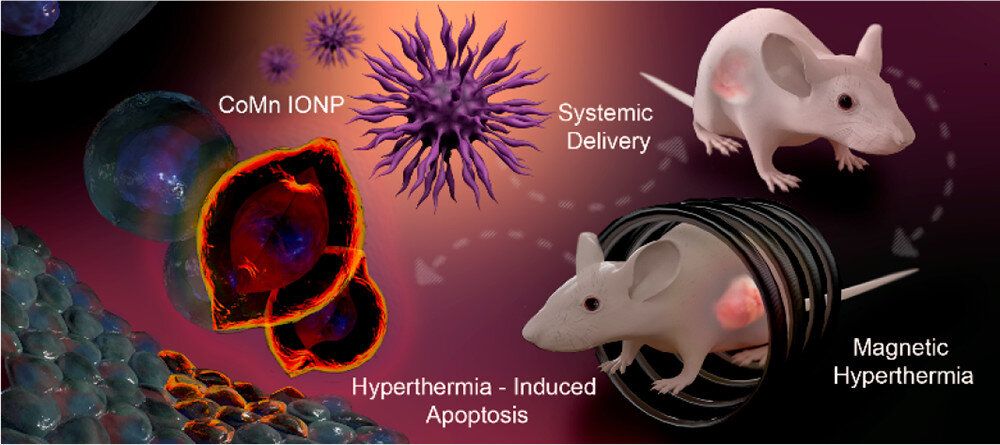
University of Michigan scientists have had early success testing 10nm “nanodiscs” that teach your body to kill cancer cells. Each disc is full of neoantigens, or tumor-specific mutations, that tell your immune system’s T-cells to recognize those neoantigens and kill them. When you pair them up with immune checkpoint inhibitors (which boost the T-cells’ responses), they can not only wipe out existing tumors, but prevent them from reemerging later.

This testing has been limited to mice so far, but it’s promising. The nanodiscs took 10 days to eliminate tumors, and they shut down identical tumors when they were reinserted 70 days later. For the researchers, the big challenge right now is scaling the tests to see if they still hold up with larger animals. If the approach proves successful with humans, the days of generic cancer solutions might be limited — so long as doctors could get a sample of your cancer, they’d stand a realistic chance of eliminating the disease, Engadget said.

Ultra-Small Nanocavity Advances Technology for Quantum-Based Data Encryption

What’s next? Nanocavities in a diamond for small devices.


Researchers have developed a new type of light-enhancing optical cavity that is only 200 nanometers tall and 100 nanometers across. Their new nanoscale system represents a step toward brighter single-photon sources, which could help propel quantum-based encryption techniques under development.

Quantum encryption techniques, which are seen as likely to be central to future data encryption methods, use individual photons as an extremely secure way to encode data. A limitation of these techniques has been the ability to emit photons at high rates. “One of the most important figures of merit for single-photon sources is brightness — or collected photons per second — because the brighter it is, the more data you can transmit securely with quantum encryption,” said Yousif Kelaita of Stanford University.

In the journal Optical Materials Express, from The Optical Society (OSA), Kelaita and his colleagues show that their new nanocavity significantly increased the emission brightness of quantum dots — nanometer-scale semiconductor particles that can emit single photons.

The perfect Christmas gift? A nanoscale snowman

Happy Holidays; happy end of the year, happy launch of next year, happy snow days, happy hot chocolate day, etc. Nonetheless, my gift to you this year is a Nanoscale Snowman.


Would a jewel-encrusted snowman make the perfect Christmas present? At only 5 nanometres in size, the price might be lower than you think. And it’s functional too, catalysing the splitting of water to make green hydrogen for fuel cells.

The nanoparticle, as imaged with the aberration-corrected scanning transmission electron microscopes, features eyes, nose and mouth of precious-metal platinum clusters embedded in a titanium dioxide face. Each platinum cluster typically contains 30 platinum atoms; within the whole nanoparticle there are approximately 1680 and 180 platinum atoms.

The nano-snowman formed spontaneously from a self-assembled platinum-titanium nanoparticle which was oxidised in air, drawing the titanium atoms out to the surface. The self-assembly occurred in a gas phase, cluster beam condensation source, before size-selection with a spectrometer and deposition onto a carbon surface for oxidation and then imaging. The mass of the snowman was 120,000 atomic mass units. Compared with a more conventional pure platinum catalyst particle, the inclusion of the titanium atoms offers two potential benefits: dilution of how much precious platinum is needed to perform the catalysis, and protection of the cores against sintering (i.e. aggregation of the nanoparticles). The shell is porous enough to allow hydrogen through and the particles are functional in the evolution reaction.

Ultra-small nanocavity advances technology for secure quantum-based data encryption

Researchers have developed a new type of light-enhancing optical cavity that is only 200 nanometers tall and 100 nanometers across. Their new nanoscale system represents a step toward brighter single-photon sources, which could help propel quantum-based encryption and a truly secure and future-proofed network.

Quantum encryption techniques, which are seen as likely to be central to future data encryption methods, use individual as an extremely secure way to encode data. A limitation of these techniques has been the ability to emit photons at high rates. “One of the most important figures of merit for single-photon sources is brightness—or collected photons per second—because the brighter it is, the more data you can transmit securely with quantum encryption,” said Yousif Kelaita, Nanoscale and Quantum Photonics Lab, Stanford University, California.

In the journal Optical Materials Express, Kelaita and his colleagues show that their new nanocavity significantly increased the emission brightness of quantum dots—nanometer-scale semiconductor particles that can emit single photons.

New structure shows how cells assemble protein-making machinery

Scientists at The Rockefeller University have created the most detailed three-dimensional images to date of an important step in the process by which cells make the nano-machines responsible for producing all-important protein. The results, described December 15 in Science, are prompting the researchers to re-evaluate how they envision this early phase in the construction of ribosomes.

“The structure they determined, shown above, belongs to a particle formally called the “small subunit processome.” Before this particle can fulfill its destiny to become the smaller half of a complete ribosome, the RNA within it needs to be folded, tweaked, and cut.

“Initially, we thought of the small subunit processome as a product on an assembly line, with molecular workers arriving from outside, much like the robots that would put together a car. But that analogy no longer appears apt,” says senior author Sebastian Klinge, head of the Laboratory of Protein and Nucleic Acid Chemistry.

Fast track control accelerates switching of quantum bits

From laptops to cellphones, technology advances through the ever-increasing speed at which electric charges are directed through circuits. Similarly, speeding up control over quantum states in atomic and nanoscale systems could lead to leaps for the emerging field of quantum technology.

An international collaboration between physicists at the University of Chicago, Argonne National Laboratory, McGill University, and the University of Konstanz recently demonstrated a new framework for faster control of a quantum bit. First published online Nov. 28, 2016, in Nature Physics, their experiments on a single electron in a diamond chip could create quantum devices that are less prone to errors when operated at high speeds.

Scientists are Creating a New Diamond Predicted to be Harder Than a Jeweler’s Diamond

For all my Lab friends who utilize Spectrometers, drill bit fans as well as many of us QC fans. A new stronger syn. diamond being developed.


But you won’t find this diamond on any engagement rings — it will help cut through ultra-solid materials on mining sites.

Step aside, girls. Diamonds may now be a miner’s best friend, thanks to scientists from Australian National University (ANU).

Led by ANU professor Jodie Bradby, an international team is creating a hexagonal diamond, called Lonsdaleite, that’s predicted to be harder than a jeweler’s diamond. The researchers made nano-sized Lonsdaleite at 400 degrees Celsius (752 degrees Fahrenheit), effectively halving the temperature in which it can be formed in a lab. They’ve published their work in Scientific Reports.

Nano-Nouvelle Trial Delivers Nanotech Breakthrough

A successful production trial by Australian battery technology innovator Nano-Nouvelle has proved its pioneering nanotechnology ­­­supports industrial-scale manufacture, with output rates 100 times faster.

The Sunshine Coast-based company is developing world-leading nanotechnology that can boost the energy storage capacity of lithium ion batteries by as much as 50 per cent. Lithium ion batteries are used in devices ranging from mobile phones and notebooks to and electric vehicles and home energy storage systems.

As well as proving its technology, Nano-Nouvelle has worked with companies worldwide to ensure its battery-boosting breakthrough is usable with today’s production lines.

/* */