Formic ventures — taking on huge challenges — from virtual reality technologist to longevity biotechnology investor.
Michael Antonov is the Founder and CEO of The Michael Antonov Foundation (https://antonovfoundation.org/), a charitable organization that supports biotechnology research and various causes that improve well being of people around the world, as well as Formic Ventures (https://formic.vc/index.html), an early stage high tech and biotech investment firm focused on prolonging human healthspan and empowering human creativity.
Michael is a serial entrepreneur and philanthropist passionate about taking on huge challenges that can make a difference in human lives, such as solving the problem of aging.
Prior to launching the foundation, Michael was a technology executive, most recently as the co-founder and Chief Software Architect at Oculus, acquired by Facebook, where he helped revive the virtual reality industry. Prior to that, Michael was the co-founder and CTO of Scaleform, a user interface software company, whose product is embedded into hundreds of computer, console, and mobile games around the world.
Michael is a graduate of the University of Maryland in the field of computer science and is a member of their alumni hall of fame.
This is the THIRD PART of the interview with Harold Katcher in Modern Healthspan YouTube channel.
Dr. Harold Katcher is a professor of Biology at the University of Maryland. He has been a pioneer in the field of cancer research, in the development of modern aspects of gene hunting and sequencing. He carries expertise in bioinformatics, chronobiology, and biotechnology. Dr. Katcher is currently working in the capacity of Chief Technical Officer at Nugenics Research exploring rejuvenation treatments in mammals. In May 2020 there was a paper published on biorxiv about the rejuvenation of rats by over 50%. We did a review of the paper which you can find linked to above. In this interview series we talk with Dr. Harold Katcher, one of the main authors of the paper about the experiment, the steps to get validation, commercialization and how the results fit into his theories of aging.
In this video we talk about the next steps towards commercialization and how the treatment that is being developed from this research will be made available. Dr. Katcher is very optimistic with a view that the treatment should be on the market within a few years.
This is the SECOND PART of the interview with Harold Katcher in Modern Healthspan YouTube channel.
Dr. Harold Katcher is a professor of Biology at the University of Maryland. He has been a pioneer in the field of cancer research, in the development of modern aspects of gene hunting and sequencing. He carries expertise in bioinformatics, chronobiology, and biotechnology. Dr. Katcher is currently working in the capacity of Chief Technical Officer at Nugenics Research exploring rejuvenation treatments in mammals. In May 2020 there was a paper published on biorxiv about the rejuvenation of rats by over 50%. We did a review of the paper which you can find linked to above. In this interview series we talk with Dr. Harold Katcher, one of the main authors of the paper about the experiment, the steps to get validation, commercialization and how the results fit into his theories of aging.
In this video we talk about how the results from the experiment will be validated in two third party labs. One of which will use Rhesus monkeys and the other, under Dr. Greg Fahy, will use dogs.
Did you know, getting a bit cold from time to time can help you get fitter, live longer, reduce pain and discomfort and help you concentrate and feel great? Whether it is cold showers, ice baths, swimming in open water or trying out cryotherapy, enduring the cold is becoming increasingly popular as a way to hack your body as an aid to longevity and a good health span. And for a good reason. It effects metabolism, heart rate, blood pressure and many biomarkers. It improves pain tolerance and levels, your mood and energy levels. It effects mitochondrial biogenesis and brown fat stores, even beiging previously white adipose tissue. In fact, there are hardly any systems left untouched. But it does have side effects as well, especially for those who have health issues, but they also have the most to gain. If you want to get more detail then check out this video where I go into more depth looking at the subject and discuss the studies that have been done to assess the effects. Have a great day.
In Cold Showers Pros And Cons — And Other Cold Therapies, I will be looking at the good, and the bad, when it comes to embracing cold therapies from cold water swimming and ice baths, through to cold showers and cryotherapy.
What are they all about? How do they work? Do they even work? Are they dangerous?
If you want to know the answer to these and more then just watch this video.
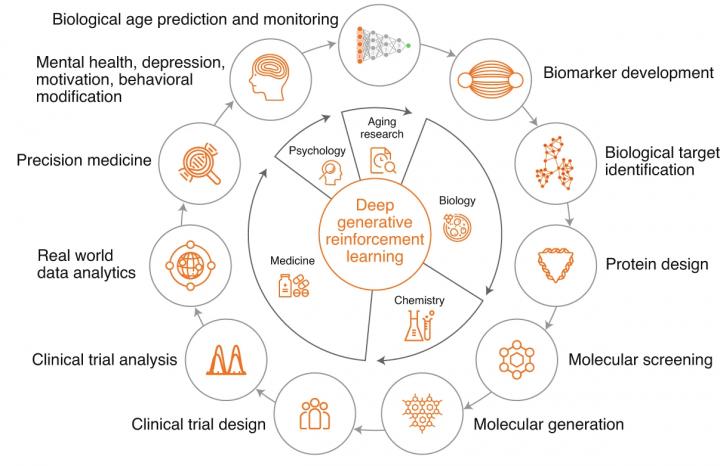
For centuries, scientists have tried to work on formulas to extend human life. While scientific and medical advancements have pushed the average human life expectancy to 71 years worldwide, researchers are still trying to find out if it can be extended further. Now, a group of scientists is leaning on artificial intelligence (AI) to combine conventional medicine to treat diseases and prevent them to extend longevity.
Conventional medicine has been the go-to tool for scientists to treat diseases and effectively extend life expectancy. But it has limitations too. While it can treat diseases, it’s not very effective in detecting early signs of an ailment that can reduce life expectancy. But combining AI, fundamental research and medicine could bring about a change in the research of extending human life. Dubbed as Longevity medicine, the scientists — Alex Zhavoronkov, Evelyne Yehudit Bischof and Kai-Fu Lee — proposed a framework. Their article was published in the journal Nature Aging.
Dr Zhavoronkov is a computer scientist with a doctorate in biophysics. Bischof is a practicing doctor who is researching on aging and gerooncology at the University Hospital Basel in Switzerland. Lee is known for his expertise in AI.
Scientists have proposed an artificial intelligence-based framework that can analyze millions of parameters and help fight aging.
This is the first part of the interview with Harold Katcher in Modern Healthspan YouTube channel.
Dr. Harold Katcher is a professor of Biology at the University of Maryland. He has been a pioneer in the field of cancer research, in the development of modern aspects of gene hunting and sequencing. He carries expertise in bioinformatics, chronobiology, and biotechnology. Dr. Katcher is currently working in the capacity of Chief Technical Officer at Nugenics Research exploring rejuvenation treatments in mammals. In May 2020 there was a paper published on biorxiv about the rejuvenation of rats by over 50%. We did a review of the paper which you can find linked to above. In this interview series we talk with Dr. Harold Katcher, one of the main authors of the paper about the experiment, the steps to get validation, commercialization and how the results fit into his theories of aging.
In this video we talk about the actual experiment and some of the results that Dr. Katcher and his team saw.
The paper is a preprint available on bioXriv on a study showing the reversal of age in rats through exchange of blood plasma. Blood plasma of older rats was exchanged for that of younger rats which lead to the older rats having a reduced epigenetic age and many improved biomarkers, including reduced inflammation.
The age of the rats’ tissue was assessed by Dr Steve Horvath using 6 separate clocks which covered individual tissue as well as a pan tissue clocks.
The international team of artificial intelligence experts and medical doctors propose a framework for the application of next-generation AI to extend human longevity.