Toggle light / dark theme

New Alzheimer’s Treatment Could Reverse Memory Loss

A small clinical trial of 10 patients with early Alzheimer’s disease has shown that the memory loss and cognitive impairment caused by the disease can be reversed.

Scientists at the University of California, Los Angeles found a new treatment that could potentially reverse memory loss and cognitive impairment among patients with early Alzheimer’s disease.

In a small clinical trial, 10 individuals underwent a treatment called “metabolic enhancement for neurodegeneration,” or MEND. The treatment is based on 36 different factors, including changes in diet, exercise, and sleeping habits. It also includes the integration of certain drugs, vitamins, and brain stimulation therapy to a patient’s regular routine.

Brain markers of numeric, verbal, and spatial reasoning abilities found

A new study found that higher concentrations of NAA (N-acetyl aspartate) in two areas of the brain were associated with better performance on verbal and spatial tests. NAA is a byproduct of glucose metabolism and an indicator of brain health. (credit: Julie McMahon and Erick Paul)

A new study helps explain how brain structure and chemistry relate to “fluid intelligence” — the ability to adapt to new situations and solve problems one has never encountered before.

The study, reported in an open-access paper in the journal NeuroImage, observed two facets of fluid intelligence*:

Approved: First Ever Human Trials Involving CRISPR Gene Editing

Excellent!!! Cannot wait until we eradicate cancer, MS, Parkinson, Dystonia, Cystic-Fibrosis, LGD, etc.


A team of Physicians at the University of Pennsylvania’s School of Medicine now has their project of modifying the immune cells of 18 different cancer patients with the CRISPR-Cas9 system approved by the National Institute of Health.

CRISPR is the gift that keeps on giving—when it’s not fighting blindness, tackling HIV, or even recording real-time immune responses, it is taking on the emperor of all maladies: cancer.

But what’s even more fascinating about this use of CRISPR is that the National Institute of Health’s (NIH) Recombinant DNA Research Advisory Committee (RAC) has approved the first-ever use of CRISPR in human cancer therapy, a monumental step in the history of the gene-editing technology.

A federal panel just gave the green light to use gene editing on humans

Scientists are one step closer to using CRISPR gene editing on humans, with a US federal advisory panel approving the use of the technique for a study led by the University of Pennsylvania.

The scientists are seeking to use the CRISPR-Cas9 technique to create genetically altered T cells – white blood cells that play an important role in our immune system – that are more effective at fighting cancer cells in patients with melanoma, multiple myeloma, and sarcoma.

“Our preliminary data suggests that we could improve the efficacy of these T cells if we use CRISPR,” lead researcher Carl June told the National Institute of Health’s (NIH) Recombinant DNA Advisory Committee (RAC) on Tuesday.

A Promising Anti-Aging Drug Will Soon Be Tried On Humans

Washington University in St. Louis and Keio University in Japan is set to test the effectiveness and safety of the compound. Starting next month, about 10 healthy people will be administered NMN to see if can improve bodily function and stave off the effects of aging. Should it work, it would become the first bona fide anti-aging intervention available on the market.


A compound called nicotinamide mono nucleotide (NMN) has been shown to slow down the aging process and extend the lifespans of mice. We’re about to find out if it does the same thing to humans.

A planned clinical trial devised by researchers from Washington University in St. Louis and Keio University in Japan is set to test the effectiveness and safety of the compound. Starting next month, about 10 healthy people will be administered NMN to see if can improve bodily function and stave off the effects of aging. Should it work, it would become the first bona fide anti-aging intervention available on the market.

World’s First Longevity SIRT Chocolate

Want to fight aging; eat this new chocolate.


Cambridge UK (PRWEB UK) 19 June 2016 Lycotec Ltd., a biotech company based in Cambridge UK, http://www.lycotec.com announces that they have developed the World’s First Longevity SIRT Chocolate, which after ingestion provides a blood level of unmodified trans-Resveratrol, t-RSV, equal to its level after drinking red wine.

T-RSV is the molecule of plant polyphenol class which is typically present in red grapes, some berries, cocoa and nuts. There are a number of beneficial health effects of t-RSV from cardioprotective to antidiabetic. However, one of its intriguing properties is the ability to activate a group of SIRT genes. These genes are responsible for controlling cellular stress protection and longevity.

When t-RSV is consumed as part of food, or a beverage, or as an isolated extract in the form of most supplements, it quickly gets modified and inactivated in the digestive tract. Drinking red wine is the only known exception when t-RSV can reach the blood in an unmodified active form at a detectable level.

MMTP — Major Mouse Testing Program — Interview with David Gems

Crowdfunding Campaign: https://www.lifespan.io/campaigns/the-major-mouse-testing-program/

We are testing a combination of compounds which clear out dysfunctional cells in the body, called Senolytics, to see if we can extend maximum lifespan and healthspan in mice. Please subscribe, share, and fund our Lifespan.io campaign today!

MMTP — Major Mouse Testing Program.
http://majormouse.org

Is a project by the International Longevity Alliance.
http://longevityalliance.org

Subscribe: https://www.youtube.com/user/LifespanIO


Novel Brain Cancer Treatment Taps Into Sound Waves

WEDNESDAY, June 15, 2016 (HealthDay News) — Brain cancer patients might benefit from an implantable ultrasound device that appears to enhance chemotherapy treatment, a small study says.

Researchers from the Pitie-Salpetriere Hospital in Paris and other French institutions tested the experimental device on 15 patients with recurrent glioblastoma, a particularly deadly brain cancer. When the so-called SonoCloud was activated, sound waves opened the blood-brain barrier, letting in more chemotherapy, they said.

“The walls of the blood vessels in the brain are very difficult to cross for certain molecules,” said Frederic Sottilini, CEO of Paris-based CarThera, the company developing SonoCloud.

New analytical technology could improve cancer treatment

Awesome!


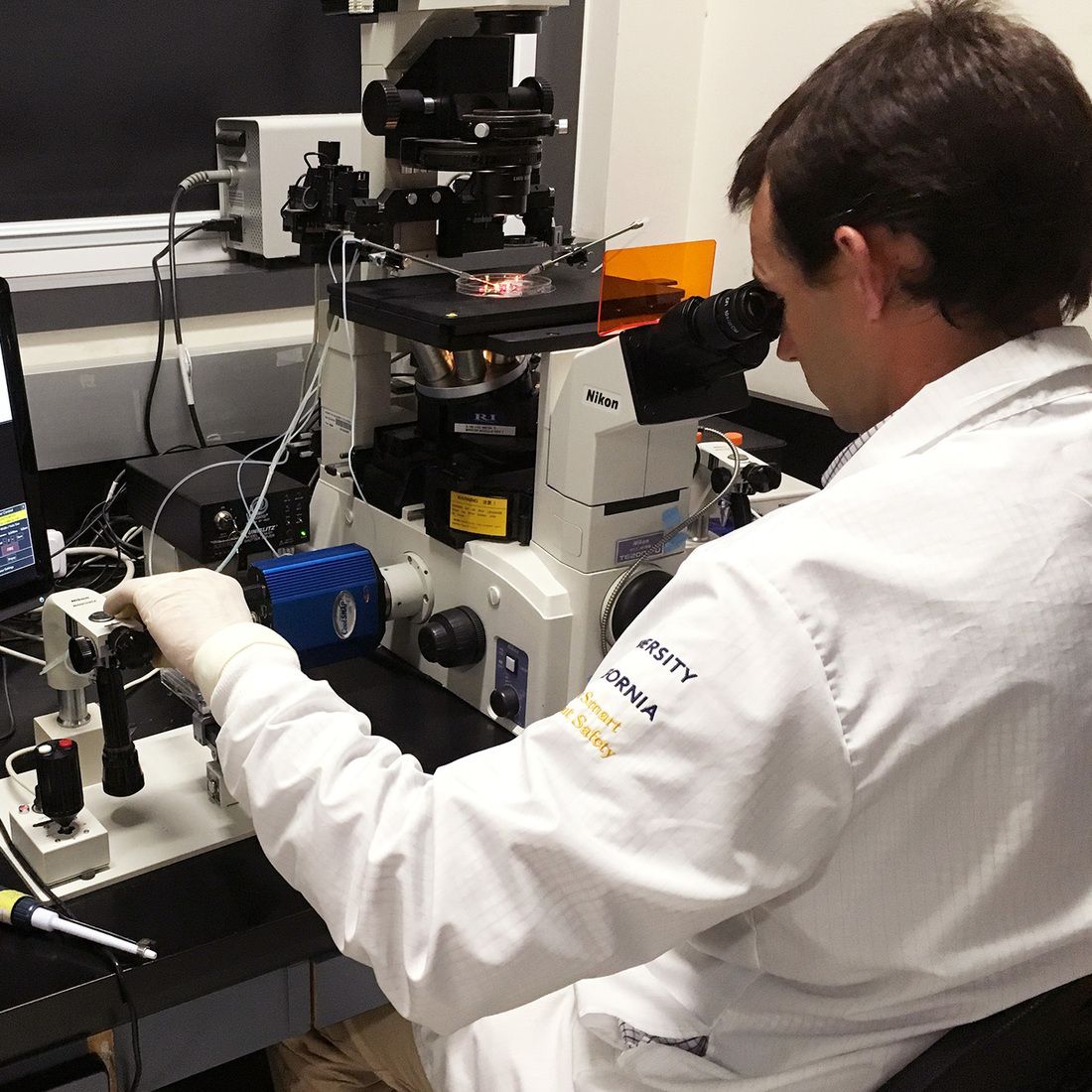
University of Oklahoma researchers will apply a new analytical technology that could ultimately provide a powerful tool for improved treatment of cancer patients in Oklahoma and beyond. Using mass spectrometry, an analytical instrument for sensitive detection and accurate identification of molecules, the team will quantitate the amount of anti-cancer drugs present in individual cancer cells, including those in bladder cancer cells isolated from patients undergoing chemotherapy. The method will provide a means to establish ideal dosing regimens that delivers effective chemotherapeutic concentrations to patients with minimal toxicities.

Anthony Burgett and Zhibo Yang, assistant professors in the Department of Chemistry and Biochemistry in the OU College of Arts and Sciences, and affiliates of the Stephenson Cancer Center, in collaboration with Jonathan E. Heinlen, M.D., assistant professor in the Department of Urology at the OU Health Sciences Center and a Stephenson Cancer Center researcher, will fully develop the novel first-in-class mass spectrometric technology—the Single Probe—capable of performing single-cell mass spectrometry of compounds inside of living single cancer cells as a bioanalytical method to improve efficacy and toxicities of chemotherapy in patients.

“One clear lesson from scientific progress is that new technologies often lead to major advances. This new single cancer cell mass spectrometry analysis could propel us forward to a new frontier in biological analysis, and we are excited to see where this technology, with its possible scientific and biomedical applications, could lead,” said Burgett.

/* */