UCLA scientists working with middle-aged fruit flies say they were able to improve the insects’ health while markedly slowing down their aging process. The team thinks its technique could eventually help delay the onset of Parkinson’s disease, Alzheimer’s disease, cancer, stroke, cardiovascular disease, and other age-related diseases in humans.
The researchers zeroed in on mitochondria, which often become damaged with age. When cells can’t eliminate the damaged mitochondria, they can become toxic and contribute to a wide range of age-related diseases, said David Walker, Ph.D., a UCLA professor of integrative biology and physiology, and the study’s senior author.
Dr. Walker and his colleagues found that as fruit flies reach middle age—about one month into their two-month lifespan—their mitochondria change from their original small, round shape.
A new study published by scientists at the Salk Institute recently shows how that changes in the nucleolus of progeria cells and normally aged cells share some characteristics that may allow them to be used as a biomarker for biological age[1].
What is Progeria?
Hutchinson-Gilford progeria is a rare genetic disease that causes people to suffer from aging-like symptoms on an accelerated timescale compared to regular aging. Whilst it shares similarities with regular aging it is not accelerated aging per se, but the outcome is much the same.
Announcement of CRISPR technology, which allows precise editing of the human genome, has been heralded as the future of individualized medicine, and a decried as a slippery slope to engineering individual human qualities. Of course, humans already know how to manipulate animal genomes through selective breeding, but there has been no appetite to try on humans what is the norm for dogs. That’s a good thing, says Dawkins. The results could well be dangerous. Does technology as a whole represent a threat to human welfare if it continues to evolve at its current rate? Not so fast, warns Dawkins. Comparing biological evolution to technological progress is an analogy at best. His newest book is Science in the Soul: Selected Writings of a Passionate Rationalist.
Transcript: I think it’s — I’m a believer in the precautionary principle as I’ve just said, and I think we have to worry about possible consequences of things that we do, and the ability to edit our own genomes is one thing we ought to worry about. I’m not sure it’s so much an ethical problem as a more practical problem. What would the consequences be? Would the consequences be bad? And they might be.
I think it’s worth noticing that long before CRISPR long before it became capable of editing our genomes in anyway we have been editing the genomes of domestic animals and plants by artificial selection, not artificial mutation, which is what we’re now talking about, but artificial selection. When you think that a Pekingese is a wolf, a modified wolf, a genetically modified wolf—modified not by directly manipulating genes but by choosing for breeding individuals who have certain characteristics, for example, a small stubbed nose, et cetera, and making a wolf turn into a Pekingese. And we’ve been doing that very successfully with domestic animals like dogs, cows, domestic plants like maize for a long time, we’ve never done that to humans or hardly at all.
Hitler tried it but it’s never really been properly done with humans I’m glad to say. So if we’ve never done that with humans with the easy way, which is artificial selection, it’s not obvious why we would suddenly start doing it the difficult way, which is by direct genetic manipulation. There doesn’t seem to be any great eagerness to do it over the last few centuries anyway.
A lot of people have problems with what they call designer babies. You could imagine a future scenario in which people go to a doctor and say, “Doctor, we want our baby to be a musical genius. Please edit the genes so that we have the same genes as the Bach family had or something like that to make them into a musical genius.” I mean that horrifies many people.
A Stanford team has launched a new challenge on the Eterna computer game. Players will design a CRISPR-controlling molecule, and with it open the possibility of new research and therapies.
A team of researchers at the Stanford University School of Medicine has launched a new challenge for the online computer game Eterna in which players are being asked to design an RNA molecule capable of acting as an on/off switch for the gene-editing tool CRISPR/Cas9.
Molecular biologists will then build and test the actual molecules, based on the most promising designs provided by the players.
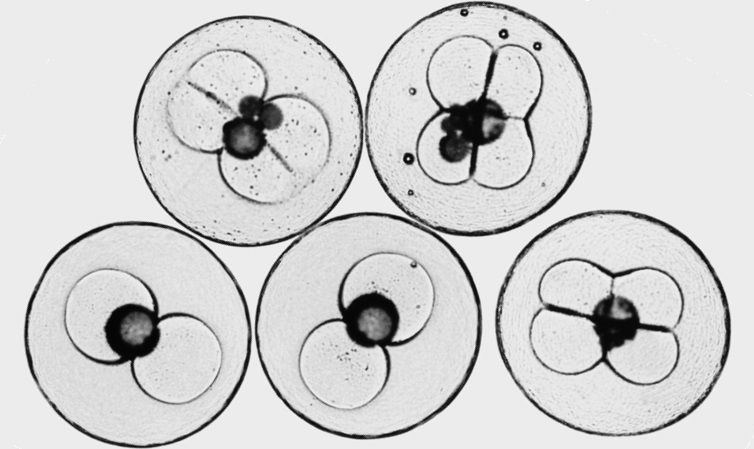
It is important to note that none of the embryos were allowed to develop for more than a few days, and that the team never had any intention of implanting them into a womb. However, it seems that this is largely due to ongoing regulatory issues, as opposed to issues with the technology itself.
In the United States, all efforts to turn edited embryos into a baby — to bring the embryo to full term — have been blocked by Congress, which added language to the Department of Health and Human Services funding bill that forbids it from approving any such clinical trials.
Good quick interview. Technical, and a mention that it’s not just about telomeres.
BioViva is looking for a way to slow aging. Globalive Chairman Anthony Lacavera talks to CEO Elizabeth Parrish, who is using herself as a test subject and claims to have seen some fascinating results. (Source: Bloomberg)
Scientists recently used a gene-editing tool to fix a mutation in a human embryo. Around the world, researchers are chasing cures for other genetic diseases.
Now that the gene-editing genie is out of the bottle, what would you wish for first?
Babies with “perfect” eyes, over-the-top intelligence, and a touch of movie star charisma?
“If astronauts are going to make journeys that span several years, we’ll need to find a way to reuse and recycle everything they bring with them,” says Mark A. Blenner, assistant professor of chemical and biomolecular engineering at Clemson University, South Carolina.
To this end, the Blenner Research Group is looking into the potential uses of a type of yeast called Yarrowia lipolytica, that feeds on the urea content of urine.
With a little genetic engineering the group has proven that the yeast can be used to produce hydrogen and carbon – the atomic ingredients of nutrients like Omega 3, and polyester-based 3D printer filament.