BARseq interrogates the expression of 104 cell-type marker genes in 10.3 million cells over nine mouse forebrain hemispheres to reveal the role of peripheral inputs on cortical area development.

During today’s earnings call covering the second fiscal quarter of 2024, Apple CEO Tim Cook again spoke about Apple’s work on generative AI. He said that Apple has “advantages” that will “differentiate” the company in the era of AI, and some “very exciting things” will be shared with customers in the near future.
We continue to feel very bullish about our opportunity in generative AI. We are making significant investments and we’re looking forward to sharing some very exciting things with our customers soon.
We believe in the transformative power and promise of AI and we believe we have advantages that will differentiate us in this new era, including Apple’s unique combination of seamless hardware, software and services integration, groundbreaking Apple silicon with our industry leading neural engines, and our unwavering focus on privacy, which underpins everything we create.

It sometimes feels like NVIDIA was destined to be in the position it currently is, and CEO Jensen Huang has highlighted the company’s “secret sauce” in an interview.
Belief, Persistence & Resilience Is What CEOs Should Target For Success, Says NVIDIA’s CEO Jensen Huang
When we see Team Green and how it managed to rise from the very bottom of the markets, it is an iconic sight. What was the reason behind such gigantic success? Many thoughts remain, but the firm’s CEO has simplified it.
1 Bit Pixels Encoded in E. coli for the Display of Interactive Digital MediaAka Could you run Doom on cells?PoSB Final Video 2023Written Report: https://docs…

Jones’ family home sat to the south of Lake Livingston, in the river bottoms of Coldspring, the San Jacinto County seat. It was overtaken by water shortly after the family left and Jones found safe harbor for their animals, his neighbors told him.
Much of the county was still underwater Friday as crews pulled stranded residents from their homes and roadways.
His family sat among dozens of evacuees who rested on cots and sat around plastic folding tables in Dunbar Gym, a makeshift shelter in an old school building. Many were elderly or infirm, few spoke English or were comfortable telling their stories.

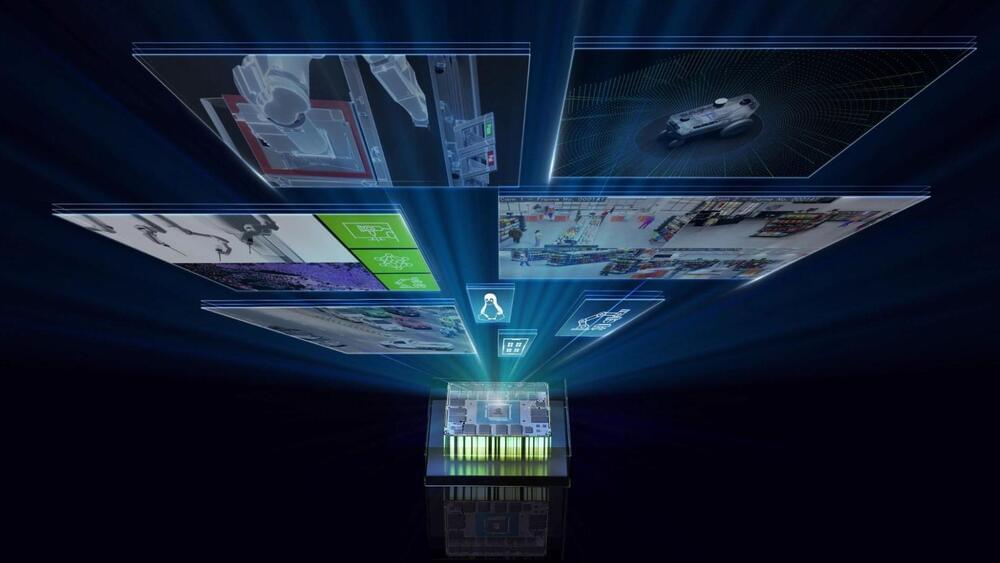
Visual language models have evolved significantly recently. However, the existing technology typically only supports one single image. They cannot reason among multiple images, support in context learning or understand videos. Also, they don’t optimize for inference speed.
We developed VILA, a visual language model with a holistic pretraining, instruction tuning, and deployment pipeline that helps our NVIDIA clients succeed in their multi-modal products. VILA achieves SOTA performance both on image QA benchmarks and video QA benchmarks, having strong multi-image reasoning capabilities and in-context learning capabilities. It is also optimized for speed.
It uses 1 ⁄ 4 of the tokens compared to other VLMs and is quantized with 4-bit AWQ without losing accuracy. VILA has multiple sizes ranging from 40B, which can support the highest performance, to 3.5B, which can be deployed on edge devices such as NVIDIA Jetson Orin.
Non-personalized content and ads are influenced by things like the content you’re currently viewing and your location (ad serving is based on general location). Personalized content and ads can also include things like video recommendations, a customized YouTube homepage, and tailored ads based on past activity, like the videos you watch and the things you search for on YouTube. We also use cookies and data to tailor the experience to be age-appropriate, if relevant.
Select “More options” to see additional information, including details about managing your privacy settings. You can also visit g.co/privacytools at any time.