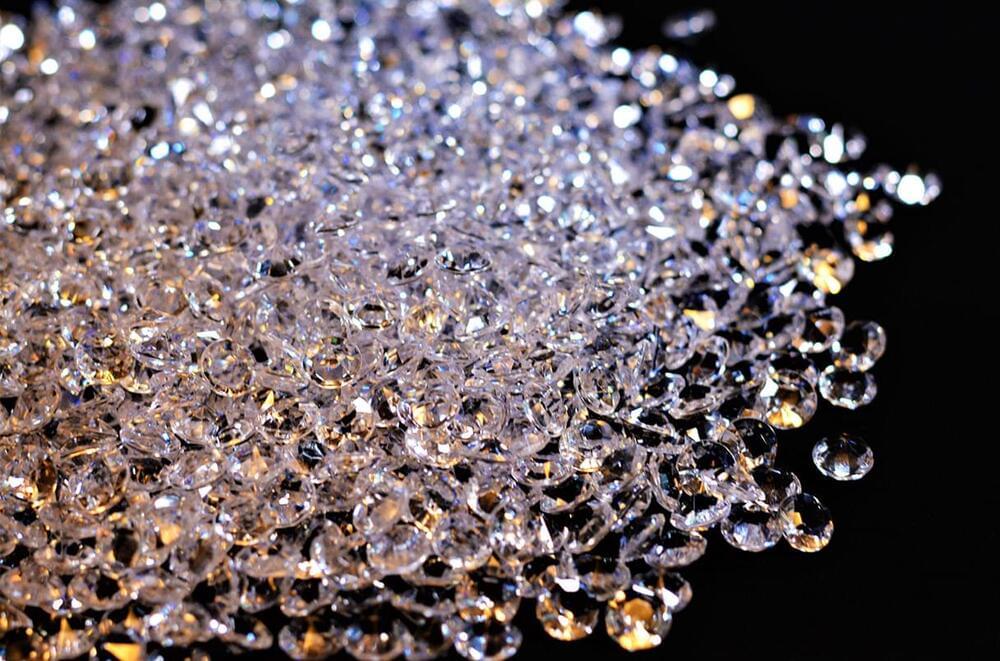
Tiny crystals grown within molten metals at atmospheric pressure.
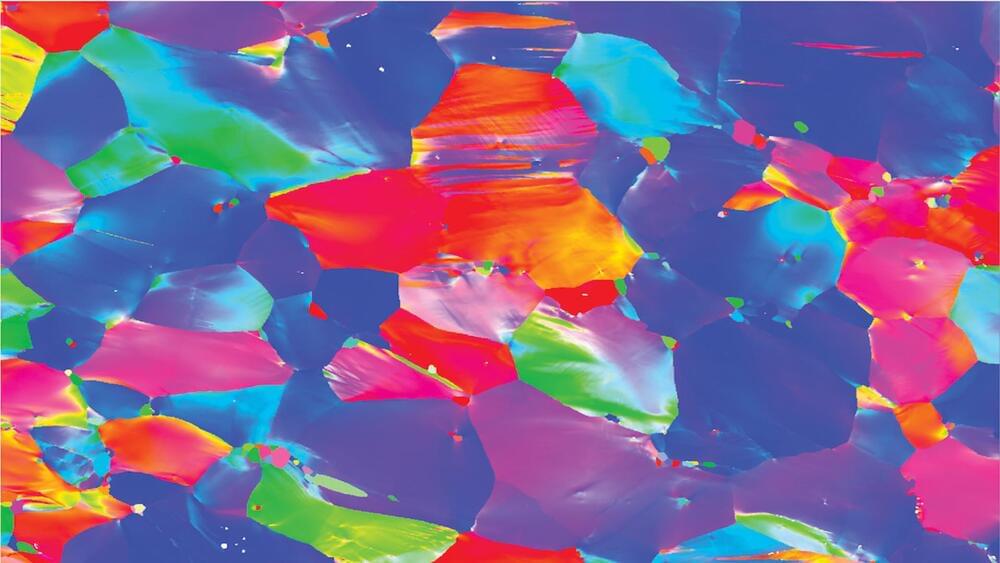
The team discovered the alloy’s surprising properties and then figured out how they arise from interactions in the atomic structure.
As per the team of researchers, the alloy is from a new class of metals known as refractory high or medium entropy alloys (RHEAs/RMEAs).

Non-personalized content and ads are influenced by things like the content you’re currently viewing and your location (ad serving is based on general location). Personalized content and ads can also include things like video recommendations, a customized YouTube homepage, and tailored ads based on past activity, like the videos you watch and the things you search for on YouTube. We also use cookies and data to tailor the experience to be age-appropriate, if relevant.
Select “More options” to see additional information, including details about managing your privacy settings. You can also visit g.co/privacytools at any time.
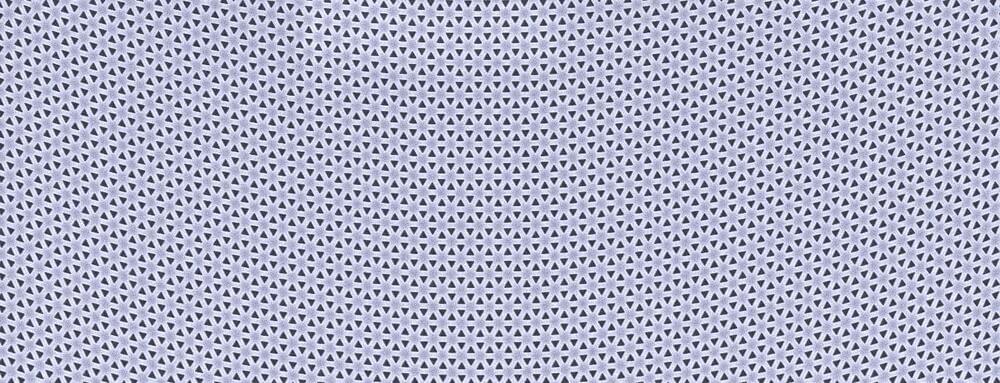
AMOLF researchers, in collaboration with Delft University of Technology, have succeeded in bringing light waves to a halt by deforming the two-dimensional photonic crystal that contains them. The researchers show that even a subtle deformation can have a substantial effect on photons in the crystal. This resembles the effect that a magnetic field has on electrons.
“This principle offers a new approach to slow down light fields and thereby enhance their strength. Realizing this on a chip is particularly important for many applications,” says AMOLF-group leader Ewold Verhagen.
The researchers have published their findings in the journal Nature Photonics. Simultaneously, a research team from Pennsylvania State University has published an article in the same journal about how they demonstrated—independently from the Dutch team—an identical effect.
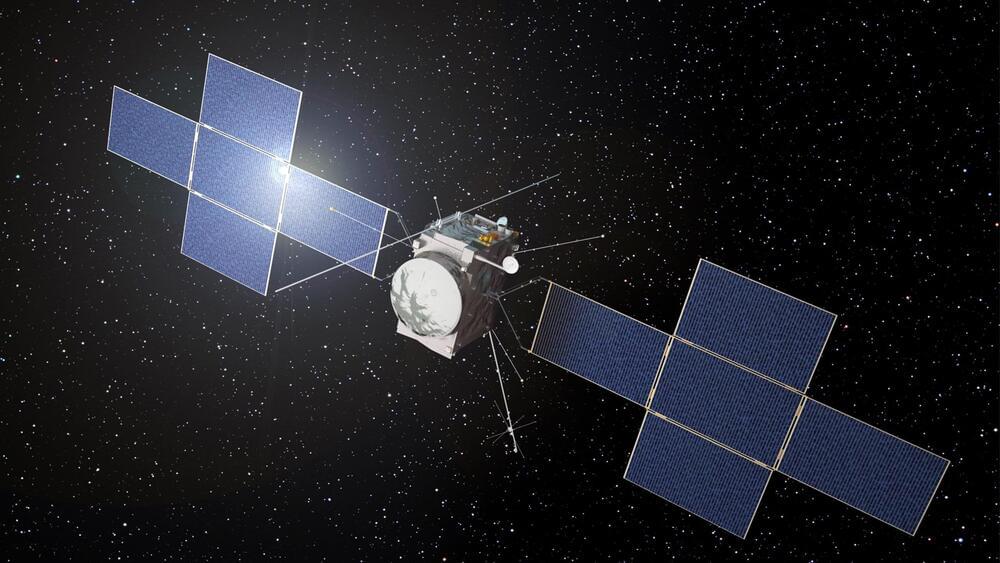
The initial step in the search for extraterrestrial life involves identifying the presence of liquid water. The moons of Saturn and Jupiter like Enceladus, Ganymede, Europa, and Callisto are suspected of holding oceans of liquid water beneath icy crusts. Similarly, some exoplanets beyond our solar system likely host liquid water, crucial for habitability. But detecting water, when we can’t physically access these celestial bodies, poses challenges. Ice-penetrating radar, a geophysical tool, has proven capable of detecting liquid water on Earth and beneath Mars ’ South polar cap.
Now, this instrument is aboard the JUICE spacecraft and it is on its way to Jupiter’s icy moon Ganymede and will also be aboard the Europa Clipper spacecraft, which will be launched to Europa later this year. What can we expect to learn from these missions and how can we use ice-penetrating radar for future planetary exploration? Dr Elena Pettinelli of Roma Tre University, with extensive experience in planetary exploration using ice-penetrating radar, delved into the utility of this technology in her presentation recently presented at the European Geosciences Union General Assembly EGU24.

PyTorch 2.3 is here 😎🔥
Details:
By Team PyTorch.
We are excited to announce the release of PyTorch® 2.3 (release note)! PyTorch 2.3 offers support for user-defined Triton kernels in torch.compile, allowing for users to migrate their own Triton kernels from eager without experiencing performance regressions or graph breaks. Tensor Parallelism improves the experience for training Large Language Models using native PyTorch functions, which has been validated on training runs for 100B parameter models. As well, semi-structured sparsity implements semi-structured sparsity as a Tensor subclass, with observed speedups of up to 1.6 over dense matrix multiplication.
This release is composed of 3,393 commits and 426 contributors since PyTorch 2.2. We want to sincerely thank our dedicated community for your contributions. As always, we encourage you to try these out and report any issues as we improve 2.3. More information about how to get started with the PyTorch 2-series can be found at our Getting Started page.
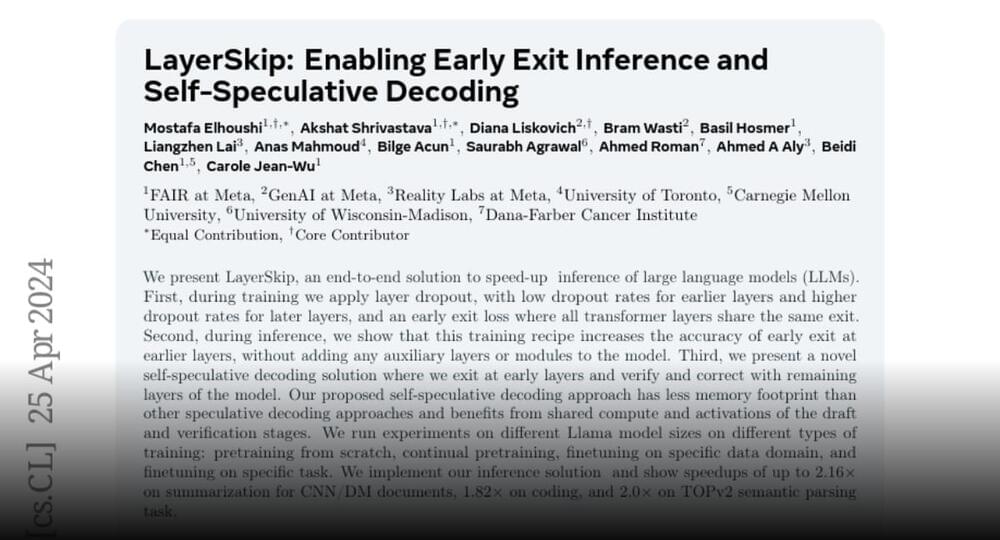
The “Second Law of Infodynamics” could prove it.