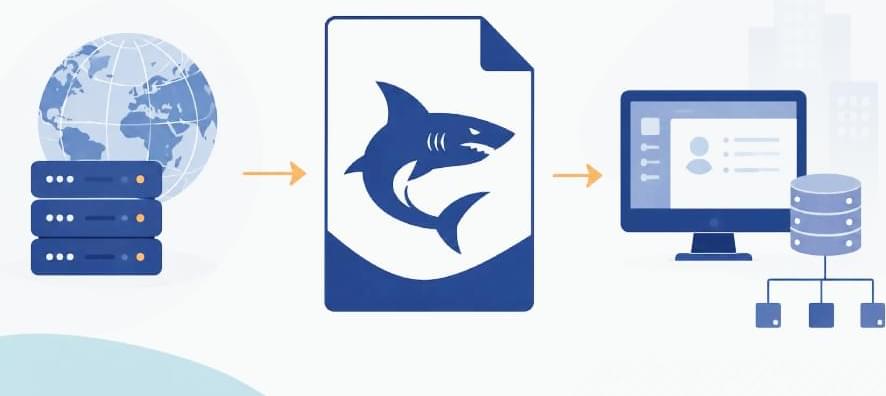
Kaspersky details StrikeShark, a likely Chinese-speaking campaign using SharkLoader, public CVE exploits, and droppers to deploy Cobalt Strike.


A newly discovered macOS malware dubbed “Gaslight” is designed to confuse AI-assisted malware analysis tools by hiding prompt injection strings and fake debugging data within the executable.
Cybersecurity researchers are increasingly using AI-powered tools to assist with malware analysis and reverse engineering.
The malware contains strings that attempt to gaslight AI-assisted analysis tools into believing there is an analysis error or other issue, potentially causing the tools to abort, truncate, or otherwise interfere with the analysis.

By Chuck Brooks, president of Brooks Consulting International and one of Executive Mosaic’s GovCon Experts
“Ushering in the Next Frontier of Quantum Innovation” and “Securing the Nation Against Advanced Cryptographic Attacks,” two Executive Orders issued by the White House on June 22, 2026, represent a clear, two-pronged approach to securing U.S. leadership in quantum technologies while guarding against the existential cybersecurity threats they pose. The National Quantum Strategy will be updated, strong quantum computers for science and defense will be developed more quickly (capabilities by 2028), quantum sensing and networking will be advanced, and a swift federal (and critical infrastructure) transition to post-quantum cryptography, or PQC, standards with aggressive timelines (high-value assets by 2030–2031) is required.

This strategy directly addresses the convergence of opportunities and risks that I have long highlighted: the urgent need to get ready for “Q-Day,” when large-scale quantum computers could crack existing public-key cryptography, and quantum computing as a transformative force for discovery, optimization and national competitiveness.

A coordinated law enforcement operation, in partnership with private sector companies, including Bitdefender, Bitsight, ESET, and Microsoft, has resulted in the takedown of criminal infrastructure powering Amadey and StealC.
“The main common goal was to disrupt the ‘assembly lines’ cybercriminals use to launch ransomware, financial fraud, and attacks on critical infrastructure,” Europol said in a statement.
The development comes days after authorities from the Netherlands, Canada, Germany, and the U.S. disrupted malicious infrastructure associated with SocGholish and cleaned up nearly 15,000 infected WordPress websites.

A malicious Microsoft Edge extension dubbed ‘Edgecution’ has been used in a ransomware attack to escape the browser sandbox and deploy a Python-based backdoor.
Access to the local system is obtained by leveraging the Chrome Native Messaging protocol that allows browser extensions to interact with native desktop applications, such as a password manager communicating with the extension to fill in web forms.
This allows the browser to launch the native application as a separate process and communicates with it over standard input/output data streams.
Further reading Thumbnail image credit: Figure AI
Text used in video and more:
AI Model Misbehavior in 2026: Scheming, Reward Hacking, and What Comes Next https://hatchworks.com/blog/gen-ai/ai… We Trust Embodied Agents? Exploring Backdoor Attacks against Embodied LLM-Based Decision-Making Systems https://openreview.net/forum?id=S1Bv3… BadRobot: Jailbreaking Embodied LLM Agents in the Physical World https://arxiv.org/html/2407.20242v5 AI Model Misbehavior in 2026: Scheming, Reward Hacking, and What Comes Next https://arxiv.org/html/2407.20242v5 Jailbreaking LLM-Controlled Robots https://arxiv.org/abs/2410.13691 LLM-Driven Robots Risk Enacting Discrimination, Violence, and Unlawful Actions https://arxiv.org/html/2406.08824v1 Inducing Bystander Interventions During Robot Abuse with Social Mechanisms https://ieeexplore.ieee.org/document/.… You might get offered promo codes if one of these delivery robots runs into you https://www.theverge.com/2024/9/19/24… Training Agents to Self-Report Misbehavior https://arxiv.org/html/2602.22303v1 Natural emergent misalignment from reward hacking in production RL https://arxiv.org/html/2511.18397v1 Long-horizon Embodied Planning with Implicit Logical Inference and Hallucination Mitigation https://arxiv.org/html/2409.15658v2 Deception Abilities Emerged in Large Language Models https://arxiv.org/abs/2307.16513 Robot in the mirror: toward an embodied computational model of mirror self-recognition https://arxiv.org/abs/2011.04485 Misleading text in the physical world can hijack AI-enabled robots, cybersecurity study shows https://news.ucsc.edu/2026/01/mislead… #science #explained #ai #artificialintelligence #robots #psychology #sentience #consciousness.
Can We Trust Embodied Agents? Exploring Backdoor Attacks against Embodied LLM-Based Decision-Making Systems https://openreview.net/forum?id=S1Bv3… BadRobot: Jailbreaking Embodied LLM Agents in the Physical World https://arxiv.org/html/2407.20242v5
AI Model Misbehavior in 2026: Scheming, Reward Hacking, and What Comes Next https://arxiv.org/html/2407.20242v5
Jailbreaking LLM-Controlled Robots https://arxiv.org/abs/2410.

A new macOS ClickFix campaign is using Terminal commands to silently download, mount, and launch info-stealing malware from malicious disk image (DMG) files.
The campaign is infecting Mac devices with the Atomic macOS Stealer (AMOS) infostealer, which steals browser credentials, cryptocurrency wallet data, Keychain data, messaging app information, and user documents.
Researchers at Palo Alto Networks Unit 42 first discovered the campaign and say it begins with a fake CAPTCHA page that tells users to open Terminal and paste a malicious command to verify themselves.