A clampdown on top U.S. AI is fueling concern that Washington is handing Beijing a cyberwarfare advantage.

AI can be used to prevent cybersecurity threats linked to ransomware, says University of Cincinnati researcher Nelly Elsayed.
“We are in a hype era of AI,” says Elsayed, associate professor in the UC School of Information Technology. “Some people support it, others fear it, but in general people who design technology are trying to use it for good.”
Elsayed, founder and leader of the Applied Machine Learning and Intelligence Lab at UC, recently published research in the Journal of Information Security and Applications, arguing that generative AI may be an ally in strengthening ransomware defense.
Quantum computing could transform medicine, cybersecurity, clean energy and countless other industries, with Ottawa playing a leading role in the technology’s development.
CTV’s Austin Lee reports that researchers at the University of Ottawa and local cybersecurity companies are helping prepare for the quantum era.
Experts say quantum computers will solve complex problems dramatically faster than today’s computers but could also threaten current encryption methods.
Ottawa-based companies are already developing quantum-safe cybersecurity technologies to protect future digital infrastructure.
Connect with CTV News:
For live updates and latest headlines visit: http://www.ctvnews.ca/
For breaking news, fast, download the CTV News App: https://www.ctvnews.ca/app.
Must-watch stories and full programs at http://www.ctvnews.ca/video.
CTV News on TikTok: https://www.tiktok.com/discover/CTV-News.
CTV News on X (formerly Twitter): / ctvnews.
CTV News on Reddit: / ctvnews.
CTV News on LinkedIn: / ctv-news.
–
CTV News is Canada’s most-watched news organization both locally and nationally, and has a network of national, international, and local news operations.
#QuantumComputing #Ottawa #CTVNewsOttawa #Cybersecurity #Technology #UniversityOfOttawa #Innovation #ArtificialIntelligence #ctvnews #ctvnationalnews #canadiannews
🚀 *Harvard says quantum computers are a decade ahead of schedule—and the evidence is arriving faster than anyone expected.* ⚛️
QuEra’s new roadmap, its partnership with Amazon Braket, and Harvard’s latest breakthroughs are reshaping the future of quantum computing. In this video, we break down why leading researchers now believe fault-tolerant quantum computers could arrive years earlier than predicted, what QuEra’s Libra system means, and how cloud-accessible quantum computing could transform industries like drug discovery, materials science, artificial intelligence, cybersecurity, and finance.
You’ll discover:
🔹 Why Harvard says the quantum timeline has accelerated by nearly a decade.
🔹 What QuEra’s 256 logical-qubit Libra system will actually do.
🔹 Why Amazon is betting on cloud-based fault-tolerant quantum computing by 2028
🔹 The difference between physical qubits and logical qubits.
🔹 How quantum error correction changed everything.
🔹 Why neutral-atom quantum computers are challenging IBM and Google.
🔹 The commercial race between QuEra, IBM, Microsoft, Quantinuum, and other quantum leaders.
🔹 What these breakthroughs mean for the future of encryption, AI, scientific research, and national security.
If you’re interested in quantum computing, emerging technologies, artificial intelligence, geopolitics, and the future of science, this channel brings you deeply researched, easy-to-understand explanations of the world’s biggest technological breakthroughs.
👍 If you enjoyed the video, don’t forget to *Like**, **Subscribe**, and **Turn On Notifications* so you never miss our latest updates on quantum technology and the future of computing.
#QuantumComputing #Harvard #QuEra #AmazonBraket #QuantumTechnology #ArtificialIntelligence #FutureTechnology #QuantumPhysics #LogicalQubits #QuantumAI #TechNews #Innovation #Science #EmergingTechnology #QuantumRevolution

From detecting pneumonia on a chest X-ray to assessing whether a dark spot on the skin is benign or malignant, medical AI systems are playing an increasingly important role in clinical diagnosis. Unfortunately, the models used to train these AI systems are often victims of cyberattacks, specifically membership inference attacks (MIAs), which can lead to people’s personal information being stolen or revealed.
In a recent study, researchers conducted a first-ever patient-level privacy audit to see how easily individual patients could be identified from the underlying data used to train medical AI models.
At first glance, an AI model may appear to protect everyone’s privacy equally well, but a closer look reveals a different story. Researchers found that attackers can identify certain individual patients with near-perfect accuracy, exposing a hidden unfairness in privacy.
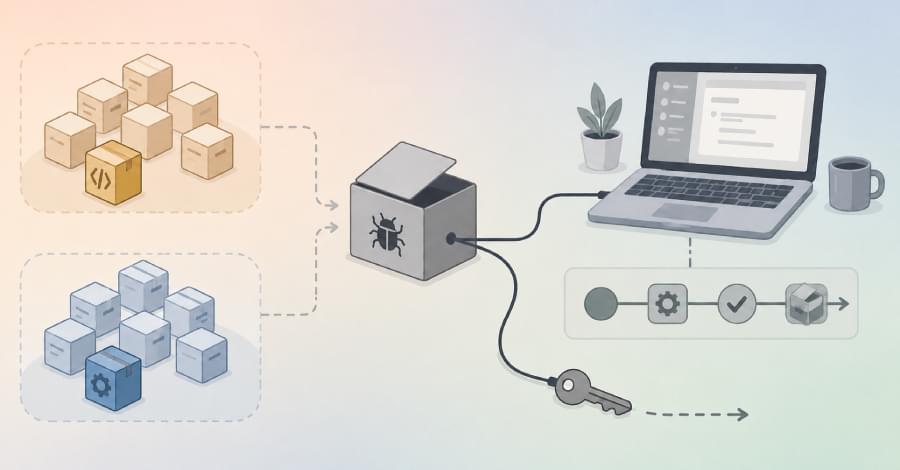
Cybersecurity researchers have flagged yet another evolution of the supply chain attack linked to the Mini Shai-Hulud, Miasma, and Hades malware family that has compromised a new set of npm packages, even as it has propagated to the Go ecosystem.
“The latest activity includes malicious npm releases affecting LeoPlatform and RStreams packages, GitHub Actions workflow abuse, and a related Go module compromise involving the Verana Blockchain project,” Socket said.
The end goal of the campaign, as before, is to harvest developer or maintainer credentials and weaponize the stolen data to spread across package registries, repositories, and trusted developer workflows.
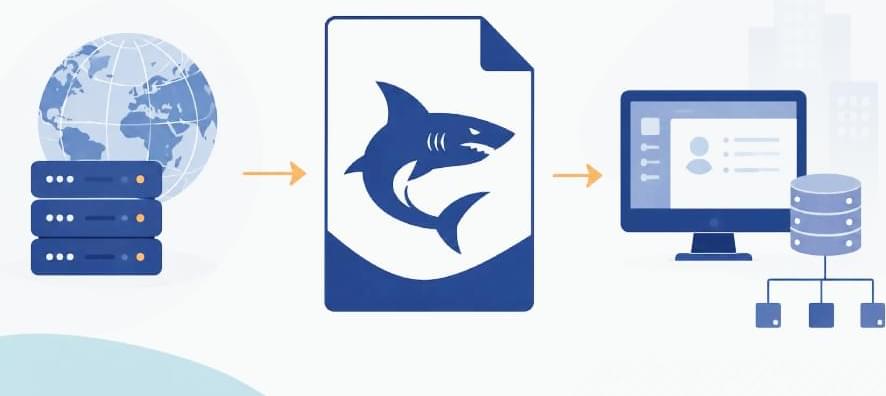
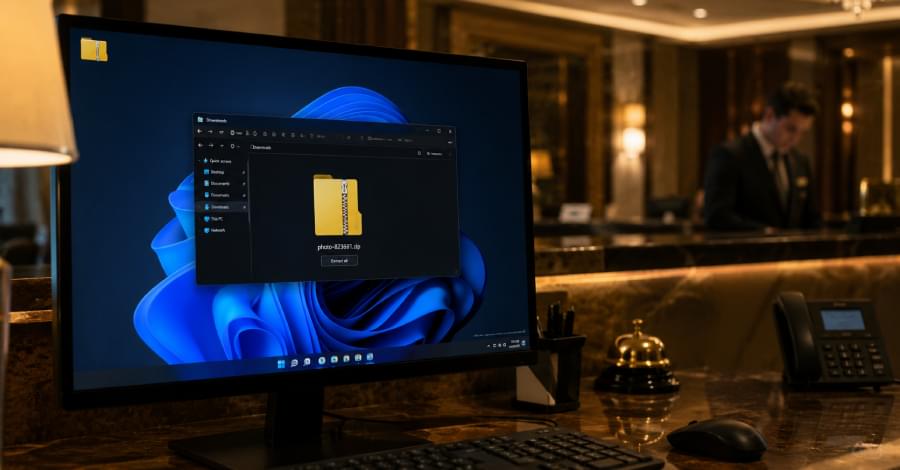
A newly discovered macOS malware dubbed “Gaslight” is designed to confuse AI-assisted malware analysis tools by hiding prompt injection strings and fake debugging data within the executable.
Cybersecurity researchers are increasingly using AI-powered tools to assist with malware analysis and reverse engineering.
The malware contains strings that attempt to gaslight AI-assisted analysis tools into believing there is an analysis error or other issue, potentially causing the tools to abort, truncate, or otherwise interfere with the analysis.

By Chuck Brooks, president of Brooks Consulting International and one of Executive Mosaic’s GovCon Experts
“Ushering in the Next Frontier of Quantum Innovation” and “Securing the Nation Against Advanced Cryptographic Attacks,” two Executive Orders issued by the White House on June 22, 2026, represent a clear, two-pronged approach to securing U.S. leadership in quantum technologies while guarding against the existential cybersecurity threats they pose. The National Quantum Strategy will be updated, strong quantum computers for science and defense will be developed more quickly (capabilities by 2028), quantum sensing and networking will be advanced, and a swift federal (and critical infrastructure) transition to post-quantum cryptography, or PQC, standards with aggressive timelines (high-value assets by 2030–2031) is required.

This strategy directly addresses the convergence of opportunities and risks that I have long highlighted: the urgent need to get ready for “Q-Day,” when large-scale quantum computers could crack existing public-key cryptography, and quantum computing as a transformative force for discovery, optimization and national competitiveness.