
Category: cybercrime/malcode – Page 17
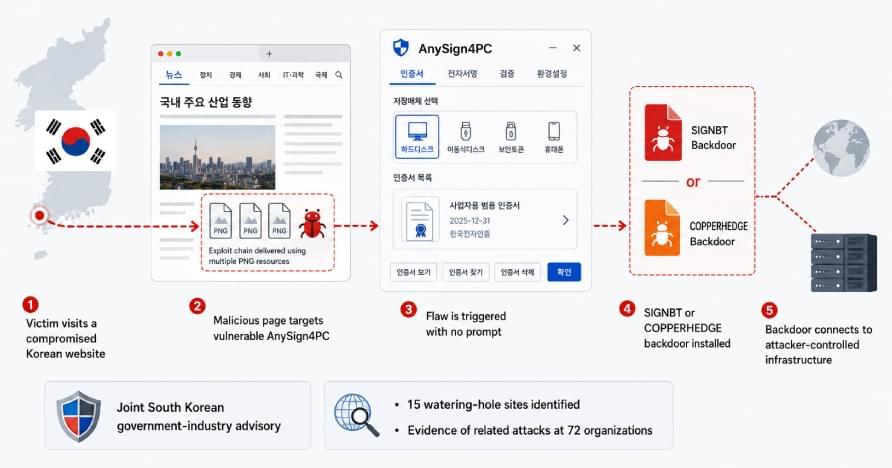
Hackers Exploit AnySign4PC via Hacked Korean Sites to Install Backdoors Without Prompts
South Korean authorities and four security firms have disclosed a state-sponsored campaign that compromised trusted domestic websites. The attackers used those sites to exploit locally installed financial-security software and infect targeted visitors with SIGNBT or COPPERHEDGE backdoors.
A compromised page could infect a system running a vulnerable AnySign4PC version without a prompt or user-initiated download. The Korea Internet & Security Agency (KISA) says AnySign4PC versions 1.1.4.4 through 1.1.4.6 are affected and lists version 1.1.5.0 as the fixed release. It recommends deleting vulnerable installations.
AhnLab refers to two exploited products only as financial-security software A and I. Its report does not disclose their identities, affected or fixed versions, or vulnerability identifiers.

Analog Devices discloses data breach, says operations unaffected
American semiconductor company Analog Devices announced that an unauthorized party accessed some of its systems and exfiltrated certain files.
The company detected the incident on June 23 and reacted by activating its incident response protocols to limit the breach. External cybersecurity experts have been contracted to assist with the containment and investigation activities.
Currently, there are no details about the type of data that has been compromised.

Google says AI helped Chrome fix 1,072 security bugs in two releases
Google says artificial intelligence is dramatically increasing the number of security vulnerabilities it can find and fix in Chrome, with more than 1,000 security bugs patched across the browser’s two most recent releases as it expands its use of AI.
According to Google, Chrome 149 and Chrome 150 fixed 1,072 security bugs, surpassing the total number fixed across the previous 23 Chrome milestones combined.
The company says it now uses large language models throughout the vulnerability management process, including discovering flaws, reproducing reports, determining severity, assigning bugs to developers, generating candidate patches, and creating tests.

Artificial Intelligence: The Definitive Primer for the Acceleration Era: Understanding AI, Technology Convergence, Cybersecurity, and the Future
Artificial intelligence is not simply another chapter in the history of technology. It is becoming the cognitive infrastructure of modern civilization. Like electricity transformed the Industrial Age and the Internet transformed the Information Age, AI will define the Intelligence Age. Its true power will not come from replacing people, but from amplifying human ingenuity through the convergence of computing, cybersecurity, robotics, quantum science, biotechnology, and human creativity. The future will belong to societies that innovate boldly, secure wisely, govern responsibly, and never lose sight of the fact that technology should ultimately serve humanity—not the other way around.

The US Robot Import Ban Doesn’t Stop China — It Redirects It
The FCC just banned new foreign-made humanoid robots and robot dogs, citing cybersecurity risks. With China holding ~85% of the global humanoid market, this is effectively a China ban.
But the ban only closes the US market. Chinese manufacturers’ production capacity and export ambition remain intact. The real result is intensified sales pressure on Southeast Asia, Africa, and other open markets — with more aggressive pricing and Robot-as-a-Service deals.
For buyers outside the US, this creates short-term opportunities… and the same data-dependency risks US regulators just cited as the reason for the ban.
Full analysis: [ https://creedtec.online/the-us-robot-import-ban-doesnt-stop-…irects-it/](https://creedtec.online/the-us-robot-import-ban-doesnt-stop-…irects-it/)
#HumanoidRobots #IndustrialRobotics #China #TradePolicy
The US import ban on Chinese robots may reshape global markets, redirecting exports toward Africa and Southeast Asia instead of stopping them.
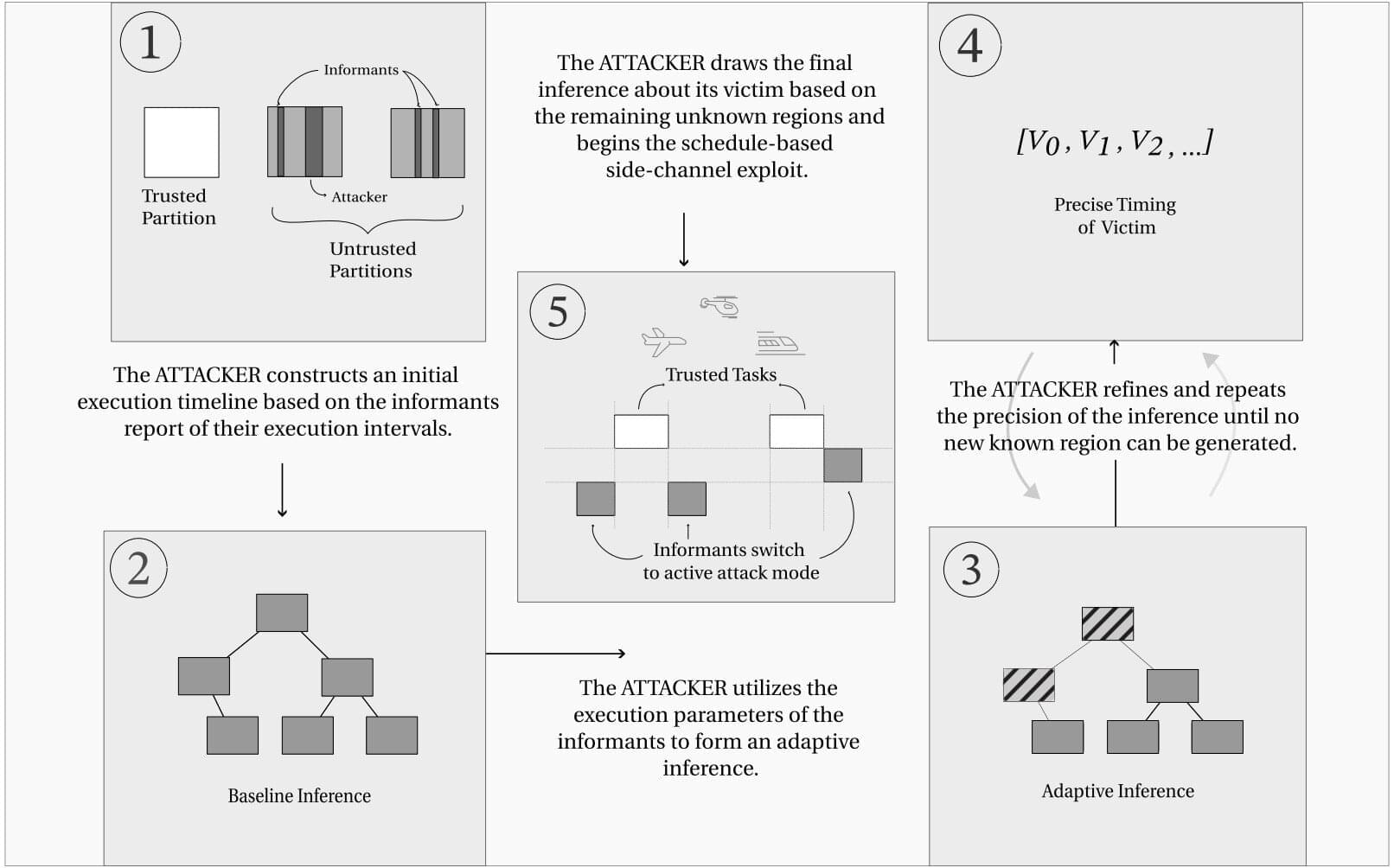
Computer scientists design a cyberattack to prevent cyberattacks
Protecting sensitive, precision-timed computing systems requires understanding the nature of cyberthreats. So researchers from Washington State University teamed up with experts at the University of Colorado Colorado Springs and Metro State University to design an attack—dubbed NosyNeighbor—that lurks on the sidelines of time- and safety-critical computer systems, “infers” what’s happening inside and adapts its malicious approach.
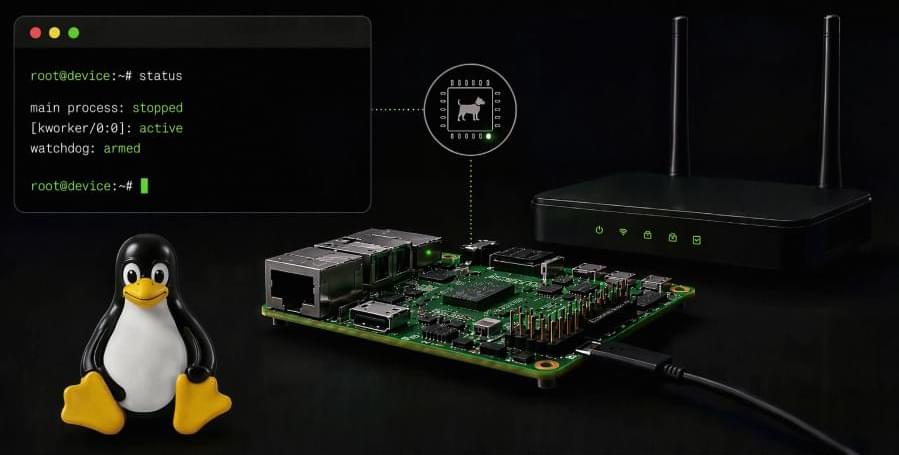

Nimbus Manticore Deploys NightLedger and Turns Victim Systems Into Covert Relays
The Iranian state-backed hacking group tracked as Nimbus Manticore (aka GalaxyGato, Mirage Kitten, Smoke Sandstorm, Subtle Snail, and UNC1549) has been attributed to a fresh set of attacks targeting entities across the Middle East, Africa, and South Asia.
The intrusions involve the use of a previously undocumented Windows backdoor called NightLedger and two custom WebSocket tunnelers, BridgeHead and ArcBridge, with an aim to maintain covert access.
Targets of the campaign include Egypt, SMB and government environments in Jordan and Tanzania, aviation organizations in Pakistan, telecommunication companies in Ethiopia, and financial-sector entities in Burkina Faso, per Kaspersky.

CubePilot drone software dev hit by DNS hijacking to intercept traffic
CubePilot, an Australian firm that designs flight controllers for drones (UAVs), announced a severe operational disruption caused by a DNS hijacking attack.
Hijacking domain name system (DNS) records allows threat actors to redirect users to their infrastructure, diverting traffic intended for a legitimate service. This exposes users to dangerous scenarios such as sensitive data interception, malware delivery, and phishing.
According to a status update published on CubePilot’s website, an attacker gained control of the cubepilot[.]org domain DNS settings on July 24, allowing them to intercept traffic intended for internal systems.