Toggle light / dark theme

New Observations Fit Neatly With String Theory, Physicists Find

🌏 Get NordVPN 2Y plan + 4 months extra here ➌ https://NordVPN.com/sabine It’s risk-free with Nord’s 30-day money-back guarantee! ✌

According to a growing body of data, dark energy is not constant. Instead, physicists claim, it’s slowly getting weaker. This has understandably shaken our understanding of the universe – this week, physicists show that the new data is compatible with string theory, and that the universe will eventually collapse. Let’s take a look.

Paper: https://arxiv.org/abs/2506.

This video comes with a quiz which you can take here: https://quizwithit.com/start_thequiz/.
 Check out my new quiz app ➜ http://quizwithit.com/ 📚 Buy my book ➜ https://amzn.to/3HSAWJW 💌 Support me on Donorbox ➜ https://donorbox.org/swtg 📝 Transcripts and written news on Substack ➜ https://sciencewtg.substack.com/ 👉 Transcript with links to references on Patreon ➜ / sabine đŸ“© Free weekly science newsletter ➜ https://sabinehossenfelder.com/newsle
 👂 Audio only podcast ➜ https://open.spotify.com/show/0MkNfXl
 🔗 Join this channel to get access to perks ➜ / @sabinehossenfelder #science #sciencenews #physics #stringtheory.

đŸ€“ Check out my new quiz app ➜ http://quizwithit.com/
📚 Buy my book ➜ https://amzn.to/3HSAWJW
💌 Support me on Donorbox ➜ https://donorbox.org/swtg.
📝 Transcripts and written news on Substack ➜ https://sciencewtg.substack.com/
👉 Transcript with links to references on Patreon ➜ / sabine.
đŸ“© Free weekly science newsletter ➜ https://sabinehossenfelder.com/newsle

👂 Audio only podcast ➜ https://open.spotify.com/show/0MkNfXl

🔗 Join this channel to get access to perks ➜
/ @sabinehossenfelder.

#science #sciencenews #physics #stringtheory

College of Science | researcher proposes first-time model that replaces dark energy and dark matter in explaining nature of the universe | The University of Alabama in Huntsville

Dr. Richard Lieu, a physics professor at The University of Alabama in Huntsville (UAH), a part of The University of Alabama System, has published a paper in the journal Classical and Quantum Gravity that proposes a universe built on steps of multiple singularities rather than the Big Bang alone to account for the expansion of the cosmos. The new model forgoes the need for either dark matter or dark energy as explanations for the universe’s acceleration and how structures like galaxies are generated.

The researcher’s work builds on an earlier model hypothesizing gravity can exist without mass that has garnered 41,000 reads and numerous citations since its publication in 2024.

Astronomers discover new type of supernova triggered by black hole-star interaction

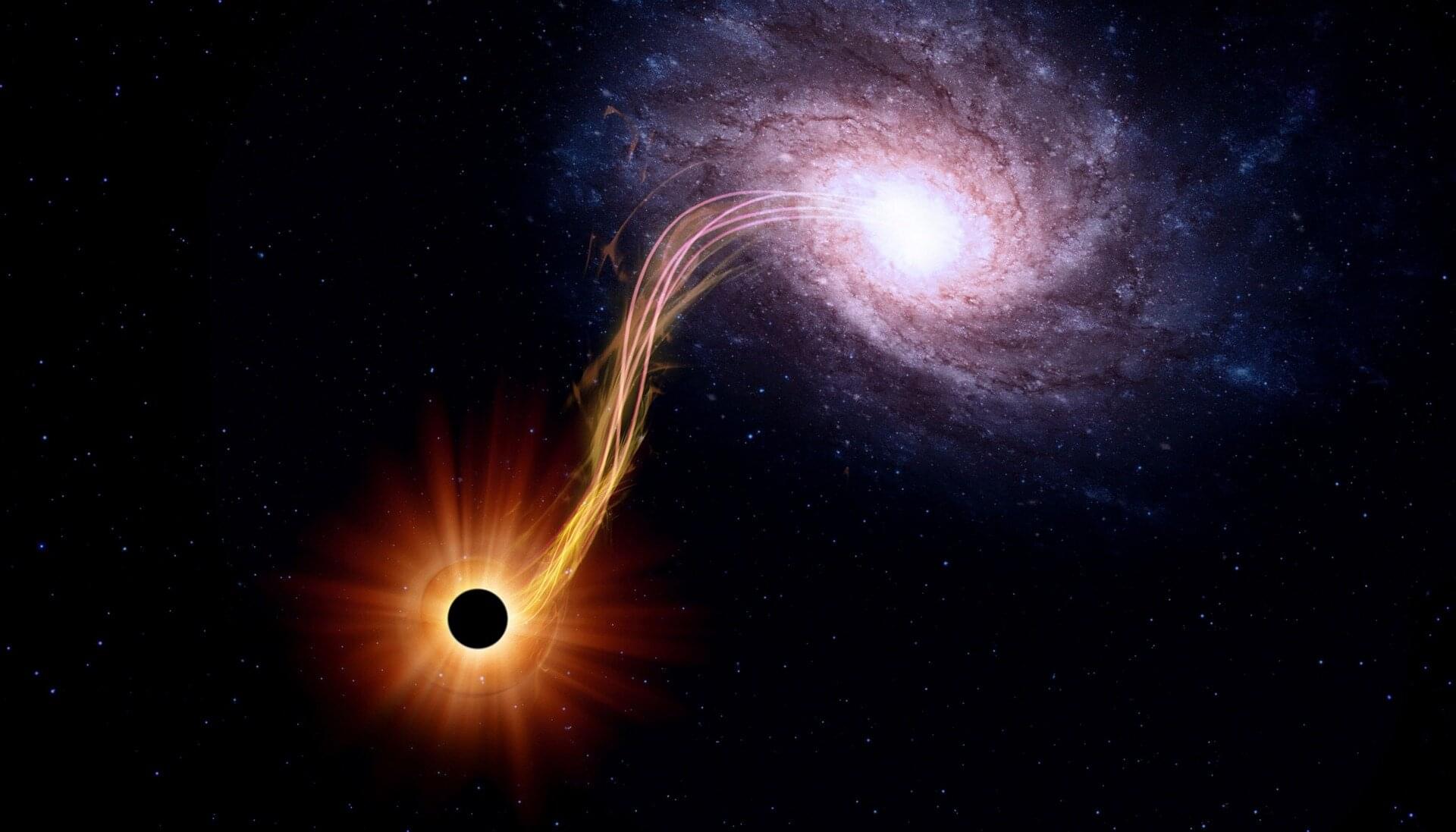
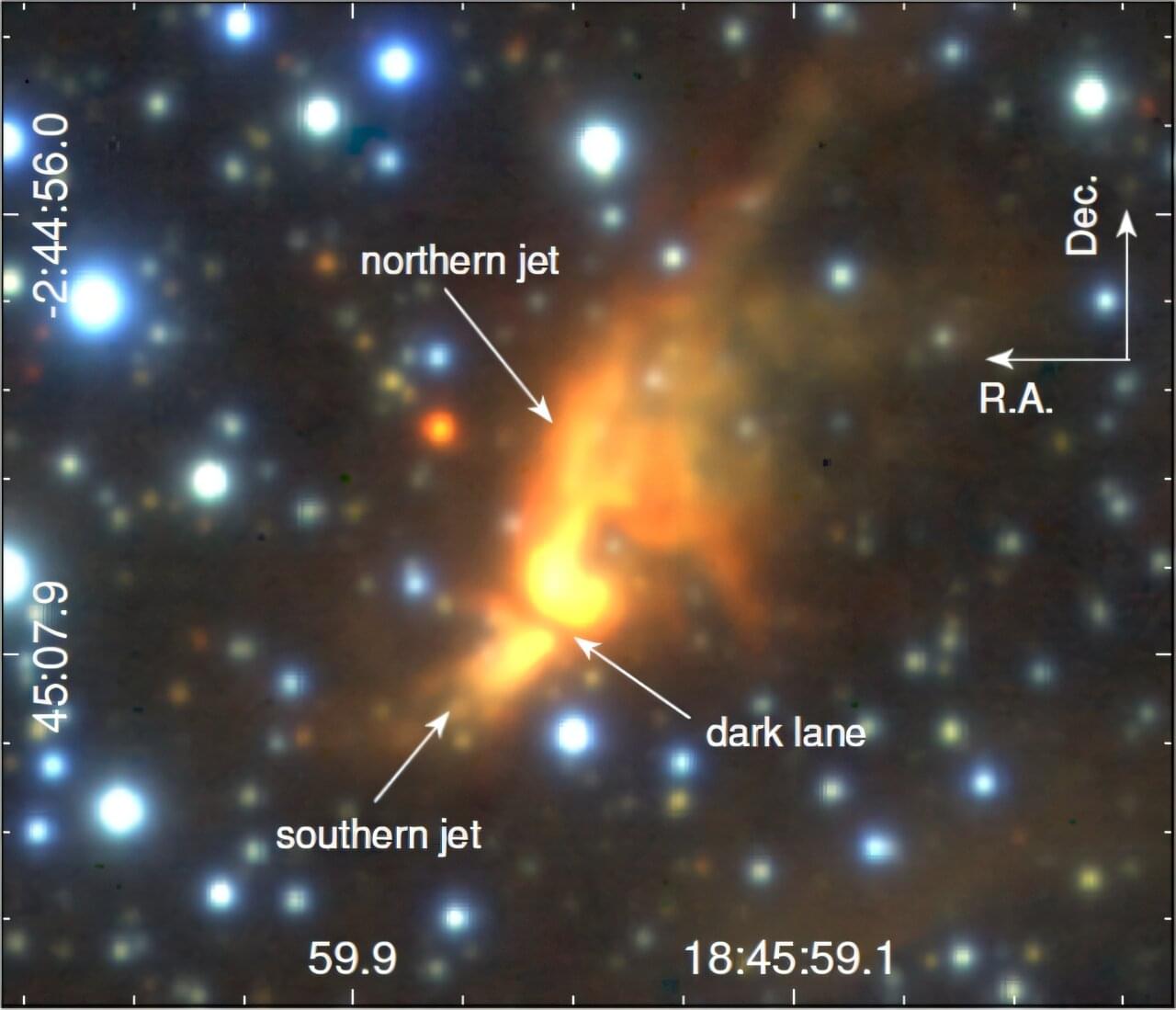
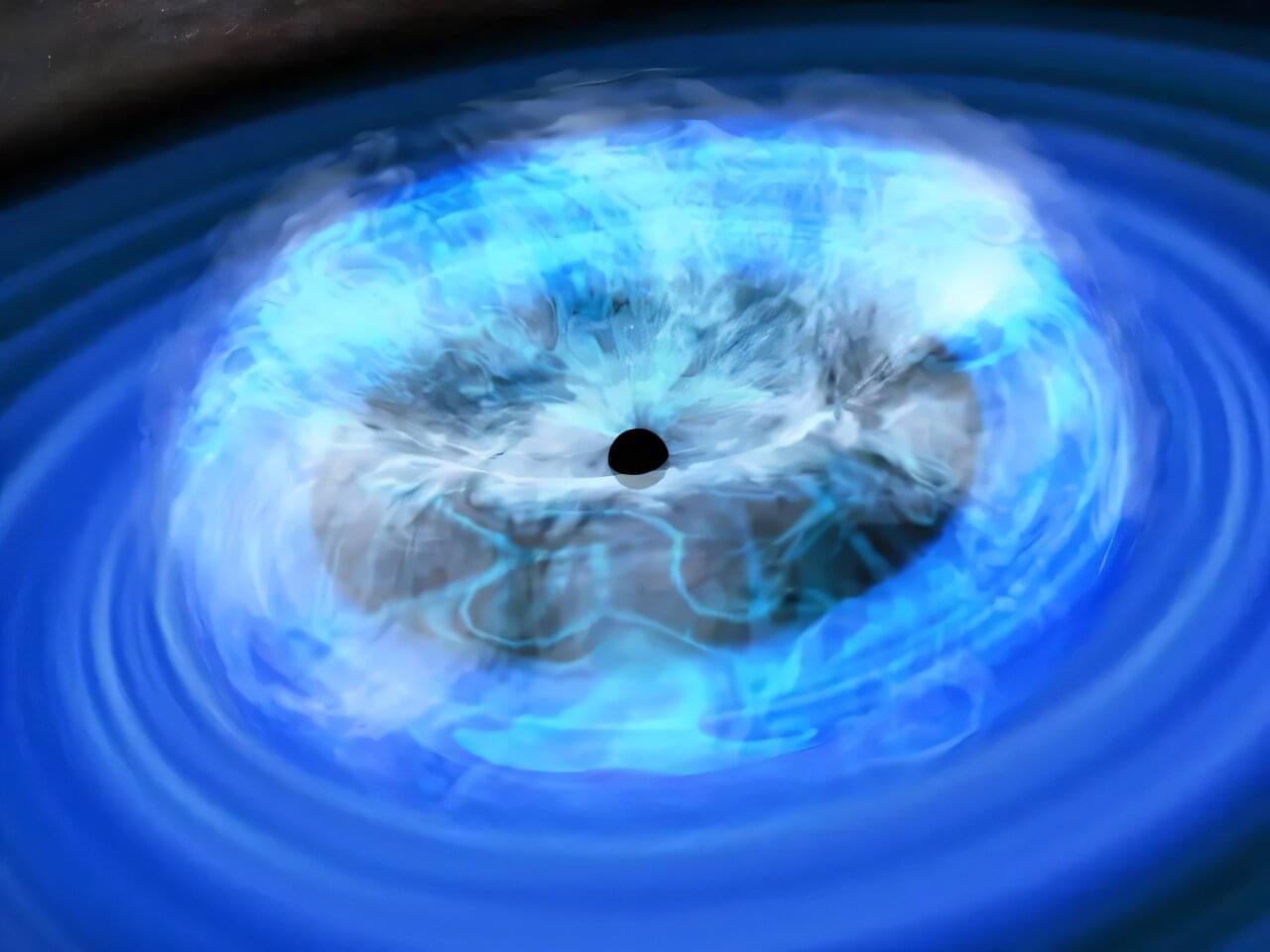
Astronomers have discovered what may be a massive star exploding while trying to swallow a black hole companion, offering an explanation for one of the strangest stellar explosions ever seen.

The discovery was made by a team led by the Center for Astrophysics | Harvard & Smithsonian (CfA) and the Massachusetts Institute of Technology (MIT) as part of the Young Supernova Experiment. The results are published in The Astrophysical Journal.

The blast, named SN 2023zkd, was first discovered in July 2023 by the Zwicky Transient Facility. A new AI algorithm designed to scan for unusual explosions in real time first detected the , and that early alert allowed astronomers to begin follow-up observations immediately—an essential step in capturing the full story of the explosion. By the time the explosion was over, it had been observed by a large set of telescopes, both on the ground and from space.

Star Trying to Swallow a Black Hole May Have Triggered a New Type of Supernova

In 2023, astronomers recorded one of the most extraordinary space explosions they had ever seen.

It took place some 750 million light-years away, flaring into the detectors of the Zwicky Transient Facility on 7 July. At first, it looked just like a normal supernova – the explosive death of a star – and astronomers named it SN 2023zkd.

Six months later, a search for cosmic anomalies flagged the explosion as a little odd. A look back at data collected since its initial discovery revealed SN 2023zkd had done something really weird: it brightened again.

Is There Evidence For a Vast Multiverse?

Learn More About Anydesk: https://anydesk.com/spacetime.

In 1987, Steven Weinberg wrote a cute little paper entitled “Anthropic Bound on the Cosmological Constant”. I say cute little paper because it feels minor in comparison to, say, electroweak unification theory that won him the Nobel Prize. Weinberg was foundational in establishing the standard model of particle physics, and represented an enormous leap in understanding how this universe works. But his little 1987 paper, though more obscure, may tell us something about how the multiverse works, and can even be thought of as evidence for the existence of an enormous number of other universes.

PBS Member Stations rely on viewers like you. To support your local station, go to: http://to.pbs.org/DonateSPACE

Sign Up on Patreon to get access to the Space Time Discord!
https://www.patreon.com/pbsspacetime.

Check out the Space Time Merch Store.
https://www.pbsspacetime.com/shop.

Sign up for the mailing list to get episode notifications and hear special announcements!

Scientists Now Propose that the Far Away Galaxies JWST Spotted Could be from Another Universe

Head to https://squarespace.com/territory to save 10% off your first purchase of a website or domain using code TERRITORY

Become a member today:
/ @territoryspace.

Some scientists now propose that our universe might have been born inside a massive black hole within a larger parent cosmos. In their model, the universe before ours followed the same laws of physics we know today, expanding for billions of years before gravity overcame that outward push. Space began to contract, galaxies moved closer, and the cosmos collapsed toward extreme densities. Instead of ending in a singularity where physics breaks down, quantum effects pushed back against gravity, halting the collapse and triggering a cosmic rebound. That bounce could have launched our own universe’s expansion, making the Big Bang not the true beginning, but a continuation.

This idea draws on the Pauli Exclusion Principle and degeneracy pressure, which in smaller-scale examples prevent white dwarfs and neutron stars from collapsing indefinitely. The same resistance, applied on a universe-wide scale, could stop total collapse inside a black hole. Simulations suggest such a process could occur without invoking exotic new particles or forces. In this framework, the formation of our universe is a purely gravitational event, governed by the physics we already understand, just operating under extreme conditions beyond what we have directly observed.

One striking prediction is that ancient relics from the parent universe could have survived the bounce. These might include primordial black holes or neutron stars that predate our own cosmos. If detected, especially in the early universe, they could serve as evidence that a cosmic bounce occurred. The James Webb Space Telescope’s discovery of unexpectedly massive galaxies soon after the Big Bang could align with this idea, as such galaxies may have formed more easily if early black holes were already present to seed them.

Recent JWST findings on how galaxies spin across the universe may also fit the model. If confirmed, these patterns could point toward a shared origin and support the possibility that we live inside a black hole. While the concept remains controversial, it offers a potential bridge between general relativity and quantum mechanics, challenging the assumption that singularities are inevitable and suggesting that the life cycle of universes may be far more connected than we thought.

/* */