Toggle light / dark theme

With open data, scientists share their work

Cranmer is a member of ATLAS, one of the two general-purpose experiments that, among other things, co-discovered the Higgs boson at the Large Hadron Collider at CERN. He and other CERN researchers recently published a letter in Nature Physics titled “Open is not enough,” which shares lessons learned about providing open data in high-energy physics. The CERN Open Data Portal, which facilitates public access of datasets from CERN experiments, now contains more than two petabytes of information.


It could be said that astronomy, one of the oldest sciences, was one of the first fields to have open data. The open records of Chinese astronomers from 1054 A.D. allowed astronomer Carlo Otto Lampland to identify the Crab Nebula as the remnant of a supernova in 1921. In 1705 Edward Halley used the previous observations of Johannes Kepler and Petrus Apianus—who did their work before Halley was old enough to use a telescope—to deduce the orbit of his eponymous comet.

In science, making data open means making available, free of charge, the observations or other information collected in a scientific study for the purpose of allowing other researchers to examine it for themselves, either to verify it or to conduct new analyses.

Scientists continue to use open data to make new discoveries today. In 2010, a team of scientists led by Professor Doug Finkbeiner at Harvard University found vast gamma-ray bubbles above and below the Milky Way. The accomplishment was compared to the discovery of a new continent on Earth. The scientists didn’t find the bubbles by making their own observations; they did it by analyzing publicly available data from the Fermi Gamma Ray Telescope.

“Qutrit”: Complex quantum teleportation achieved for first time

Researchers from the Austrian Academy of Sciences and the University of Vienna have experimentally demonstrated what was previously only a theoretical possibility. Together with quantum physicists from the University of Science and Technology of China, they have succeeded in teleporting complex high-dimensional quantum states. The research teams report this international first in the journal “Physical Review Letters”.

In their study, the researchers teleported the quantum state of one photon (light particle) to another distant one. Previously, only two-level states (“qubits”) had been transmitted, i.e., information with values “0” or “1”. However, the scientists succeeded in teleporting a three-level state, a so-called “qutrit”. In quantum physics, unlike in classical computer science, “0” and “1” are not an ‘either/or’ – both simultaneously, or anything in between, is also possible. The Austrian-Chinese team has now demonstrated this in practice with a third possibility “2”.

Novel experimental method.

Newly Discovered State of Matter Could Vastly Enhance Computing

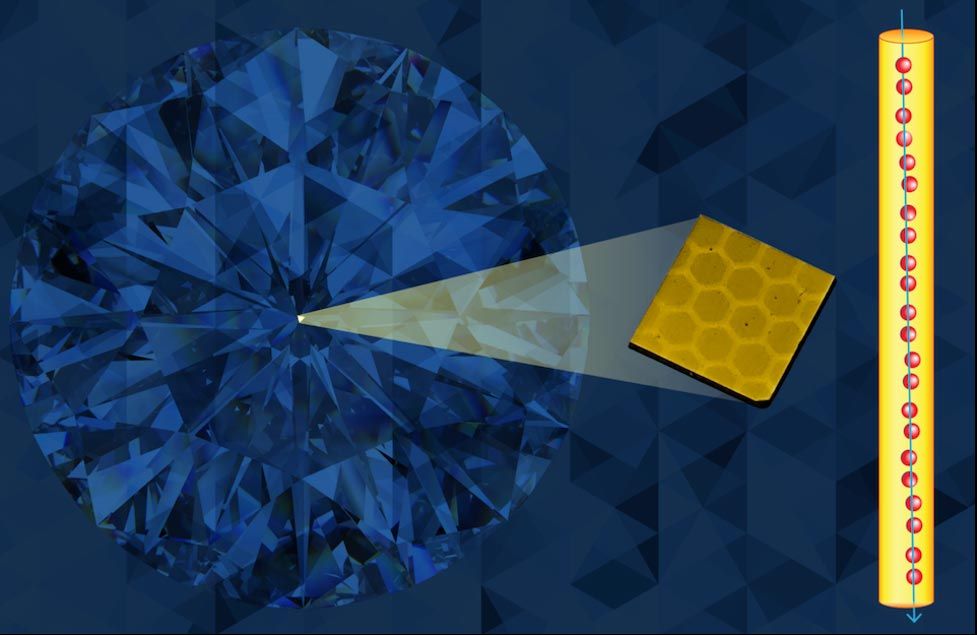
A team of physicists claims to have discovered a new state of matter — a breakthrough that could vastly improve traditional as well as quantum computing.

The new state, called “topological superconductivity,” could help to increase storage capabilities in electronic devices and enhance quantum computing.

RELATED: ‘QUTRIT’ EXPERIMENTS SHOW PROGRESS IN QUANTUM TELEPORTATION

A wireless body area sensor network based on stretchable passive tags

Stanford engineers have developed a new type of wearable technology called BodyNet that detects physiological signals emanating from the skin. The novel tech consists of wireless sensors that stick like band-aids and beam readings.


A body area sensor network (bodyNET) is a collection of networked sensors that can be used to monitor human physiological signals. For its application in next-generation personalized healthcare systems, seamless hybridization of stretchable on-skin sensors and rigid silicon readout circuits is required. Here, we report a bodyNET composed of chip-free and battery-free stretchable on-skin sensor tags that are wirelessly linked to flexible readout circuits attached to textiles. Our design offers a conformal skin-mimicking interface by removing all direct contacts between rigid components and the human body. Therefore, this design addresses the mechanical incompatibility issue between soft on-skin devices and rigid high-performance silicon electronics. Additionally, we introduce an unconventional radiofrequency identification technology where wireless sensors are deliberately detuned to increase the tolerance of strain-induced changes in electronic properties. Finally, we show that our soft bodyNET system can be used to simultaneously and continuously analyse a person’s pulse, breath and body movement.

Solid State Cooling

US based Phononic’s thermoelectric technology is proving truly disruptive in the usually staid world of cooling technology.

When it comes to cooling technologies it’s fair to say that not a lot has changed in the past 100 years. Today, however, Phononic, a US company based in North Carolina, is using solid-state microchips to reinvent how devices are cooled.

“Over the past 50 years, semiconductors have totally transformed areas as diverse as data, communications, solar power and LED lighting,” says Alex Guichard, senior products marketing manager, Phononic. “Today, we’re using thermoelectric coolers to offer a radical alternative to traditional forms of cooling technology.”

What You Need To Know First About The Inexplicable World Of Quantum Computing

Down the road

The end game for quantum computing is a fully functional, universal fault-tolerant gate computer. To fulfill its promise, it needs thousands, maybe even millions, of qubits that can run arbitrary quantum algorithms and solve extremely complex problems and simulations.

Before we can build a quantum machine like that, we have a lot of development work to be done. In general terms, we need:

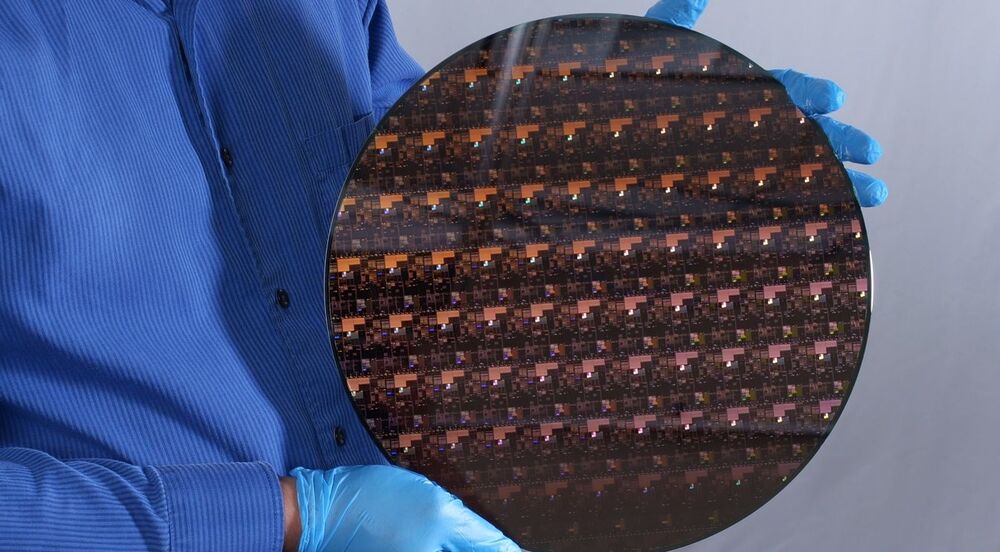
Researchers build a heat shield just 10 atoms thick to protect electronic devices

Excess heat given off by smartphones, laptops and other electronic devices can be annoying, but beyond that it contributes to malfunctions and, in extreme cases, can even cause lithium batteries to explode.

To guard against such ills, engineers often insert glass, plastic or even layers of air as insulation to prevent heat-generating components like microprocessors from causing damage or discomforting users.

Now, Stanford researchers have shown that a few layers of atomically , stacked like sheets of paper atop hot spots, can provide the same insulation as a sheet of glass 100 times thicker. In the near term, thinner heat shields will enable engineers to make even more compact than those we have today, said Eric Pop, professor of electrical engineering and senior author of a paper published Aug. 16 in Science Advances.

How will quantum computing change the world? | The Economist

The potential for quantum computing to crack other countries’ encrypted networks has captured the attention of national governments. Which of the world’s fundamental challenges could be solved by quantum computing?

Click here to subscribe to The Economist on YouTube: https://econ.st/2xvTKdy

For more from Economist Films visit: http://films.economist.com/
Check out The Economist’s full video catalogue: http://econ.st/20IehQk
Like The Economist on Facebook: https://www.facebook.com/TheEconomist/
Follow The Economist on Twitter: https://twitter.com/theeconomist
Follow us on Instagram: https://www.instagram.com/theeconomist/
Follow us on Medium: https://medium.com/@the_economist

U.S. Army Troops to Get New Sci-Fi Helmet

Essentially you could use the body and a computer even modify and enhance the processes even modify the wetware making things stronger and faster. Essentially like master chief from the halo series.


The U.S. Army is testing a new helmet designed to offer full ballistic protection to a soldier’s entire head. Looking like something out of Starship Troopers, the Integrated Head Protection System (IHPS) protects a soldier’s entire head, including for the first time the face and jaw, from injury. The helmet, developed by 3M subsidiary Ceradyne Systems, is scheduled to head to the troops next year.

Researchers Have Built The Most Complex Light-Based Quantum Computer Chip Ever

In a world-first, researchers have created a quantum chip that contains four entangled particles of light, known as photons, and is capable of performing actions over hundreds of channels simultaneously.

Or to put that into context, they’ve come closer than ever before to building a chip that’s similar to the ones in our smartphones and computers, but that has the potential to perform exponentially more calculations, and can process data at the speed of light. Sounds good, right?

“This represents an unprecedented level of sophistication in generating entangled photons on a chip,” said co-lead researcher David Moss, from Swinburne University of Technology in Australia.

/* */