Kyle Vanhemert | WIRED
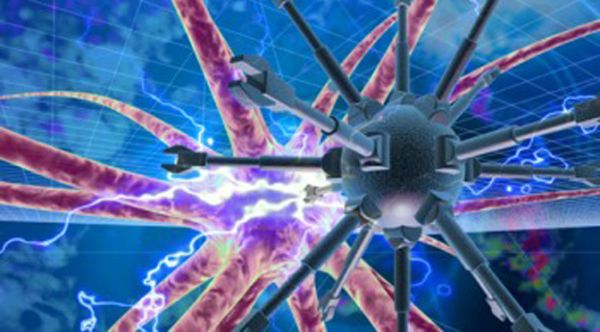
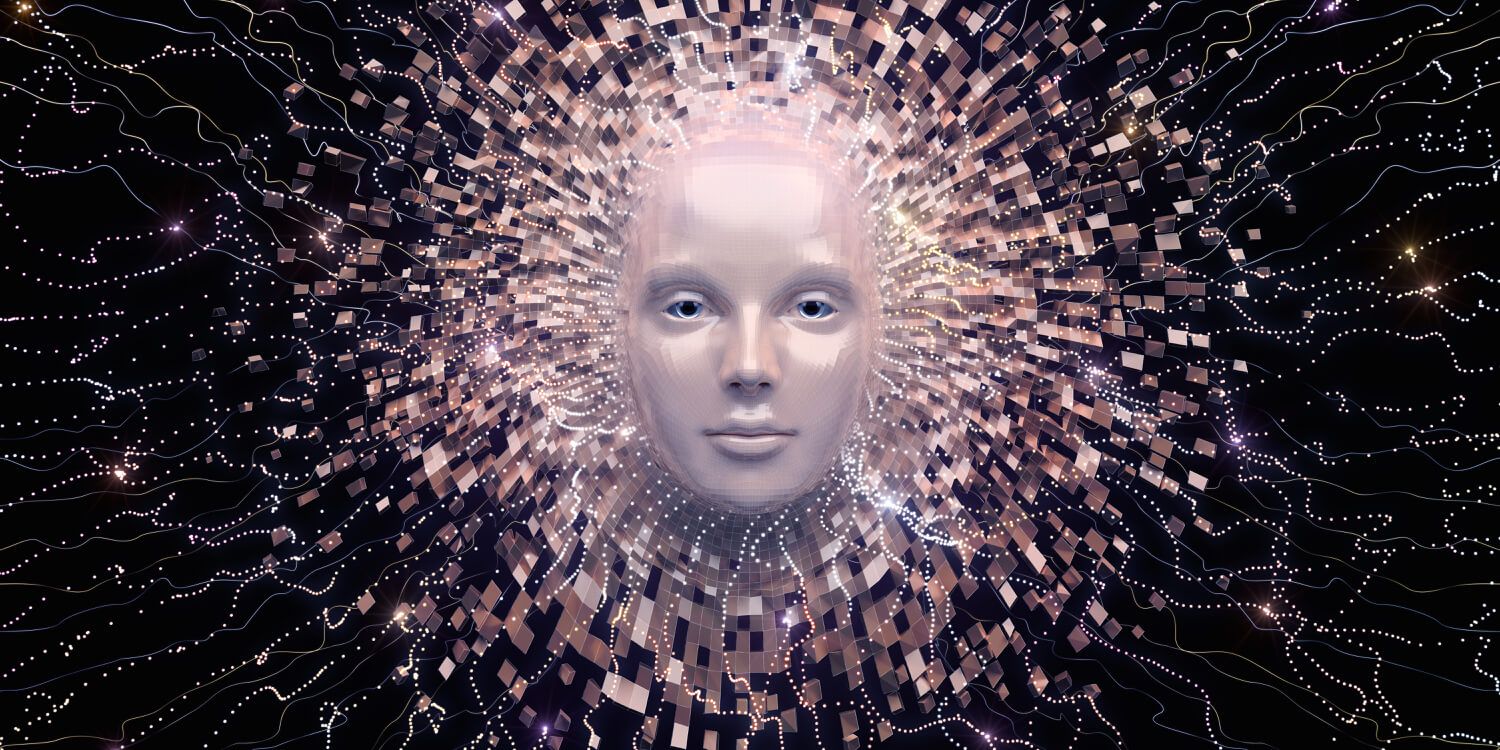
“Your computer isn’t a person, but as psychological studies have shown, you often can’t help but treat it like a one. “ Read more
Kyle Vanhemert | WIRED
“Your computer isn’t a person, but as psychological studies have shown, you often can’t help but treat it like a one. “ Read more
Tom Simonite | Technology Review
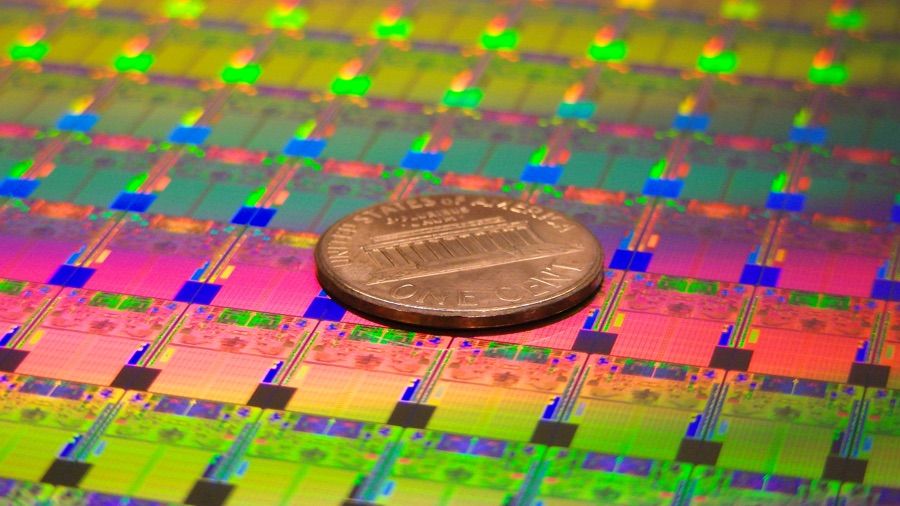
“Nearly three-quarters of the people in HP’s research division are now dedicated to a single project: a powerful new kind of computer known as ‘the Machine.’ It would fundamentally redesign the way computers function, making them simpler and more powerful. If it works, the project could dramatically upgrade everything from servers to smartphones—and save HP itself.”
- Press release by our partner ”Risk Evaluation Forum” emphasizing on renewed particle collider risk: http://www.risk-evaluation-forum.org/newsbg.pdf
- Study concluding that “Mini Black Holes” could be created at planned LHC energies: http://phys.org/news/2015-03-mini-black-holes-lhc-parallel.html
- New paper by Dr. Thomas B. Kerwick on lacking safety argument by CERN: http://vixra.org/abs/1503.0066
By Richard Moss — GizmagScientists have been working since 2008 to develop technology based on memristors (short for memory resistors), which promise computers that need never boot up and function more akin to the human brain – like neurons, they can retain information and perform logic operations. Now scientists at Northwestern University have made a new breakthrough that may make possible brain-like computing capabilities.
Memristors are considered exciting for more than their potential to create brain-like computers. Unlike flash memory, they’re fast. Unlike random access memory (RAM), they remember their state – whatever information they held – when they lose power. They also require less energy to operate, rarely crash, and are immune to radiation. The trouble is that they are two-terminal electronic devices, which results in them being tunable only through changes in the voltage applied externally. Read more
— Gizmodo
Quantum computers—theoretical machines which can process certain large and difficult problems exponentially faster than classical computers—have been a mainstay of science fiction for decades. But actually building one has proven incredibly challenging.
A group of researchers at Aarhus University believes the secret to creating a quantum computer lies in understanding human cognition. So, they’ve built computer games to study us, first.
Larry Hardesty | MIT News OfficeResearchers at the MIT Media Laboratory are developing a system that enables young children to program interactive robots by affixing stickers to laminated sheets of paper.
Not only could the system introduce children to programming principles, but it could also serve as a research tool, to help determine which computational concepts children can grasp at what ages, and how interactive robots can best be integrated into educational curricula.Read more
Quoted: “Ethereum’s developers believe their project will lead to the proliferation of programs they call “smart contracts,” in which the terms of an agreement are written in code and enforced by software. These smart contracts could carry out the instructions of a complex algorithm based on data feed—such as a stock ticker. They could facilitate practically any financial transaction, such as holding money in escrow or dispersing micropayments among autonomous machines. They could be used to create a peer-to-peer gambling network, a peer-to-peer stock trading platform, a peer-to-peer social network, a prenuptial agreement, a will, a standard agreement to split a dinner check, or a public registry for keeping track of who owns what land in a city.
Gupta predicts that these smart contracts will be so cheap and versatile that they’ll do “a lot of things that today we do informally,” and take on a lot of the “donkey work of running a society.””
Read the article here > http://reason.com/blog/2015/03/19/here-comes-ethereum-an-information-techn
Davey Alba — Wired
A little while back, we started to hear a few voices speaking up against the drumbeat of doom. No, PCs weren’t dead. They were maybe even coming back.
Well, they’re not.
Market research outfit IDC has revised its prediction of PC shipments in 2015 downward. It’s projecting a drop of nearly 5 percent this year, worse than its earlier forecast of a 3.3 percent decline. In all, IDC expects 293.1 million PC units to ship this year.
Read more
Quoted: “The decentralized Sapience AIFX project has developed a distributed artificial intelligence system running on a cryptocurrency network. In addition, the project has implemented the first distributed database platform running entirely over the bitcoin peer-to-peer protocol, built on top of a distributed hash table with redundancy, resiliency, and multi-dimensional trie-based indexing. These technologies are the first core pieces in the Sapience AIFX platform strategy to be the market leader in the consumerization of the blockchain.
The project has implemented the first in-wallet interactive Lua shell, bringing developers unprecedented capabilities to build solutions leveraging the blockchain, multi-layer perceptron networks, and distributed data storage. The possibilities span from algorithmic trading tools to bioinformatics and data mining, and the traditional applications of deep learning.”
Read more here > http://www.pressreleaserocket.net/first-cryptocurrency-to-ut…in/104609/