Toggle light / dark theme

Pong Prodigy: “Hydrogel Brain” Defies Expectations With Deep Learning

Researchers have developed a hydrogel that can learn to play the game Pong, demonstrating that even simple materials can exhibit adaptive behaviors akin to those seen in living systems.

The study, led by Dr. Yoshikatsu Hayashi from the University of Reading, also revealed that similar hydrogels could mimic cardiac tissue, potentially offering new avenues for studying heart arrhythmias and reducing animal testing in medical research.

“Hydrogel Brain” Learns To Play Pong

Over a Hundred Times Smaller Than the Width of a Hair — Revolutionary Tiny Sensor Reveals Hidden Neuron Activity

Rice University researchers have developed a new implantable sensor, spinalNET, capable of recording the electrical activity of spinal neurons in freely moving subjects. This breakthrough could help unlock the complexities of how spinal neurons process sensory and motor functions, potentially leading to better treatments for spinal cord diseases and injuries.

Implantable technologies have significantly improved our ability to study and even modulate the activity of neurons in the brain. However, neurons in the spinal cord are harder to study in action.

“If we understood exactly how neurons in the spinal cord process sensation and control movement, we could develop better treatments for spinal cord disease and injury,” said Yu Wu, a research scientist who is part of a team of Rice University neuroengineers working on a solution to this problem.

Research Reveals Potential Target for Immune Diseases

Research that began with a patient-driven discovery in the lab of YSM’s Carrie Lucas, PhD, could help in fighting autoimmune diseases.

Writing in Nature Immunology, Lucas and colleagues identify a signaling molecule found in immune cells that could be a target for future treatments.


A medical mystery served as the genesis for a Yale-led study that has promising implications for treating a range of autoimmune diseases.

A young girl entered the clinic suffering from blood cell abnormalities, difficulty breathing, and later, diarrhea. She also had been diagnosed with recurrent infections due to low levels of antibody production. Her doctors treated her with corticosteroids to reduce her lung and gut inflammation and immunoglobulin replacement therapy to restore her antibody levels.

Queensland Scientists Identify New DNA Regulation Mechanism

University of Queensland researchers have discovered a mechanism in DNA that regulates how disease-causing mutations are inherited.

Dr Anne Hahn and Associate Professor Steven Zuryn from UQ’s Queensland Brain Institute said the findings could provide a promising therapeutic avenue to stop the onset of heritable and age-related diseases.

“Mitochondrial DNA is essential for cell function,” Dr Hahn said.

For first time, DNA tech offers both data storage and computing functions

Researchers from North Carolina State University and Johns Hopkins University have demonstrated a technology capable of a suite of data storage and computing functions—repeatedly storing, retrieving, computing, erasing or rewriting data—that uses DNA rather than conventional electronics. Previous DNA data storage and computing technologies could complete some but not all of these tasks.

Mitigating Spaceflight Vision Risks: The Role of Portable Ultrasound in Polaris Dawn

Dr. Matt Lyon, MD: “We are not entirely sure what causes these issues with vision, but we suspect it has to do with a shift in cerebrospinal fluid in the optic nerve sheath. On Earth, gravity pushes that fluid down and it drains out, but in space, it floats up and presses against the optic nerve and retina.”


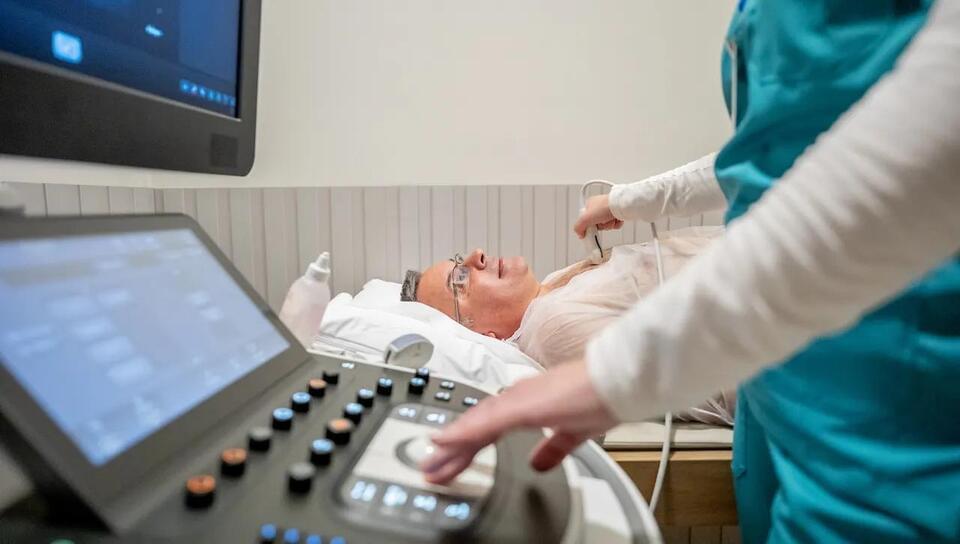
How does spaceflight affect vision loss in astronauts for both the short and long term? This is what a combined effort between the upcoming Polaris Dawn mission and the Medical College of Georgia (MCG) at Augusta University hopes to achieve as the four-person crew will be using a portable ultrasound machine to study changes in vision during spaceflight. This is especially prevalent since the four-person crew will be traveling in an elliptical orbit 870 miles above the Earth’s surface, exposing them to the Van Allen radiation belt, which is a highly radiated region of space between the Earth and the Moon.

For context, the International Space Station orbits approximately 250 miles above the Earth, and this research holds the potential to further explore the effects of space radiation on the human body, and specifically vision loss.

This study comes as 70 percent of astronauts have been found to suffer from Spaceflight Associated Neuro-Ocular Syndrome (SANS), which is associated with changes within the brain from fluids shifting during spaceflight. Additionally, with NASA planning on sending humans back to the Moon in the next few years, better understanding these changes could help scientists develop ways to combat them, as well.

/* */