Toggle light / dark theme

How a tiny RNA molecule in the kidney triggers a deadly autoimmune disease

Researchers at the University Hospital Bonn (UKB) and the University of Bonn have discovered how a small, naturally occurring RNA molecule in the kidney activates a mutated immune receptor, triggering a chain reaction.

In cooperation with Nanyang Technological University Singapore and the University Hospital Würzburg, among others, the study provides an explanation of how a in the immune receptor RIG-I transforms the body’s defense system into a self-destructive force and causes severe organ-specific autoimmune diseases.

The results have been published in the journal Science Immunology.

A gene from 100-year-olds could help kids who age too fast

Scientists have uncovered a breakthrough in the fight against a rare genetic condition that causes children to age much faster than normal. The discovery involves “longevity genes” found in people who live exceptionally long lives, often beyond 100 years. Researchers from the University of Bristol and IRCCS MultiMedica found that these genes, which help maintain the health of the heart and blood vessels during aging, could reverse some of the damage caused by this devastating disease.

The study, published in Signal Transduction and Targeted Therapy, is the first to show that a gene from long-lived individuals can slow down heart aging in a model of Progeria. Known scientifically as Hutchinson-Gilford Progeria Syndrome (HGPS), this rare and fatal disorder causes children to exhibit signs of “accelerated aging.”

Progeria stems from a mutation in the LMNA gene, which leads to the creation of a harmful protein called progerin. This protein disrupts normal cell function, particularly in the heart and blood vessels. Most affected children die in their teenage years from heart complications, though some, like Sammy Basso — the oldest known person with Progeria — live longer. Sammy passed away on October 24, 2024, at the age of 28.
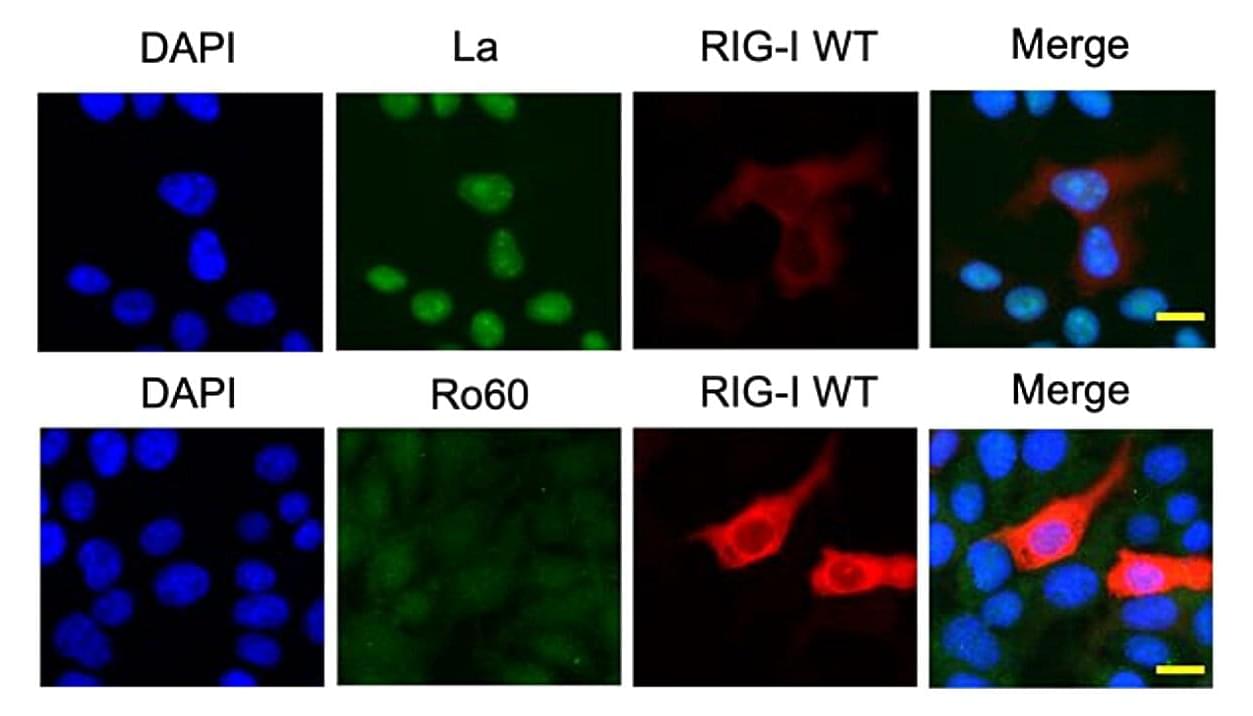
Artificial muscles use ultrasound-activated microbubbles to move

Researchers at ETH Zurich have developed artificial muscles that contain microbubbles and can be controlled with ultrasound. In the future, these muscles could be deployed in technical and medical settings as gripper arms, tissue patches, targeted drug delivery, or robots.

It might look like a simple material experiment at first glance, as a brief ultrasound stimulation induces a thin strip of silicone to start bending and arching. But that’s just the beginning. A team led by Daniel Ahmed, Professor of Acoustic Robotics for Life Sciences and Healthcare, has developed a new class of : flexible membranes that respond to ultrasound with the help of thousands of microbubbles.

The work is published in the journal Nature.

Rare lost allele that boosts soybean seed protein identified

A research team led by Prof. Hou Xingliang from the South China Botanical Garden of the Chinese Academy of Sciences has used genome-wide association studies (GWAS) to identify a rare allele that controls seed protein content and was lost during soybean domestication.

Their findings were published in the Proceedings of the National Academy of Sciences on Oct. 30.

Domesticating into crops represents a breakthrough in human history, yet key beneficial traits are often lost in the process. Soybeans are a good example. Modern soybean cultivars have lower seed protein content (30%–40%) than their wild ancestors, wild soybeans (Glycine soja), which typically contain 50%–60% protein. Since soybeans (Glycine max [L.] Merr.) are the primary source of plant-based protein for both and , increasing seed protein content is a critical goal for .

How just minutes of running can supercharge your health

Interval running condenses the powerful effects of regular running into shorter, high-intensity bursts. Research shows it can improve cardiovascular health, regulate blood sugar, and reduce body fat more effectively than longer steady runs. Just a few short sprints per session can deliver major fitness gains.

Running offers a wide range of advantages for both body and mind. It can protect against disease, improve mood, and even slow down the body’s natural aging process.

Yet about 31% of adults still don’t get enough physical activity, including running. The most common reason people give is simple — they don’t have enough time.