Toggle light / dark theme

Synthetic, shelf-stable blood developed by Maryland scientist could save lives in emergencies

A Maryland scientist developed synthetic blood that could save lives when seconds count and fresh blood is out of reach.

Dr. Allan Doctor is a professor-scientist at the University of Maryland School of Medicine. His shelf-stable synthetic blood product is called ErythroMer, under development by KaloCyte.

The blood alternative could be used in the field without a refrigerator or a donor match, he said.

In a world breakthrough, Israeli researchers grow first long-term human kidney in lab

In a world first, researchers from Sheba Medical Center and Tel Aviv University have successfully grown human kidney organoids – a synthetic 3D organ culture – using kidney tissue stem cells.

The synthetic kidney organs matured and stayed stable for 34 weeks, which is the longest-lasting and purest set of kidney organoids ever developed.

Prof. Benjamin Dekel, Director of the Pediatric Nephrology Unit and the Stem Cell Research Institute at the Safra Children’s Hospital at Sheba Medical Center and Director of the Sagol Center for Regenerative Medicine at Tel Aviv University led the study. Doctoral student Dr. Michael Namestannikov, a graduate of the Physician-Researcher track at Tel Aviv University’s Faculty of Medicine, and Dr. Osnat Cohen-Sontag, a research associate at Sheba Medical Center, participated in the research.

Overlooked microproteins could treat obesity and metabolic disorders

The obesity rate has more than doubled in the last 30 years, affecting more than one billion people worldwide. This prevalent condition is also linked to other metabolic disorders, including type 2 diabetes, cardiovascular diseases, chronic kidney disease, and cancers.

Current treatment options include lifestyle interventions, bariatric surgery, and GLP-1 drugs like Ozempic or Wegovy, but many patients struggle to access or complete these treatments or to maintain their weight loss afterward.

Salk Institute scientists are looking for a new treatment strategy in microproteins, an understudied class of molecules found throughout the body that play roles in both health and disease.

Targeting sleeping tumor cells: Oncogene location may determine neuroblastoma’s resistance to cancer therapy

Neuroblastoma can be a particularly insidious cancer. In about half of all cases, tumors regress, even without therapy. In the other half, tumors grow very quickly. These tumors often respond well to chemotherapy at first, but usually return after one to two years. A characteristic feature of such aggressive neuroblastoma cells is an abnormally high number of copies of the oncogene MYCN.

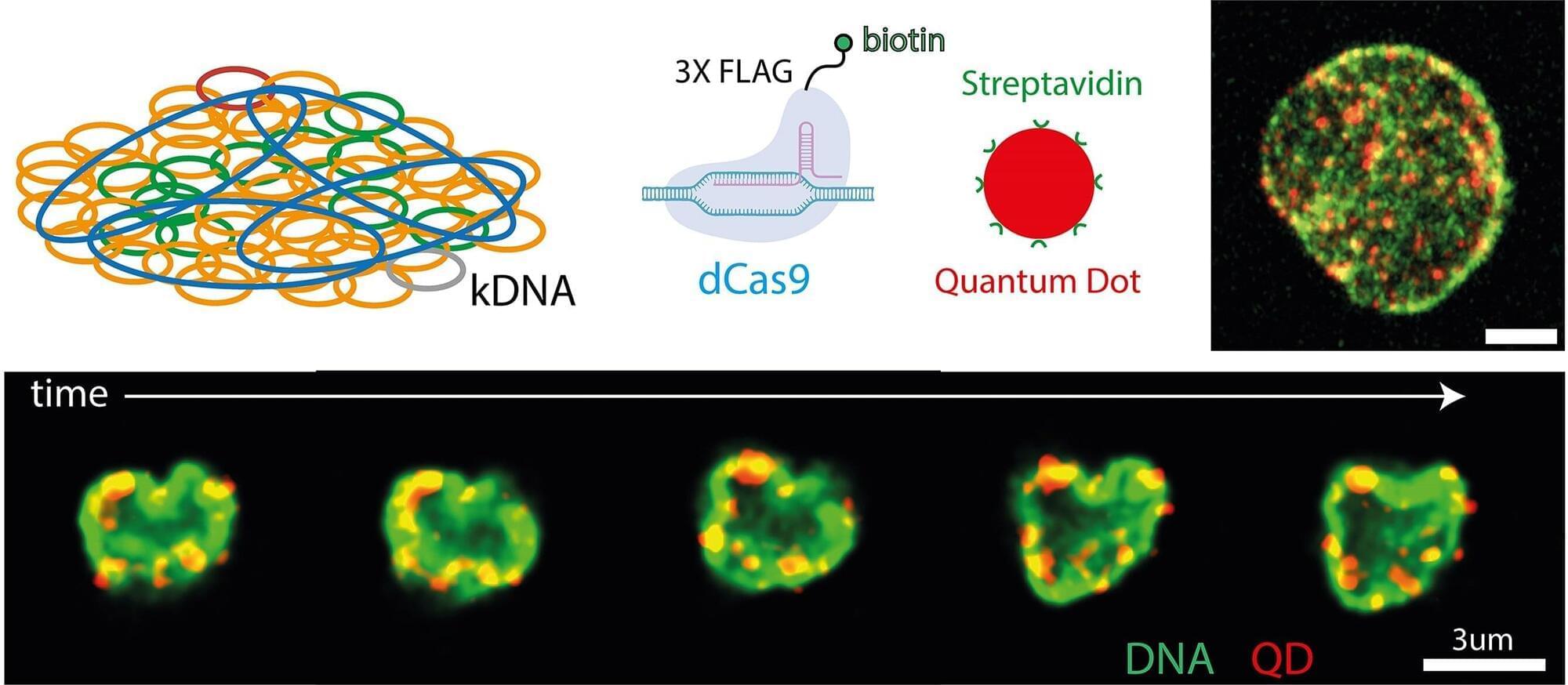
A team led by Dr. Jan Dörr and Professor Anton Henssen from the Experimental and Clinical Research Center (ECRC), a joint institution of Charité—Universitätsmedizin Berlin and the Max Delbrück Center, has now discovered that the location of the MYCN gene plays an important role in the aggressiveness of neuroblastoma: If it is located outside chromosomes, enter a dormant state and thereby render themselves immune to therapy.

In Cancer Discovery, the research team proposes a new treatment strategy that targets these dormant . Their approach has already proven successful in a .

Sleep disruption damages blood vessels in brain and may increase dementia risk: study

A new study reveals that fragmented sleep causes cellular damage to the brain’s blood vessels, providing further evidence to suggest that sleep disruption predisposes the brain to dementia.

The research, published in the journal Brain, is the first to offer cellular and molecular evidence that sleep disruption directly causes damage to brain blood vessels and blood flow.

“We found that individuals who had more fragmented sleep, such as sleeping restlessly and waking up a lot at night, had a change in their balance of pericytes—a brain blood vessel cell that plays an important role in regulating brain blood flow and the entry and exit of substances between the blood and the brain,” said Andrew Lim, principal investigator of the study and a sleep neurologist and scientist at Sunnybrook Health Sciences Centre.

Hepatocellular Carcinoma in Mice Affects Neuronal Activity and Glia Cells in the Suprachiasmatic Nucleus

Background: Chronic liver diseases such as hepatic tumors can affect the brain through the liver–brain axis, leading to neurotransmitter dysregulation and behavioral changes. Cancer patients suffer from fatigue, which can be associated with sleep disturbances. Sleep is regulated via two interlocked mechanisms: homeostatic regulation and the circadian system. In mammals, the hypothalamic suprachiasmatic nucleus (SCN) is the key component of the circadian system. It generates circadian rhythms in physiology and behavior and controls their entrainment to the surrounding light/dark cycle. Neuron–glia interactions are crucial for the functional integrity of the SCN. Under pathological conditions, oxidative stress can compromise these interactions and thus circadian timekeeping and entrainment.

Single pollen parents in flowering plants may be more common than previously thought

While all seeds produced within a fruit have the same maternal genome, the paternal genomes of seeds can come from the pollen of one or more paternal parents. A common assumption about flowering plants is that the ovules are most often pollinated by multiple paternal parents at the flower level.

Various genomic conflicts can arise during the process of fertilization and in multiseed plants, including conflicts over nutritional resources between the maternal plant and its offspring, conflicts over nutritional resources among developing seeds, between paternal and maternal genomes over seed development and competition among paternal parents. The relationship between these genomic conflicts and single or multiple paternal parentage is unclear.

To shed some light on the prevalence of monogamy and polyandry in flowering plants, a group of researchers in India conducted a systematic literature review of studies from 1984 to 2024 and a of 63 flowering from diverse families. The study was recently published in the Proceedings of the National Academy of Sciences. The number of paternal parents was determined in the context of self-compatible vs. incompatible breeding, seed number, and phylogenetic relationships.

/* */