Toggle light / dark theme

Medical error is third biggest cause of death in the US, say experts

This is concerning in what is being proposed in the US for doctor report errors and it’s whole timing. Why now? I mean why wait to report on this when this has been known about for many decades plus mistakes today are actually a lot less than they were 2 decades ago thanks to medical records, and the self-monitor/ medicated drip devices, etc. My guess is this is part of a huge push by some to replace doctors and medical teams with more AI which in the US patients have been blocking AI to treat them due to their own distrust of AI.

Now, if US Laws are in place requiring doctors to publish, report, etc. their errors for the 1st time in the US it does help build case to the public and conditions the public to rethink their position on AI.

I am just not buying “the experts’” report stats given that he has no official records to back up his report especially detail records for the past 40 years showing doctors openly reporting any mistakes they made in the 70s, 80s or 90s when the equipment was poorer plus medical records in many situations were not always digital and could be easily lost in the 70s and 80s.


Medical error is the third leading cause of death in the US after heart disease and cancer, say experts in The BMJ today.

Martin Makary and Michael Daniel at Johns Hopkins University School of Medicine in Baltimore say death certificates in the US have no facility for acknowledging medical error, and they call for better reporting to help understand the scale of the problem and how to tackle it.

Currently, death certification in the US relies on assigning an International Classification of Disease (ICD) code to the cause of death — so causes of death not associated with an ICD code, such as human and system factors, are not captured.

Oxford Scientists Made A Pocket-Sized, Portable DNA Sequencer

Oxford Nanopore Technologies is changing the course of genomics through the development of their small and portable DNA sequencer, the MinION, which makes of nanopore technology.

The handheld, portable tricorder from Star Trek was essentially able to scan and record biological data from almost anything, and it could do it anytime and anywhere. Recent technology has been pulling the device out of science fiction and turning it into reality, but none have come close to getting genetic information with the same portability…except for British company Oxford Nanopore Technologies.

The device is only 10.16 cm (4 in) long, 2.54 cm (1 in) wide, and weighs about 87 grams. It’s a USB-powered device, and it’s called the MinION. It’s smaller than most smartphones, easy to forget in your jacket pocket, and it’s changing the DNA sequencing industry.

Disney’s 3D Printer Produces Models Almost Instantaneously Using Light

Disney Research has designed a new 3D printer that utilizes light on photosensitive resin so that models can be printed out as whole objects instead of by the layer, cutting down 3D printing from hours down to just minutes.

Disney Research has patented its design for “a nearly instantaneous” 3D printer that uses light to cure resin selectively to produce an entire model out of a stereolithography (STL) file all at once. Notably, this significantly cuts down printing time. Or at least, it will if it makes it to market.

“Presently, 3D printing is extremely slow and time consuming. For example, it may take several hours to print a single 3D object even if the 3D object is relatively small (e.g., several inches in diameter and four to 12 inches tall),” the patent stated. It continues, “the 3D printing process that uses conventional 3D printers such as an FFF-based 3D printer is limited in its speed by the speed of the mechanism moving the print head to each new position on a print layer.”

Materialise CEO on medical 3D Printing

I do love and believe in the benefits of 3D printing; however, as a technologist and concerned informed citizen I do worry about this technology getting the hands of drug lords, terrorists, and other criminals. With Medical 3D printing; illegal drug manufacturing can change overnight and expanded to new levels of mass production. Also, illegal weapon production can be enhanced as well with 3D printing.

At this point, law enforcement in 1st and 2nd world countries are going to face harder times than they ever have in the recent past and before. 3D Printing and AI are truly going to take an already difficult situation for government and their law enforcement teams extremely tough in the coming 3 to 5 years; and hope they and tech come together to figure out a good go forward plan to ensure right benefits are received and progress not slowed down while keeping everyone safe.


Materialise incorporates more than 25 years of 3D printing experience into a range of software solutions and 3D printing services, which together form the backbone of the 3D printing industry. Materialise’s open and flexible solutions enable players in a wide variety of industries, including healthcare, automotive, aerospace, art and design, and consumer goods, to build innovative 3D printing applications that aim to make the world a better and healthier place.

Fried Vancraen, CEO of Materialise – recently called upon industry stakeholders to come to an agreement for a common standard for measuring the clinical, economical and patient benefits of medical 3D printing.

untitled

When 3D Printing Gets Into The Wrong Hands

Don’t tell Forbes; but I believe it is too late given that 3D Printing has already been available to be purchased for some time now. In 2012, for $15K or even $32K you could get a 3D Printer why several jewelry houses had them to mass produce custom jewelry, etc. based on your online order request.

I am just amazing that we haven’t seen mass production of drugs, and other weapons and black market items developed by Cartels, and other criminals.


It’s only a matter of time until 3D printing begins to revolutionize how things are made — the technology, for example, is already being used to produce airplane parts and medical devices. The 3D printing market is projected to jump from $1.6 billion in 2015 to $13.4 billion 2018, per research firm Gartner.

3Dprinting

“The next industrial revolution will be 3D printing,” said Cynthia Slubowski, vice president and head of manufacturing and wholesale trade distribution at Zurich North America. “But what’s really interesting is not so much the 3D printer, but the materials they’re using to print these different products, like bio-medicines. That’s where we’re seeing huge advances. But with those types of materials comes risk.”

A breakthrough in science of memory: How a “Spotless Mind” could soon be Reality

We could see commercials for the “Spotless Mind” someday and in various releases. However, why stop there?

Recently, scientists did find the gene that ties serial and mass murders together as a cause for their evil deeds and CRISPR could someday eliminate these people from existing which is a great thing. However, what happens if folks in power believe everyone in Europe and the US cannot have any religious belief and/ or values in order (in their own belief) to keep everyone equal; so they use this technolgy to eradicate how people believe or view the world. Just imagine; like John Lennon’s “Imagine”.


Jim Carrey’s role as shy and morose Joel Barish in “Eternal Sunshine of the Spotless Mind” is deeply memorable in the context of his predominantly comedic repertoire of movie roles. And context is everything when it comes to recollection of memories. Though the kind of memory erasing technologies showcased in Eternal Sunshine may be too farfetched to ever become reality, scientists have nonetheless managed to make astounding progress in understanding and manipulating memories.

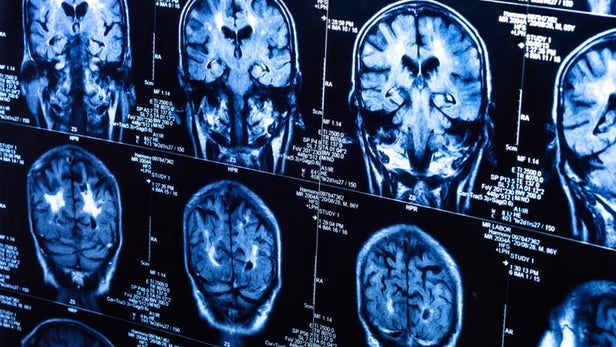
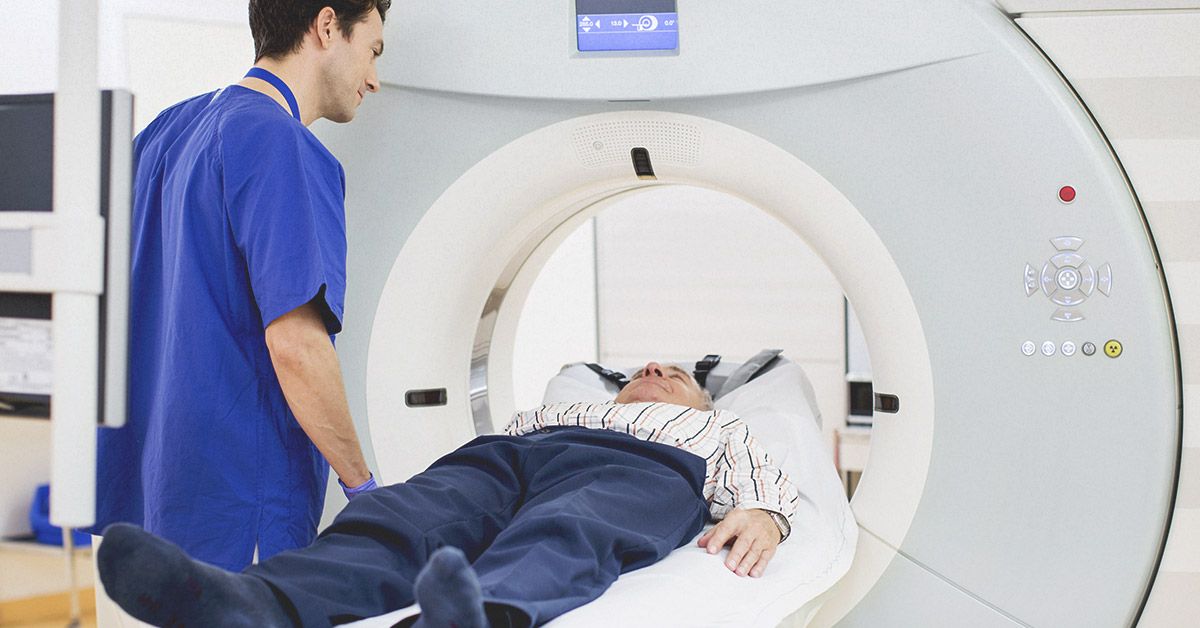
The most recent of these was the result of a joint study done in the US led by researchers at Dartmouth College, which also included scientists at Princeton, Bard College and the University of Illinois at Urbana Champaign. The researchers focused mainly on the contexts of our memories and how alterations made to these contexts can actually change our memories or even make us forget them. Using a specially designed brain mapping technology called “functional magnetic resonance imaging” (fMRI) the scientists constantly tracked thoughts related to memory contexts in the brains of the volunteer participants in the study.

Groups of participants were given two lists of random words to study while images of nature and scenery were shown to them. When they were told to forget the words, their brain scans revealed that participants were actually “flushing out” scenery-related brain activity. In contrast, there was no similar brain activity when they were asked to remember the words instead.

DARPA looking to develop new technology to ID cybercriminals

CRISPR to take bio- and dirty-bombs to new levels.
Great; however, QC needs to be front and center on this; or, I see a bunch of funding spent on research that will be render useless by the time it goes to market due to the progress in QC.

I truly feel bad for the labs who are having to tests for bio- and dirty-bomb material. Really a dangerous job.


The Defense Advanced Research Projects Agency (DARPA) is looking for research proposals to develop a system that would enable the government and law enforcement to identify the actual individual behind a cyber attack.

The Enhanced Attribution Program proposal is looking to create the technology that would allow not only the collection of data that could pinpoint the perpetrator, but do so in a way that would not put at risk the sources and methods used to find the person or group. From DARPA’s perspective the need for this is quite straightforward.

“Malicious actors in cyberspace currently operate with little fear of being caught due to the fact that it is extremely difficult, in some cases perhaps even impossible, to reliably and confidently attribute actions in cyberspace to individuals,” DARPA wrote in the 43-page proposal.

Garage Biotech: New drugs using only a computer, the internet and free online data

Garage startup (credit: Chase Dittmer)

By Director of UWA Centre for Software Practice, University of Western Australia

Pharmaceutical companies typically develop new drugs with thousands of staff and budgets that run into the billions of dollars. One estimate puts the cost of bringing a new drug to market at $2.6 billion with others suggesting that it could be double that cost at $5 billion.

One man, Professor Atul Butte, director of the University of California Institute of Computational Health Sciences, believes that like other Silicon Valley startups, almost anyone can bring a drug to market from their garage with just a computer, the internet, and freely available data.

In a talk given at the Science on the Swan conference held in Perth this week, Professor Butte outlined the process for an audience of local and international scientists and medics.

Japanese scientists have used skin cells to restore a patient’s vision for the first time

Japanese scientists have reported the first successful skin-to-eye stem cell transplant in humans, where stem cells derived from a patient’s skin were transplanted into her eye to partially restore lost vision.

The patient, a 70-year-old woman diagnosed with age-related macular degeneration (AMD) – the leading cause of vision impairment in older people – received the experimental treatment back in 2014 as part of a pilot study. Now, closing in on two years after the transplant took place, the scientists are sharing the results.

The researchers took a small piece of skin from her arm (4 mm in diameter) and modified its cells, effectively reprogramming them into induced pluripotent stem cells (iPSC).

OrCam headset recognises faces, objects and reads words aloud

Something so simple and finally done to help so many.

Beautiful


Researchers at the University of California said the new system dramatically improves the ability of people with limited sight to read books, menus, newspapers and emails.

The camera is not limited to text: its makers said it can also recognise faces and products.

The research paper ‘Evaluation of a Portable Artificial Vision Device among Patients with Low Vision’ has been published in the US journal JAMA Ophthalmology.

/* */