Toggle light / dark theme

The case for techno-optimism: Is the world about to enter an era of mass flourishing?

Instead of relying on a fixed catalogue of available materials or undergoing trial-and-error attempts to come up with new ones, engineers can turn to algorithms running in supercomputers to design unique materials, based on a “materials genome,” with properties tailored to specific needs. Among the new classes of emerging materials are “transient” electronics and bioelectronics that portend applications and industries comparable to the scale that followed the advent of silicon-based electronics.

In each of the three technological spheres, we find the Cloud increasingly woven into the fabric of innovation. The Cloud itself is, synergistically, evolving and expanding from the advances in new materials and machines, creating a virtuous circle of self-amplifying progress. It is a unique feature of our emerging century that constitutes a catalyst for innovation and productivity, the likes of which the world has never seen.

Frogs regrow amputated legs after treatment with a chemical cocktail

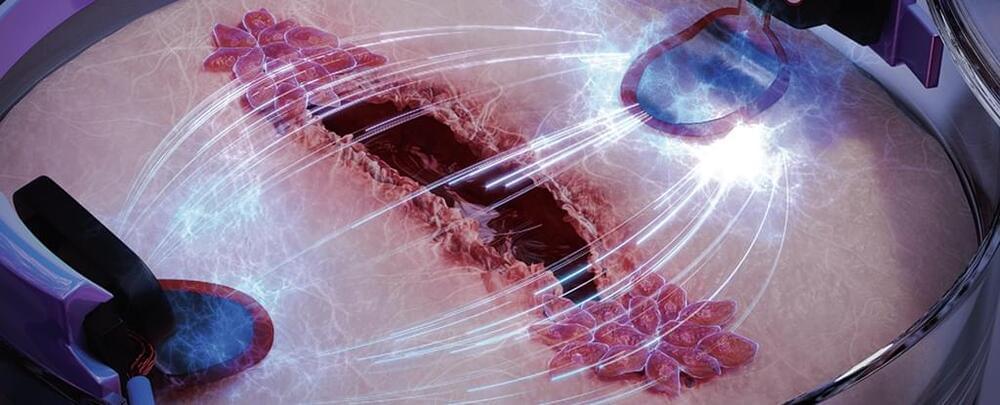
Adult frogs can’t usually regrow a lost leg, but they can after treatment with a regenerative cocktail — and the new leg even contains functioning nerves.


Adult frogs can gain the ability to regrow a lost leg if they are treated with a device containing a silk gel infused with five regenerative chemicals. The limbs the frogs grow can apparently move and sense as well as the original legs.

Although tadpoles and young froglets can regenerate hindlimbs, adult frogs, like humans, lack the capacity to regrow their legs.

“We were [looking for] a way to kickstart regeneration in an organism that normally can’t regenerate a limb,” says Nirosha Murugan at Algoma University in Ontario, Canada.

Woman is cured of HIV in huge breakthrough for virus treatment

‘The fact that she’s mixed race, and that she’s a woman, that is really important scientifically and really important in terms of the community impact,’ doctor says.


The new findings were presented on Tuesday at the Conference on Retroviruses and Opportunistic Infections in Denver, Colorado.

University of California, San Francisco AIDS expert Dr Steven Deeks said that “the fact that she’s mixed race, and that she’s a woman, that is really important scientifically and really important in terms of the community impact,” The New York Times reported.

Women account for the majority of global HIV cases but only make up 11 per cent of participants in cure trials. The disease is thought to develop differently in men and women.

Stretchable Mesh Nanoelectronics for 3D Single‐Cell Chronic Electrophysiology from Developing Brain Organoids

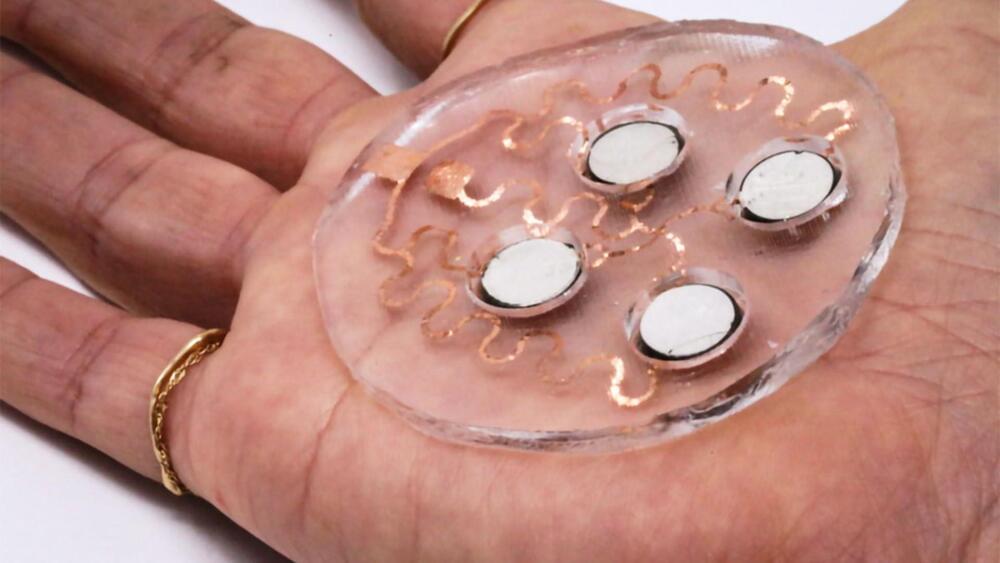
There is a cyborg organoid platform developed by integrating “tissue-like” stretchable mesh nanoelectronics with 2D stem cell sheets. Leveraging the 2D-to-3D reconfiguration during organoid development, 2D stem cell sheets fold and embed stretchable mesh nanoelectronics with electrodes throughout the entire 3D organoid. The embedded electronics can then enable continuous electrical recording.

Scientists design stretchable mesh nanoelectronics, mimicking the mechanical and structural properties of brain organoids to build cyborg human brain organoids.

Using the 3D embedded stretchable electrodes, achieved reliable long-term electrical recording of the same hiPSC-derived neural tissue at single-cell, millisecond spatiotemporal resolution for 6 months, revealing the evolution of the tissue-wide single-cell electrophysiology over hiPSC-derived neuron development. Applying this technology to brain organoids at early developmental stages, they traced the gradually emerging single-cell action potentials and network activities.

#biomimicry #meshelectronics #hiPSC #neurallace #neuroscience


Building cyborg brain organoids through the integration of stretchable mesh nanoelectronics with human induced pluripotent stem cell derived progenitors and neurons through organogenesis is reported…

Some People think Life Extension is “Just a Fear of Death”

Sometimes those working in the field of rejuvenation biotechnology face the accusation that what they are doing is just a fear of death, like not being scared of age-related diseases is somehow brave.

War used to be fashionable but now it isn’t

These days, war is not really portrayed in a very good light. When we think about war, we think about genocide, mass murder, and slaughter, and we call for an end to it. The popular sentiment is that war is bad and we should just do away with it.

First gene therapy for Tay-Sachs disease successfully given to two children

About 1 in 300 people in the general population carry the Tay-Sachs disease gene. Ray Kachatorian/Stone via Getty ImagesTwo babies have received the first-ever gene therapy for Tay-Sachs disease after over 14 years of development. Tay-Sachs is a severe neurological disease caused by a deficiency in an enzyme called HexA. This enzyme breaks down a fatlike substance that normally exists in very small, harmless amounts in the brain. Without HexA, however, this fatlike substance can accumulate to toxic levels that damage and kill neurons.

City Air is Just as Dangerous to Your Health as it was 20 Years Ago States The Lancet

Urban air pollution exposure is an ongoing critical challenge for humanity today because the majority of us live in cities. A just-published study in The Lancet Planetary Health reports that 2.5 billion live in urban areas where particulate matter levels exceed World Health Organization (WHO) safety guidelines causing more than 1.8 million attributed deaths annually. The study reports that “the global health burden of ambient fine particulate matter is increasing annually” and is associated with mortality from cardiovascular, respiratory, and lung diseases including cancer. And in terms of chronic diseases, particulate matter in the air contributes to asthma, bronchitis and emphysema, and seen as the leading environmental risk humans face today.

What is particulate matter? The Canadian government defines it as airborne particles that can be solid or liquid. Particulate matter comes from natural and human sources. The natural ones can be seen when volcanoes erupt spewing ash and other aerosols high into the atmosphere. But far more dangerous because of the sheer volume, is human-produced particulate matter coming from smokestacks, tailpipes, power plants, recently tilled fields, tires running across asphalt and concrete roads, and other human activities that release fine particles into the wind. The lighter and smaller the particle, the greater the threat. That’s because fine particulate matter is easier to inhale. It’s also easier to enter the pores of leaves in plants, and easier as liquid aerosols to bind to our buildings and bridges and other infrastructure where its acidic nature causes corrosion.

A particle of 2.5 micrometres (equivalent to 0.00009843 inches) or less is a public health threat. The U.S. Environmental Protection Agency tracks aerosol pollution at this size and on its site notes that particulate matter smaller than 2.5 micrometres has been declining for two decades. The Lancet study contradicts this finding noting that globally levels of airborne particulate matter have changed very little in twenty years. And where’s the greatest rise? In the cities of Southeast Asia.

/* */