Toggle light / dark theme

How We Could Detect an Alien Apocalypse From Earth

It’s generally assumed that we will eventually find signs of life in the galaxy. But rarely do we consider searching for advanced civilizations that have destroyed themselves. Here’s how we could do it—and what the search for dead aliens could tell us about our own future.

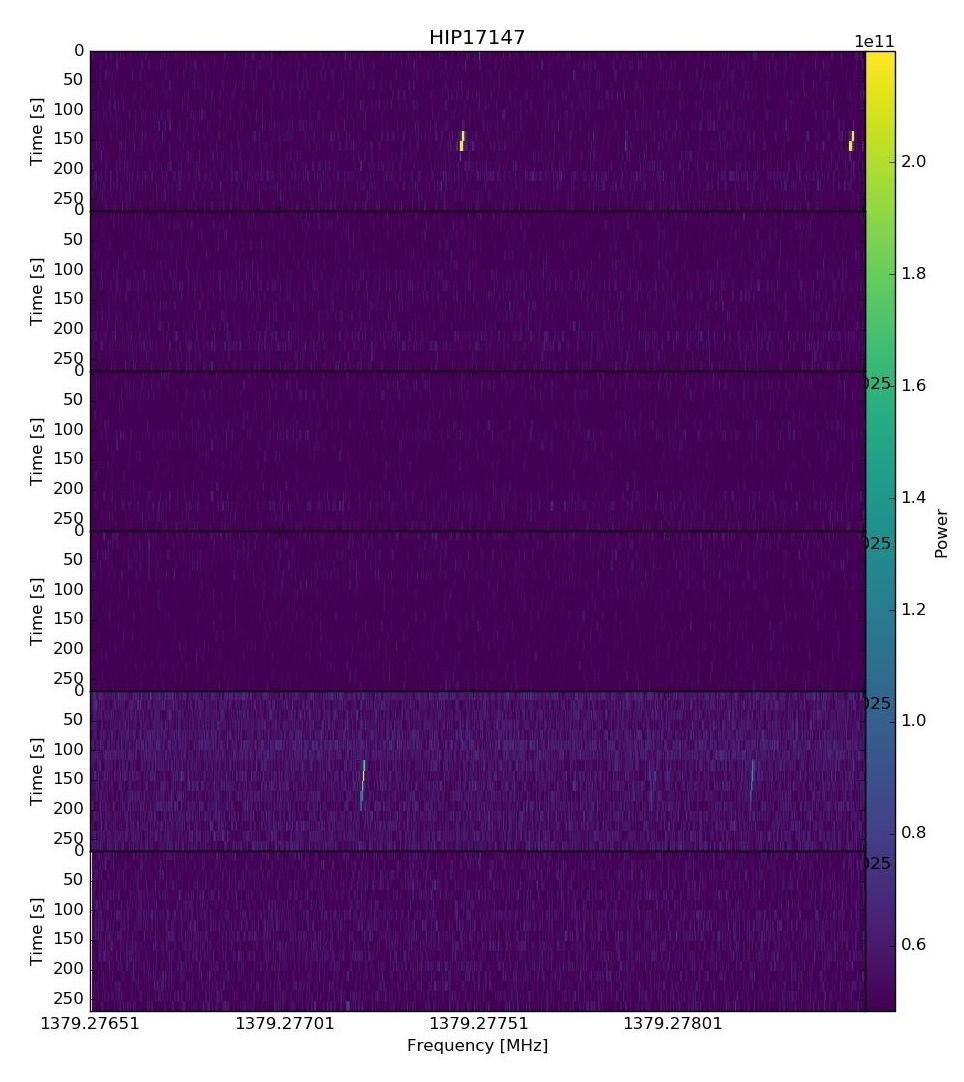
Typically, astrobiologists and SETI enthusiasts are in the business of searching for signs of active extraterrestrial civilizations. Proposed signatures that could be detected by astronomical instruments on Earth include radio and optical signals, megascale engineering objects (such as Dyson Spheres) radiating in the far infrared, artificial illumination, and abnormal levels of atmospheric carbon dioxide suggestive of a post-industrial age civilization.

But a new study by a research team from Cornell University’s Carl Sagan Institute suggests we should also look for signs of alien civilizations that have destroyed themselves. It would be a grim task, but the ability to detect extinct civilizations would not only tell us something about the prospect of intelligent life in the galaxy, it might also tell us something about our own fate as well.

Read more

From the Earth to the Moon: 1865/1968

How does science fiction become science fact? Often the link between art and science can be hard to pin down. It can be unclear if science fiction is actually influencing science or merely observing it, giving the public sneak peaks into the implications of scientist’s work.

But some work of science fiction create direct links to the future. As a young man in Russia, Konstantin Tsiolkovsky read a translation of Jules Verne’s ‘From the Earth to the Moon.” And although Verne’s plan to get to the moon wouldn’t have worked, the novel had just enough science mixed in with its romance to make the central idea seem plausible. Tsiolkovsky became obsessed with the idea of spaceflight, and his life’s work created the foundations of modern rocketry.

One hundred years after Verne wrote his novel, a group of individuals who had been inspired by Verne’s fantasy as children launched a voyage to the moon.

Stephen Hawking announces $100 million hunt for alien life — Rachel Feltman The Washington Post

On Monday, famed physicist Stephen Hawking and Russian tycoon Yuri Milner held a news conference in London to announce their new project: injecting $100 million and a whole lot of brain power into the search for intelligent extraterrestrial life, an endeavor they’re calling Breakthrough Listen.

“We believe that life arose spontaneously on Earth,” Hawking said at Monday’s news conference, “So in an infinite universe, there must be other occurrences of life.” Read more

Evolutionary Biologist Suggests Aliens Look Like Us

According to the reputable Australian astro-enthusiast journal, SkyNews, a leading biologist says that it is surprising we have not already discovered extra-terrestrials that look like us — given the growing number of Earth-like planets now discovered by astronomers.

Simon Conway Morris, an evolutionary biologist suggests that aliens resembling humans must have evolved on other planets. He bases the claim on evidence that different species will independently develop similar features which means that life similar to that on Earth would also develop on equivalent planets.

The theory, known as convergence, says evolution is a predictable process which follows a rigid set of rules. Read the full story at Skynews

__________
Philip Raymond is Co-Chair of The Cryptocurrency Standards
Association [crypsa.org] and chief editor at AWildDuck.com

What are our rights and duties towards alien life? — Lizzie Wade | AEON

http://cdn-imgs-mag.aeon.co/images/2015/06/wade-42-68213815-1024x641.jpg

“The ethics of encountering non-sentient alien life in our solar systems boils down to a core dilemma, says Waller. ‘Is it about conservation and preservation? Or is it about our needs, wants, and desires?’ On Earth, natural-resource grabs have a history of bringing out the worst in us as a species…There’s plenty of reason to believe other planets will be chock-full of resources we’d like to exploit, even if the life forms are microbial – perhaps especially if they’re microbial.” Read more

/* */