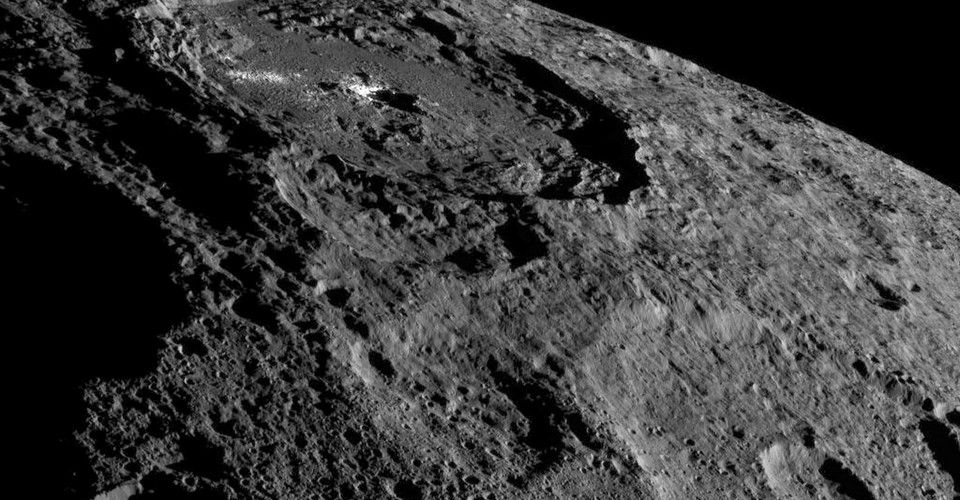
The Dawn spacecraft has detected for the first time evidence of organic compounds on the dwarf planet.

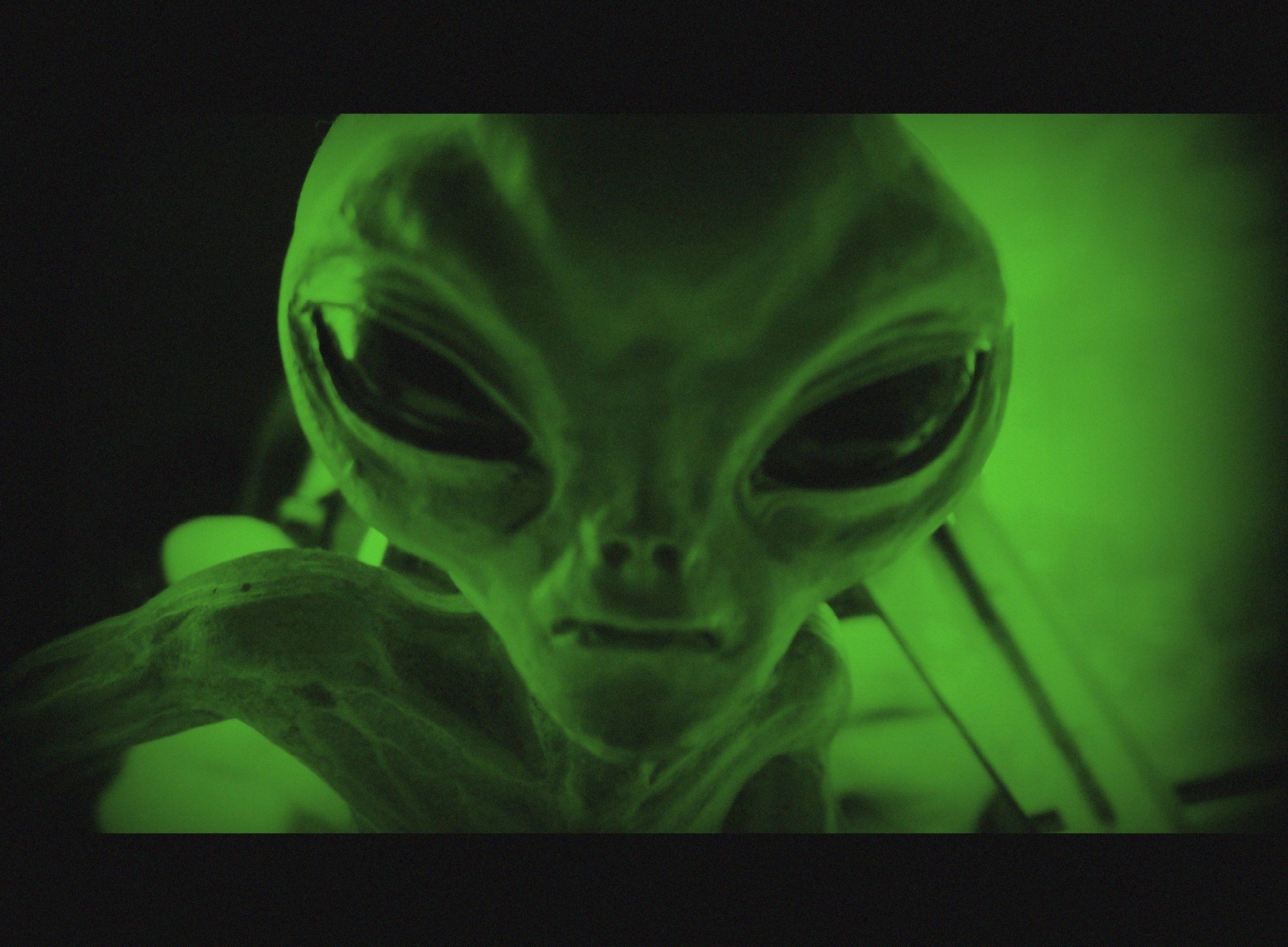
Enjoy this Sci-Fi short film created by the talented Jason J. Whitmore! Earth’s days are numbered when a nearby star goes supernova. Seizing the opportunity, an alien race has offered humanity a deal: Be our slaves or be left to die. As one couple struggles toward the last escaping ship, they grapple with the cost of sacrificing their freedom for their survival.
Contact:
[email protected]
http://www.imdb.com/title/tt2405816/?ref_=nm_flmg_snd_1
SUBSCRIBE — to TheCGBros for more inspiring content!
https://www.youtube.com/user/thecgbro?sub_confirmation=1
Official TheCGBros http://www.thecgbros.com
YouTube https://www.youtube.com/user/TheCGBro
Facebook https://www.facebook.com/TheCGBro
Twitter https://twitter.com/TheCGBros
Google+ https://plus.google.com/104301021746334584641
Pinterest https://www.pinterest.com/TheCGBros/
Tumblr http://thecgbros.tumblr.com/

Interesting hypothesis…
Despite all that scientists now know, much of our universe still remains a mystery.
And according to a Columbia University astrophysicist, this could be because the physical laws of the cosmos are not as they seem.
Instead, the expert argues that our universe may be driven by the reassembled intelligence of an alien civilization – one so advanced that it transcribed itself into the quantum realm, allowing life to ‘disappear into ordinary physics.’
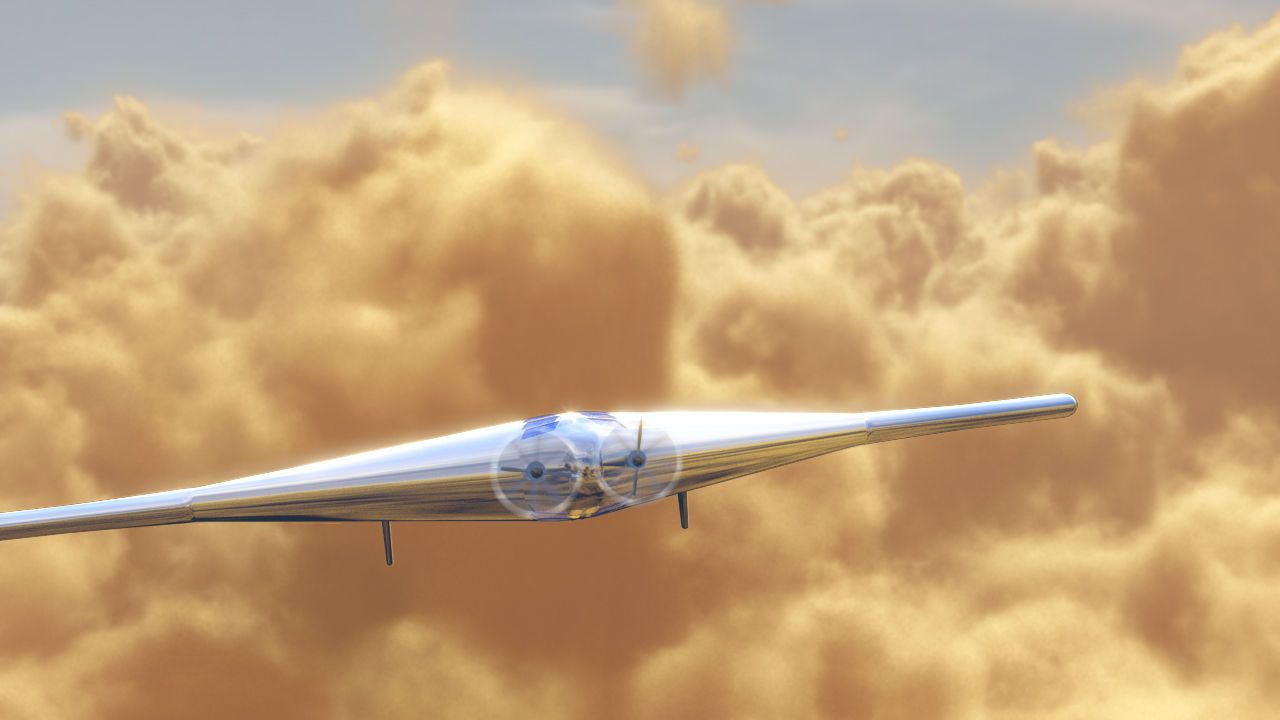

Abstract: We examine the possibility that Fast Radio Bursts (FRBs) originate from the activity of extragalactic civilizations. Our analysis shows that beams used for powering large light sails could yield parameters that are consistent with FRBs. The characteristic diameter of the beam emitter is estimated through a combination of energetic and engineering constraints, and both approaches intriguingly yield a similar result which is on the scale of a large rocky planet. Moreover, the optimal frequency for powering the light sail is shown to be similar to the detected FRB frequencies. These ‘coincidences’ lend some credence to the possibility that FRBs might be artificial in origin. Other relevant quantities, such as the typical mass of the light sail, and the angular velocity of the beam, are also derived. By using the FRB occurrence rate, we infer upper bounds on the rate of FRBs from extragalactic civilizations in a typical galaxy. The possibility of detecting fainter signals is briefly discussed, and the wait time for an exceptionally bright FRB event in the Milky Way is estimated.
The search for aliens has become a grassroots movement for billionaires.
The last few years demonstrate that extraterrestrial research has finally moved into the mainstream — and money is pouring in fast.
Aside from a strange blip in the 1950s and early 1960s, the search for extraterrestrial life has primarily taken place at society’s fringes. Public figures have not historically risked their reputations advocating the search for alien life. And within the scientific community, the subject was largely (and understandably) sidelined until recent years, when telescopes that could detect new planets and instruments that found the ingredients for life on other worlds allowed serious-minded researchers to pass the laugh test.
As a result, the last decade has seen a surge of interest in extraterrestrial research within the scientific community that has seized the public imagination. For example, the recent discovery of water on Mars immediately raised serious hopes from serious people we might find Martians. Every announcement that scientists have found another potentially habitable exoplanet (which includes the nearest exoplanet to Earth) causes days of clamor on the internet.
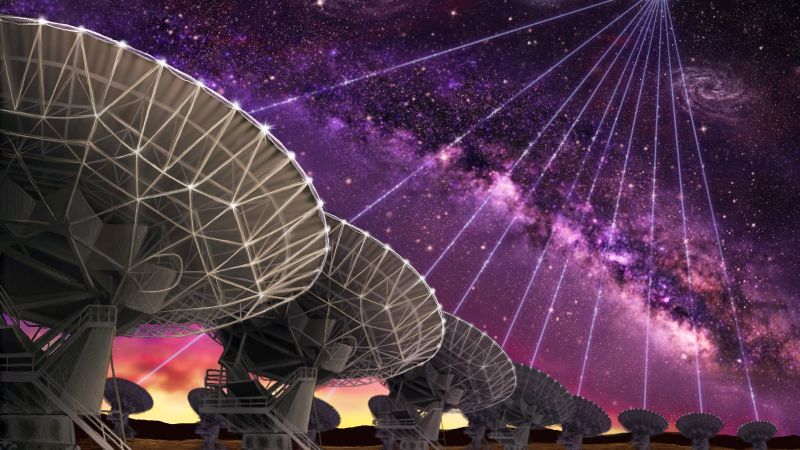
Fast radio bursts, powerful pulses of radio energy of unknown cosmic origin, are a source of endless fascination to astronomers and alien conspiracy theory fodder to everybody else. But while most FRBs discovered to date are one-off events—a single chirp in the interstellar void, if you will—these phenomena got more interesting last year when astronomers discovered the very first FRB signal that repeats. Now, they’ve pinpointed its location.