Toggle light / dark theme

Get the latest international news and world events from around the world.

Log in for authorized contributors

Prevalence and Factors Associated With Atrial Fibrillation Among Young Patients With Ischemic Stroke

Stra8 links neuronal activity to inhibitory circuit protection in the adult mouse brain.


Huang et al. show that Stra8, a gene previously thought to be germline specific, is expressed in the adult mouse hippocampus in an activity-dependent manner. Stra8 protects neuronal integrity and cognition by regulating neuromodulator genes and preserving inhibitory circuit function.

How natural daylight can help people with diabetes improve blood sugar levels

People with type 2 diabetes may be able to improve their blood sugar by doing something as simple as sitting by a window for a few hours each day. In a study published in Cell Metabolism, scientists showed that natural daylight helps maintain healthy glucose levels.

Daylight is known to be a mood enhancer and also beneficial for our health. However, according to the research team, most people living in Western societies typically stay indoors around 80% to 90% of the time under artificial light, which is not as bright or dynamic as sunlight. This is important because the human body operates on circadian rhythms, internal 24-hour clocks that orchestrate a range of biological processes, such as digestion and temperature regulation. These are synchronized by light, and a lack of natural light is a risk factor for type 2 diabetes.

Previous studies have shown that artificial light at night disrupts these rhythms and that daylight outdoors can improve the body’s response to insulin, which helps control blood sugar levels. But no prior research examined how natural light entering a window affects people with diabetes.

Ribbon-Like Cortical Calcifications in Hereditary Cerebral Hemorrhage With Amyloidosis-Dutch Type

The Letters section represents an opportunity for ongoing author debate and post-publication peer review. View our submission guidelines for Letters to the Editor before submitting your comment.

View the Letters for this article.

Climate impacts of the El Niño–Southern Oscillation on Australia

El Niño–Southern Oscillation (ENSO) profoundly affects Australian weather, climate, ecosystems and socio-economic sectors. This Review presents the progress made in understanding ENSO teleconnections to Australian weather over the past 40 years, describing the atmospheric dynamics, complexities and impacts of this climate phenomenon.

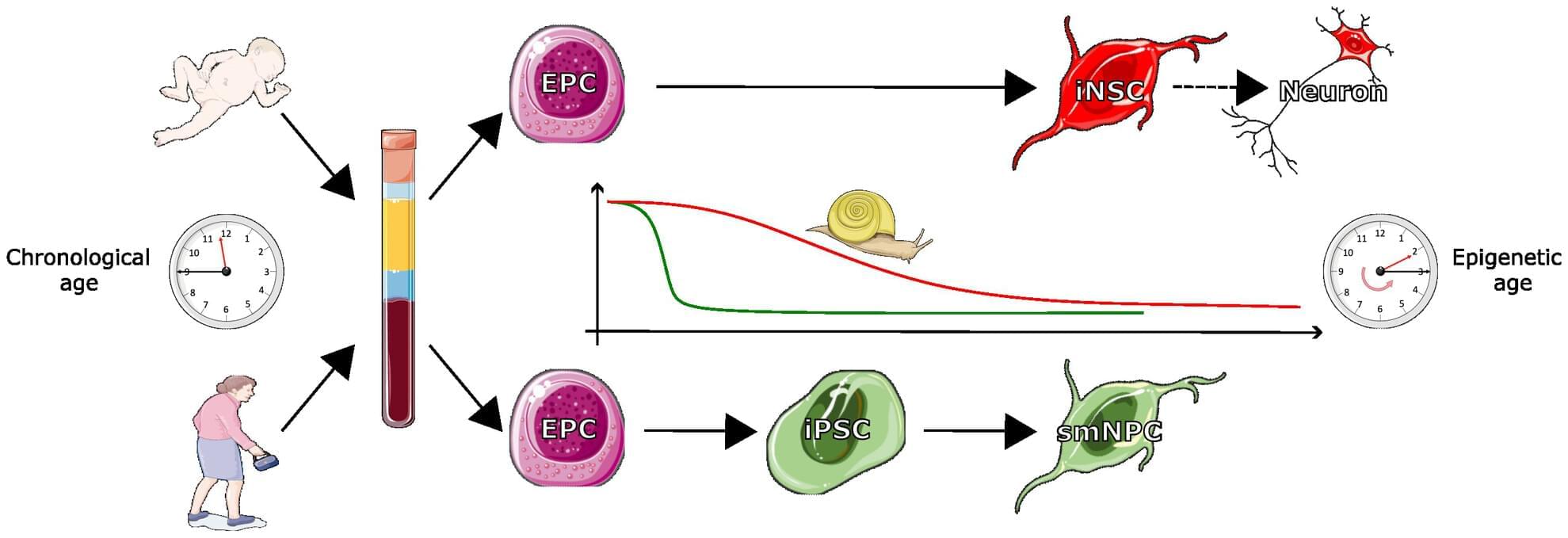
Prodrug nanoplatform for triggering ferroptosis to eliminate senescent cells in age-associated pathologies

Accumulation of senescent cells is associated with age-related diseases. Here, the authors present a prodrug nanoplatform to trigger ferroptosis specifically and exclusively in senescent cells.

From Big Bang To AI, Unified Dynamics Enables Understanding Of Complex Systems

Experiments reveal that inflation not only smooths the universe but populates it with a specific distribution of initial perturbations, creating a foundation for structure formation. The team measured how quantum fluctuations during inflation are stretched and amplified, transitioning from quantum to classical behavior through a process of decoherence and coarse-graining. This process yields an emergent classical stochastic process, captured by Langevin or Fokker-Planck equations, demonstrating how classical stochastic dynamics can emerge from underlying quantum dynamics. The research highlights that the “initial conditions” for galaxy formation are not arbitrary, but constrained by the Gaussian field generated during inflation, possessing specific correlations. This framework provides a cross-scale narrative, linking microphysics and cosmology to life, brains, culture, and ultimately, artificial intelligence, demonstrating a continuous evolution of dynamics across the universe.

Universe’s Evolution, From Cosmos to Cognition

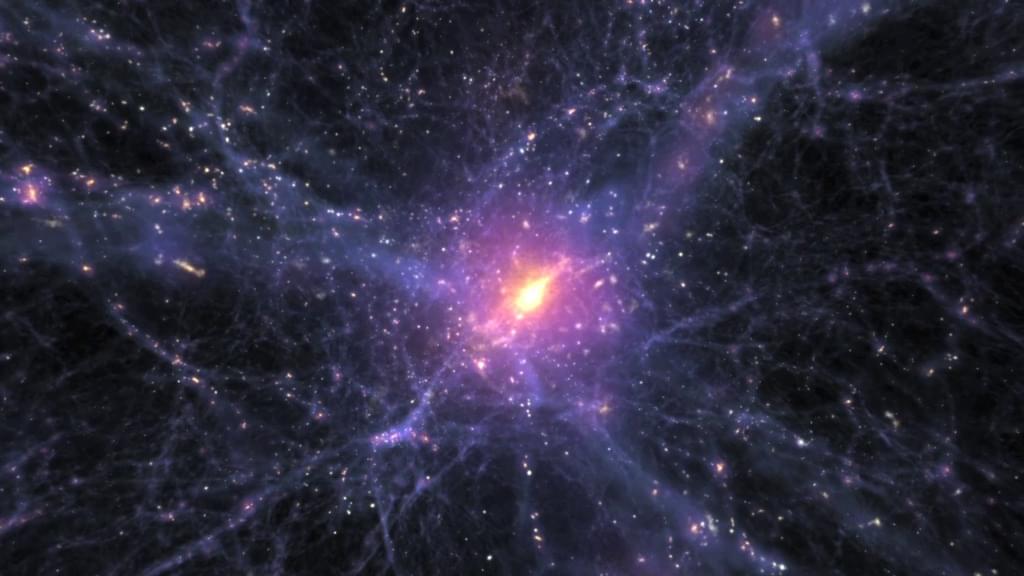
This research presents a unified, cross-scale narrative of the universe’s evolution, framing cosmology, astrophysics, biology, and artificial intelligence as successive regimes of dynamical systems. Rather than viewing these fields as separate, the work demonstrates how each builds upon the previous, connected by phase transitions, symmetry-breaking events, and attractors, ultimately tracing a continuous chain from the Big Bang to contemporary learning systems. The team illustrates how gravitational instability shapes the cosmic web, leading to star and planet formation, and how geochemical cycles establish stable, long-lived attractors, providing the foundation for life’s emergence as self-maintaining reaction networks. The study emphasizes that the universe is not simply evolving in state, but also in its capacity for description and learning, with each transition.

How common is Alzheimer’s? Blood-test study holds surprises

A Nature analysis of a major Norwegian study challenges existing estimates of Alzheimer’s prevalence, finding that 25% of people aged 85–89 have dementia with Alzheimer’s pathology — far higher than previous 7–13% estimates — while preclinical Alzheimer’s in younger seniors (70−74) occurs at only 8% versus earlier 22% estimates. Using blood biomarker pTau217 in 11,486 participants, researchers identified that 10% of over-70s had dementia, 10% had mild cognitive impairment, and 10% had preclinical Alzheimer’s, but warn that blood tests alone are insufficient for widespread screening due to potential harm from false positives. The discrepancies highlight how previous studies may have been skewed by selection bias, while demonstrating that blood-based biomarkers require careful interpretation and comprehensive clinical assessment.


A survey of Alzheimer’s disease prevalence in Norway confirms earlier estimates and might show how education level relates to risk.

/* */