Toggle light / dark theme

Get the latest international news and world events from around the world.

Log in for authorized contributors

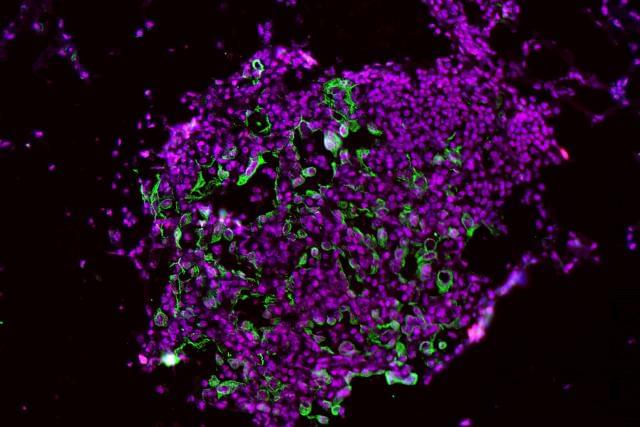
Lab-grown brain organoids power biocomputers

A feature story authored by Simon Spichak, MSc investigates how biotech companies like Cortical Labs and FinalSpark harness human brain cells to electrodes, performing computational functions and testing the cells’ responses to electrical and chemical stimuli. To create biocomputers, scientists grow organoids—small spheres of, in this case, neural tissue—on top of multi-electrode arrays in a hardware shell, which can then be used for everything from testing medications to playing video games. The work is published in the Journal of Medical Internet Research.

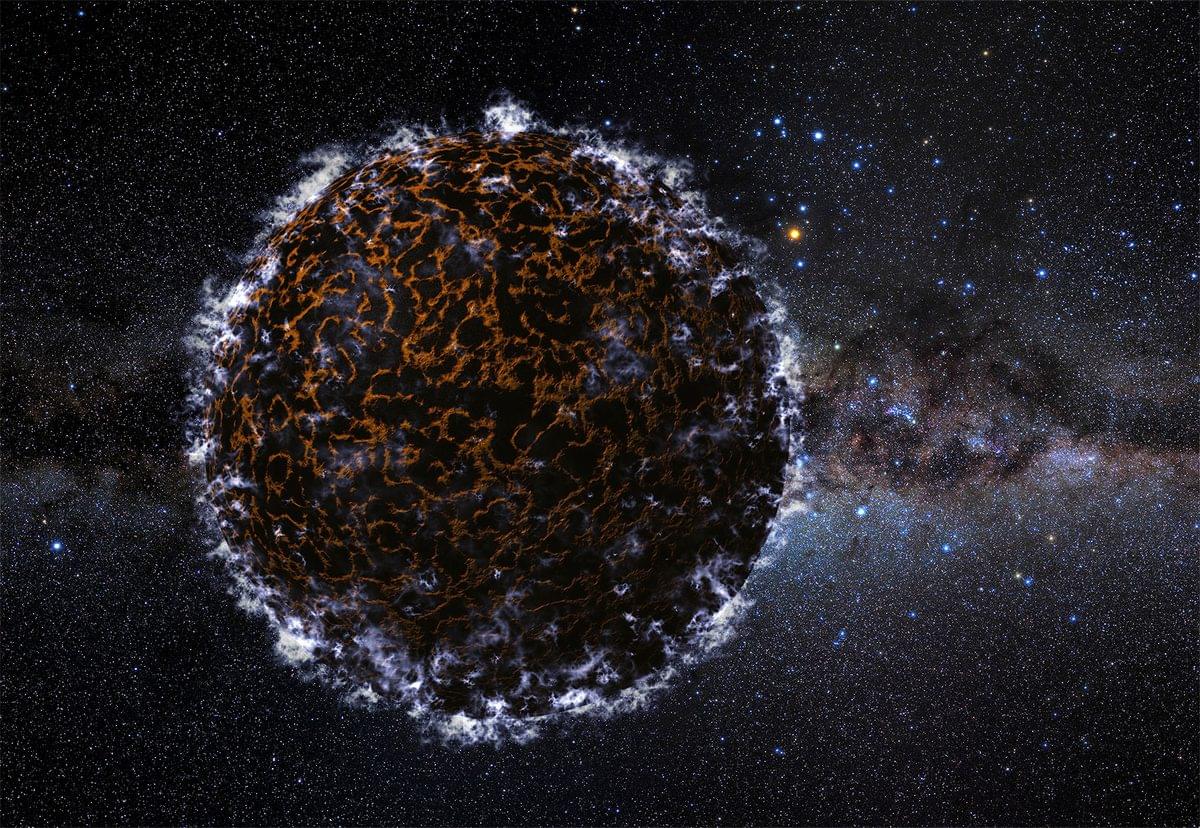
IceCube detects break in cosmic neutrino spectrum, ruling out simple power-law model

A new study published in Physical Review Letters by the IceCube Collaboration reports evidence that the energy spectrum of astrophysical neutrinos is not a simple straight line.

Astrophysical neutrinos are tiny, nearly massless particles produced when high-energy cosmic rays interact with matter or radiation near sources such as active galactic nuclei, gamma-ray bursts, and supernova remnants. Because they barely interact with anything, they travel from the edges of the observable universe in straight lines, carrying information about the environments that produced them.

Analyzing more than a decade of data, the study found a break in the spectrum near 30 TeV, comparable to the energies seen at the Large Hadron Collider. This rules out the single power law with a statistical significance greater than 4σ, meaning the chance of the result being a fluke is less than about 1 in 16,000.

‘Shoot for the moon?’ Aim a bit lower, researchers say

How ambitious should you be? Folk wisdom offers conflicting advice: “Shoot for the moon,” but also, “Don’t let the perfect be the enemy of the good.” A new study by researchers at the University of Wyoming, Stanford University and the University of Colorado-Boulder used a mathematical model to show that ambition lies in the middle—above average but finite.

“Conventional wisdom tells people not to settle, but also not to let the perfect be the enemy of the good,” says lead author Kath Landgren, a postdoctoral scholar at Stanford’s Doerr School of Sustainability. “We wanted to see whether the math actually supports that intuition. It does, with some interesting twists.”

A hidden supermassive black hole may be lurking inside the Antennae galaxies

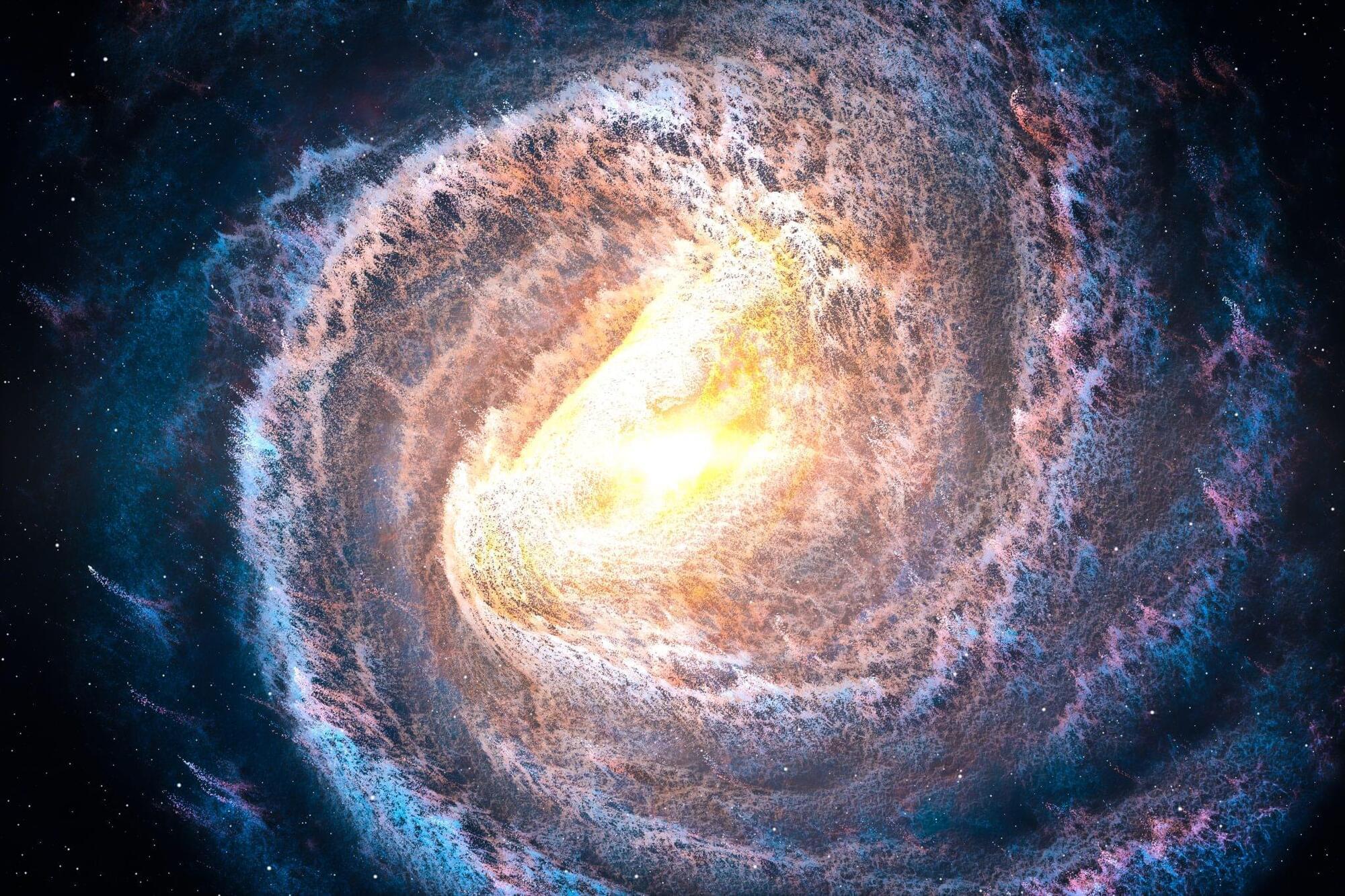
Astronomers may have uncovered a hidden supermassive black hole inside the famous Antennae galaxies NGC 4038/4039, a pair of colliding galaxies best known for their spectacular bursts of star formation. The paper outlining the findings was posted to the arXiv preprint server on May 21.

The Antennae galaxies are a pair of colliding spirals located roughly 70 million light-years from Earth, making them the nearest example of two gas-rich galaxies merging. The system is also one of the youngest of its kind. The two merging galaxies are called Antennae galaxies because the collision has stripped out long tails of stars, gas, and dust from them, resembling an insect’s antennae. The interaction has triggered one of the most intense bursts of star formation seen in the local universe, making the Antennae a widely used laboratory for studying how galaxies grow through interactions.

Galaxy mergers are known to do more than just ignite star formation. The gravitational disruption they cause can funnel gas toward galactic centers and trigger the supermassive black holes residing there to accrete, turning into an active galactic nucleus (AGN). The Antennae, however, only showed a spectrum dominated by starburst activity so far, with no indication that either black hole was actively feeding. A previous study analyzing the massive star clusters in the merging system, however, found some changes in the brightness near the core of one of the galaxies. Astronomers are now curious to know if this has anything to do with the AGN activity.

Diamond quantum sensor could reveal elusive altermagnets

For nearly a century, there were two known kinds of magnets. Ferromagnets are the classic magnets that attract metal and keep pictures stuck to the refrigerator. Antiferromagnets hide their magnetism at the atomic scale but are increasingly prized for their technological potential. A third category discovered within the last decade may combine the best qualities of both. Dubbed altermagnets, they could someday help create faster, more energy-efficient electronics.

Now, University at Buffalo physicists are proposing a quantum sensing system to make identifying altermagnets much simpler. Described in a study published in Physical Review Letters, the theoretical technique would measure how a suspected altermagnet disturbs a tiny magnetic defect in a nearby diamond. The way the defect’s magnetic signal relaxes could provide evidence of altermagnetism.

“This could be the first building block of a new generation of experiments that determine whether a material is an altermagnet,” says corresponding author Jamir Marino, Ph.D., assistant professor in the UB Department of Physics, College of Arts and Sciences. “Altermagnets could completely revolutionize the way we transport information, but to confirm if this elegant theory is true, we need experiments that identify altermagnets and confirm they behave the way scientists predict.”

Topological states emerge in quantum Hall-superconductor devices with multiple channels

Topological phases are unusual states of matter that give rise to properties protected by a material’s overall structure (i.e., “topology”), as opposed to microscopic details. These phases are of great interest for the development of quantum technologies, as they can yield desirable electronic properties that are robust against defects and disturbances.

Researchers at Autonomous University of Madrid investigated the topological phases that emerge in hybrid devices that combine the quantum Hall effect and superconductivity.

The quantum Hall effect is an effect that emerges when the electrical resistance of a two-dimensional (2D) material placed under a strong magnetic field and cooled to temperatures close to absolute zero changes in precise, rigid “steps” rather than continuously. Superconductivity, on the other hand, is a state exhibited by some materials that entails an electrical resistance of zero, typically below a specific critical temperature and magnetic field.

Antihydrogen mirrors hydrogen in upgraded spectrum test, narrowing cosmic mystery

University of Calgary researchers are a part of a group who just got one step closer to solving a mystery of the universe. Dr. Timothy Friesen, Ph.D., an associate professor of Physics and Astronomy in the Faculty of Science, and his team led a new measurement comparing the spectrum of hydrogen to its antimatter counterpart—antihydrogen.

The results of this new measurement are published in the journal Nature.

“Fairly core in our theoretical models is the symmetry between matter and antimatter, and if that symmetry is broken there would be a huge impact on how we construct those theories and how we think about our absolute laws in physics,” says Friesen.

AI and ultralow-energy lasers enable an ultrafast authentication system

The security of modern communications heavily relies on systems that can rapidly and reliably verify users and the devices they are using. This process, known as authentication, essentially entails confirming that users or devices are legitimate (i.e., who or what they claim to be).

Conventional authentication systems rely on static cryptographic keys, fixed digital keys that allow encryption algorithms to scramble readable data into unreadable texts or vice versa. While these systems perform well in some contexts, they often struggle when networks include billions of devices that continuously connect and disconnect.

Researchers at King Abdullah University of Science and Technology (KAUST) recently developed a new system that could authenticate devices faster and more reliably in real time, even when they are connecting to large-scale networks, cloud services or virtual environments.

/* */