Toggle light / dark theme

Get the latest international news and world events from around the world.

Log in for authorized contributors

Physics In History (@PhysInHistory) on X

The Longest Equation in Physics The model Lagrangian is a mathematical expression that summarizes the Standard Model of particle physics, which is the most successful theory of the fundamental interactions between elementary particles. It is composed of four different parts, each describing a different aspect of the Standard Model. The model Lagrangian is written in a compact notation that uses symbols and operators from quantum field theory, such as covariant derivatives, field strength tensors, Dirac matrices, and gauge group generators. It also uses various constants and parameters that are determined by experiments, such as coupling constants, masses, and mixing angles. It is one of the longest equations in physics because it contains many terms and factors that account for all the possible interactions and symmetries of the Standard Model. It was transcribed by Thomas Gutierrez who derived it from Martinus Veltman’s Diagrammatica: The Path to Feynman Diagrams.

Repurposing deep-Earth tools in the hunt for practical superconductors

If scientists could find a material that acts as a superconductor—that is, one that transmits energy with zero resistance—at normal pressures and relatively high temperatures, it would open up a vast number of possibilities. These include medical imaging, quantum computing and numerous other fields. So, yes, it would be a big deal.

“Right now, almost 50% of the energy in transmission is just heat in copper wires,” said Shomeek Mukhopadhyay. “If you can transmit electricity through wires without dissipating energy, that’s a huge economic benefit. I would say it’s equivalent to having thermonuclear fusion.”

Mukhopadhyay, a research scientist in Chemical & Environmental Engineering, is on the third floor of the Kline Geology Laboratory. Nearby, Natalia Nevskaya, a postdoctoral associate in Earth & Planetary Sciences, prepares a massive device called the Kawai multi-anvil press.

A precise neuronal mechanism allows the brain to plan future routes to remembered goals

When humans and other animals move through familiar or unfamiliar environments, their brains rely on numerous intricate neural processes to decide which path to take next. Past studies have identified a specific population of cells in the hippocampus, a structure deep within the brain, that appears to play a key role in spatial navigation.

These cells, called place cells, become active when an animal either visits or thinks about a specific location. Place cells often fire in rapid sequences during so-called theta oscillations (i.e., rhythmic brain activity patterns that cycle approximately 4–12 times per second). These rapid bursts of sequential place cell activity, also known as theta sweeps, were previously associated with the mental evaluation of possible future routes.

Two distinct research teams based at Cornell University and University College London recently shed new light on the contribution of theta sweeps to spatial navigation.

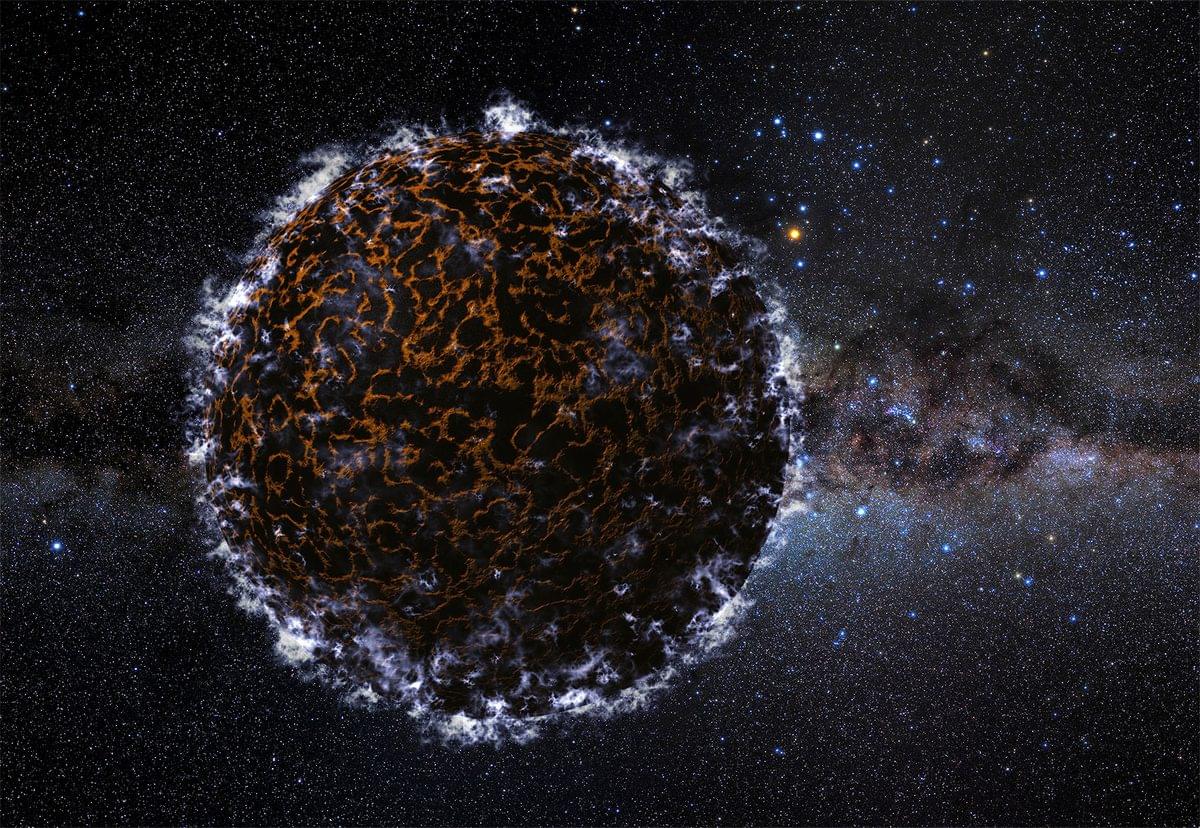
JWST study suggests a handful of ‘leaky’ galaxies reionized the early universe

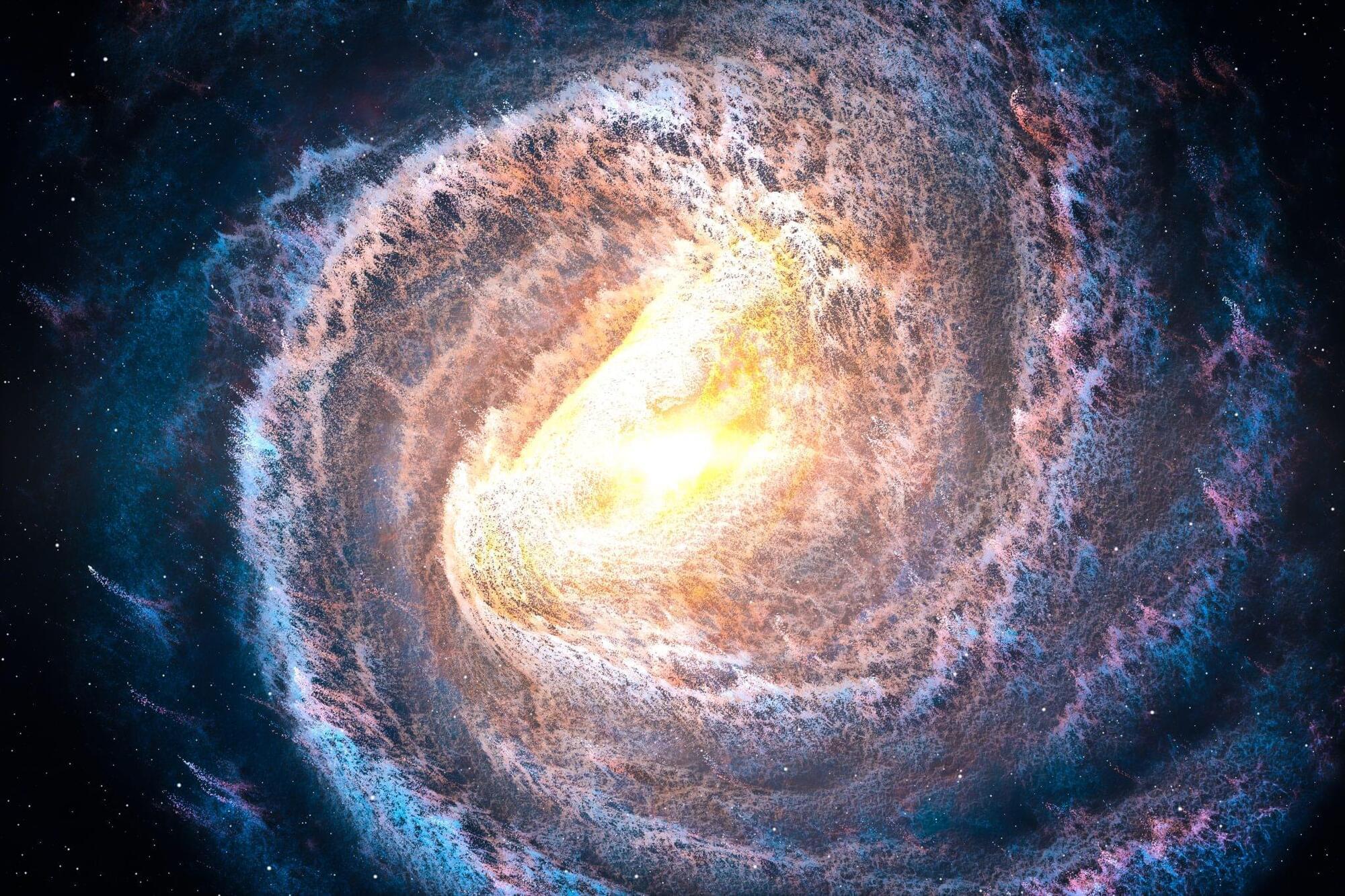
A new study analyzing the James Webb Space Telescope (JWST) spectra of more than 1,400 galaxies suggests a surprisingly small group of “leaky” galaxies was responsible for cosmic reionization. The paper outlining this work was posted to the arXiv preprint server on July 24.

Cosmic reionization happened when ionizing ultraviolet radiation from early stars and galaxies heated the universe’s neutral hydrogen gas and converted it into the ionized state seen today. Based on cosmic microwave background and quasar data, this epoch is estimated to have occurred around redshift 6–8, roughly 600 million to 1 billion years after the Big Bang. The main driver is thought to be star-forming galaxies. Therefore, the epoch of reionization is considered the last major phase transition of the universe.

The ultraviolet radiation responsible for cosmic reionization is mainly composed of Lyman continuum (LyC) photons with wavelengths less than 912 Å. Their escape fraction from galaxies, along with the rate of their production, determines whether they reach and ionize the intergalactic medium because most LyC photons are absorbed internally by gas and dust.

Sunlight-powered setup generates quantum entanglement

Today’s quantum technologies rely on energy-intensive lasers, raising concerns that scaling them up could further increase energy demands. In new work, researchers have demonstrated that quantum entanglement between photons can be generated directly from sunlight, offering a potential alternative.

“Quantum entanglement is crucial for applications such as secure communication, ultra-precise sensing and high-performance computation,” said Cheng Li, a recent graduate of the University of Ottawa in Canada. “Our work shows that abundant natural light sources can be used for quantum entanglement, opening the possibility of more energy-efficient and accessible quantum technologies.”

In Optica, the researchers report that the entanglement they achieved using sunlight was comparable to laser-based approaches after accounting for differences in the bandwidth of the input light.

Two-qubit entangling gate flags its own errors as detectable photon losses

Quantum errors are a normal part of quantum computing because fragile physical qubits (the tiny components storing data) can easily break down because of environmental noise, like heat, stray signals or microscopic vibrations. Typical fixes involve vast amounts of extra hardware qubits, which make computers larger, more expensive and harder to build.

In a paper published in the journal Nature, scientists report developing a two-qubit entangling gate that automatically flags its most common errors as they occur.

The team at D-Wave Quantum Inc. engineered an ultrafast link, called a controlled-Z (CZ) entangling gate, that entangles two qubits in just 500 nanoseconds. When errors occur, the system automatically flags most of them as photon losses (known as erasures) instead of letting them turn into hidden glitches.

/* */