Toggle light / dark theme

Get the latest international news and world events from around the world.

Log in for authorized contributors

Three anesthesia drugs all have the same effect in the brain, MIT researchers find

When patients undergo general anesthesia, doctors can choose among several drugs. Although each of these drugs acts on neurons in different ways, they all lead to the same result: a disruption of the brain’s balance between stability and excitability, according to a new MIT study.

This disruption causes neural activity to become increasingly unstable, until the brain loses consciousness, the researchers found. The discovery of this common mechanism could make it easier to develop new technologies for monitoring patients while they are undergoing anesthesia.

“What’s exciting about that is the possibility of a universal anesthesia-delivery system that can measure this one signal and tell how unconscious you are, regardless of which drugs they’re using in the operating room,” says Earl Miller, the Picower Professor of Neuroscience and a member of MIT’s Picower Institute for Learning and Memory.

Miller, Edward Hood Taplin Professor of Medical Engineering and Computational Neuroscience Emery Brown, and their colleagues are now working on an automated control system for delivery of anesthesia drugs, which would measure the brain’s stability using EEG and then automatically adjust the drug dose. This could help doctors ensure that patients stay unconscious throughout surgery without becoming too deeply unconscious, which can have negative side effects following the procedure.

Miller and Ila Fiete, a professor of brain and cognitive sciences, the director of the K. Lisa Yang Integrative Computational Neuroscience Center (ICoN), and a member of MIT’s McGovern Institute for Brain Research, are the senior authors of the new study, which appears today in Cell Reports. MIT graduate student Adam Eisen is the paper’s lead author.

Excellent work Earl Miller and team!

Read More

The Secret Life of Claude Code: Reading Code You Didn’t Write

How to orient yourself in an unfamiliar codebase — and how Claude Code can help you find your footing without losing your judgment.

Margaret is a senior software engineer. Timothy is her junior colleague. They work in a grand Victorian library in London — the kind of place where inherited collections are treated with respect, and where no one pretends to have read something they haven’t. Timothy has arrived today with someone else’s problem.

Episode 6

Scientists say there is one sea on Earth that touches no land, and that is because it has no shore

The Atlantic Ocean holds a secret: a patch of calm water ringed by swift currents, sitting about 590 miles east of Florida yet never touching land. Known as the Sargasso Sea, sailors have crossed it for centuries, but few notice the border when they slip into glassy indigo waters.

Those who linger find the surface scattered with golden-brown seaweed – Sargassum – named for the Portuguese word sargaço, a type of grape-like algae. The plants bob in slow motion, rolling gently like tumbleweeds on a prairie of water.

Consciousness is the hidden architecture behind fundamental and quantum physics

Physics and phenomenology are usually taken to inhabit different worlds. Physics aims at a description of objective reality in mathematical terms. Phenomenology—the philosophical movement inaugurated by Edmund Husserl—is an a priori investigation into consciousness and into the ways things appear in experience. Physics deals with equations, invariants, and symmetries, aiming to represent reality minus observers; phenomenology seems to concern precisely what physics leaves out: subjectivity, consciousness, meaning. If the two meet at all, it is only in polite, but ultimately inconsequential, interdisciplinary dialogue.

My claim is that this picture is mistaken. Physics does not stand outside phenomenology. It presupposes the very structures phenomenology seeks to analyse—above all, the structured correlation between subject and object through which objectivity first becomes intelligible. The task, therefore, is not to unite two distant domains, but to recognize a relation that has been there from the beginning.

To make this more tangible, consider what physics means by objectivity. Contrary to the image sometimes promoted in popular science—objectivity as detachment from all observers—in spacetime physics, objectivity is defined by invariance across observers. A physical description is deemed objective if it holds regardless of the coordinate frame in which it is expressed.

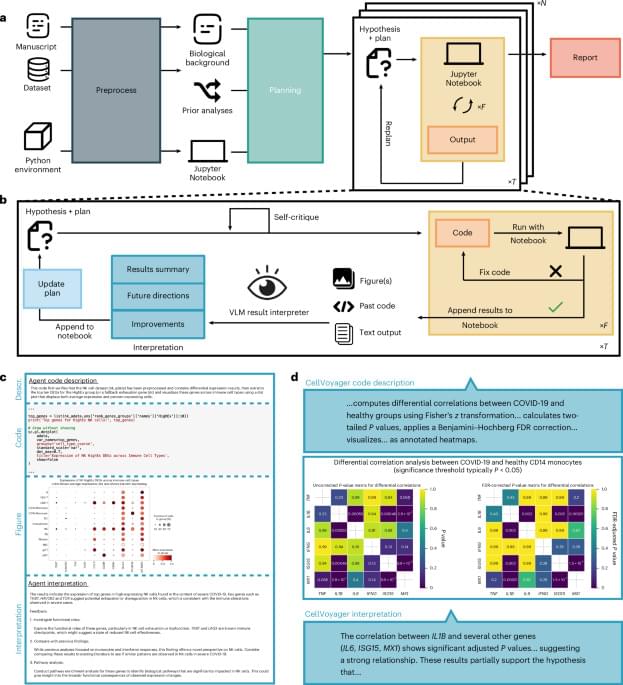
CellVoyager: AI CompBio agent generates new insights by autonomously analyzing biological data

CellVoyager is an artificial intelligence agent capable of exploring new biological hypotheses by autonomously analyzing single-cell RNA sequencing datasets and accounting for background information and prior analyses.

A single injection of mRNA-like treatment could help heart muscle heal after a heart attack in mice and pigs. Could it work in humans too?

Link:- https://www.livescience.com/health/a-single-injection-of-mrn…tUEC70CfRQ


Link:-?utm_source=facebook&utm_medium=social&utm_campaign=dhfacebook&utm_content=app.dashsocial.com/live-science/library/media/652167657

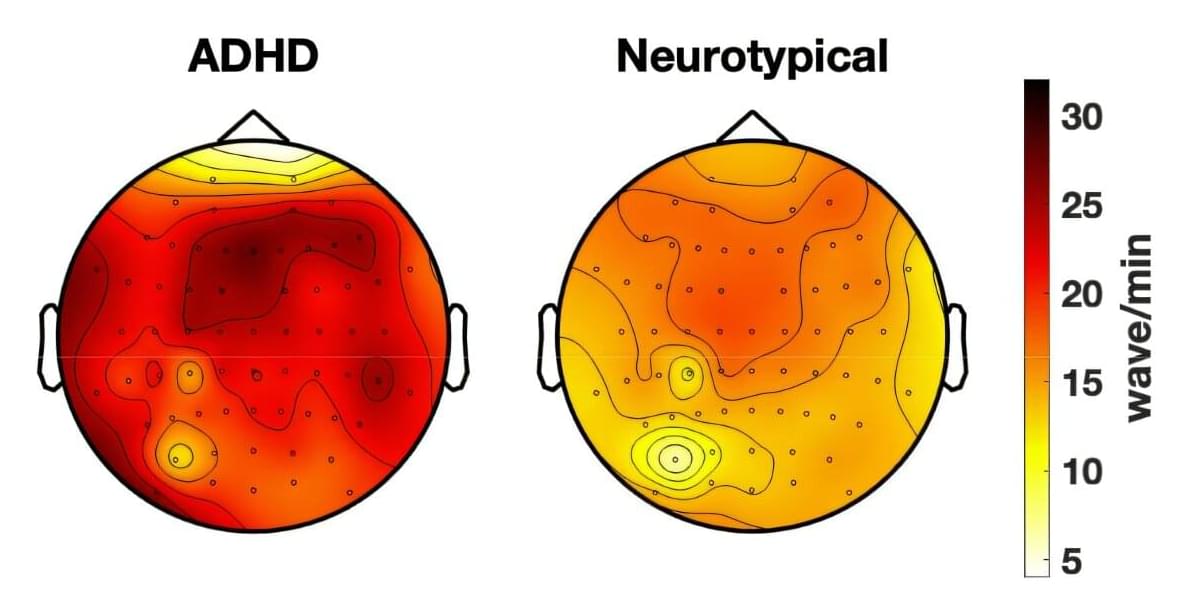
Differences in brain activity between ADHD and neurotypical adults

Elaine Pinggal from Monash University, and colleagues assessed how sleep-like brain activity in awake adults influences sustained attention during a task.

The researchers compared sleep-like brain activity from 32 medication-withdrawn adults with ADHD to 31 neurotypical adults as participants performed a task requiring sustained attention. The findings have been published in JNeurosci.

The ADHD group had more sleep-like brain activity, which was associated with more lapses in attention. Further analyses revealed that this activity may drive the relationship between ADHD and attention problems, including task errors, slower reaction times, and sleepiness.

/* */