The soft, stretchable VoxeLite developed by Professors J. Edward Colgate and Michael Peshkin wraps around a fingertip to let users feel the digital world.


This study isolates extracellular vesicles and particles (EVPs) from hepatocellular carcinoma (HCC) cells. Biophysical and proteomic analyses demonstrate that sEVs and exomeres are distinctive entities. GALNS and MAN2B1 are identified as potential EM markers. HCC-derived EMs promote oncogenesis via several mechanisms, including PI3K/AKT/mTOR activation, cell cycle progression, and lipidomic dysregulation.
Sundar Pichai predicts AI will cause “societal disruption,” but of course, he himself won’t do anything about it.
Supports high-speed transfer between USB-A and USB-C devices
In this video, Whitney, a registered dental hygienist, breaks down the viral headlines about a “tooth regrowth shot” being tested in Japan. She explains the real science behind the drug — how it targets the USAG-1 protein to potentially reactivate dormant tooth buds — and clears up common misconceptions about tooth regeneration research. From animal trials to current human safety studies, Whitney dives into what’s fact, what’s hype, and what this breakthrough could mean for the future of dentistry.
https://bit.ly/free-oral-hygiene-rout… SHOP MY STOREFRONT: https://bit.ly/4jgJPdG • Born With Missing Teeth? (Hypodontia)
• What Happens If You Don’t Replace Your Mis…
• Regrowing vs Remineralizing Tooth Enamel 🦷 WANT MORE TEETH TALK? ▶ newsletter: https://bit.ly/ttg-subscribe ▶ bettermouth app: https://www.bettermouth.com/ ▶ website: https://teethtalkgirl.com ▶ shop happyteeth: https://givehappyteeth.com/ ▶ amazon storefront: https://www.amazon.com/shop/teethtalk?tag=lifeboatfound-20?tag=lifeboatfound-20 🦷 SUPPORT THIS CONTENT: ▶ patreon:
/ teethtalkgirl ▶ youtube:
/ @teethtalkhttps://www.france24.com/en/live-news… https://pubmed.ncbi.nlm.nih.gov/33579… https://www.kyoto-u.ac.jp/en/research… https://news.harvard.edu/gazette/stor… https://trial.medpath.com/news/7c38d8… https://theweek.com/health/the-scienc… 🦷 BACKGROUND MUSIC: artlist.io 🦷 NOTE: This video does not provide medical advice and is intended for informational purposes only. Always seek the advice of your dentist or other qualified health provider with any questions you may have regarding a medical or dental condition. Never disregard professional medical advice or delay in seeking it because of something you have heard or seen on social media. ☮️ ❤️ 🦷
https://bit.ly/4jgJPdG
• Born With Missing Teeth? (Hypodontia)
• What Happens If You Don’t Replace Your Mis…
• Regrowing vs Remineralizing Tooth Enamel.
▶ newsletter: https://bit.ly/ttg-subscribe.
▶ bettermouth app: https://www.bettermouth.com/
▶ website: https://teethtalkgirl.com.
▶ shop happyteeth: https://givehappyteeth.com/
▶ amazon storefront: https://www.amazon.com/shop/teethtalk?tag=lifeboatfound-20?tag=lifeboatfound-20.
▶ patreon: / teethtalkgirl.
▶ youtube: / @teethtalk.
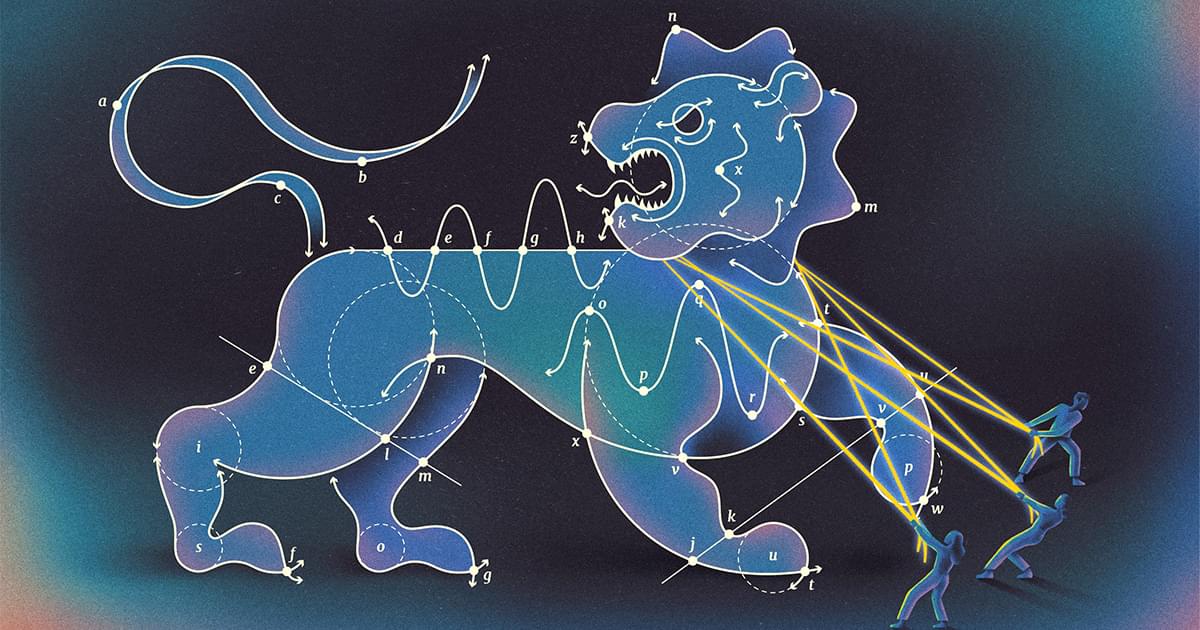
When the team posted their proof in August, many mathematicians were excited. It was the biggest advance in the classification project in decades, and hinted at a new way to tackle the classification of polynomial equations well beyond four-folds.
But other mathematicians weren’t so sure. Six years had passed since the lecture in Moscow. Had Kontsevich finally made good on his promise, or were there still details to fill in?
And how could they assuage their doubts, when the proof’s techniques were so completely foreign — the stuff of string theory, not polynomial classification? “They say, ‘This is black magic, what is this machinery?’” Kontsevich said.
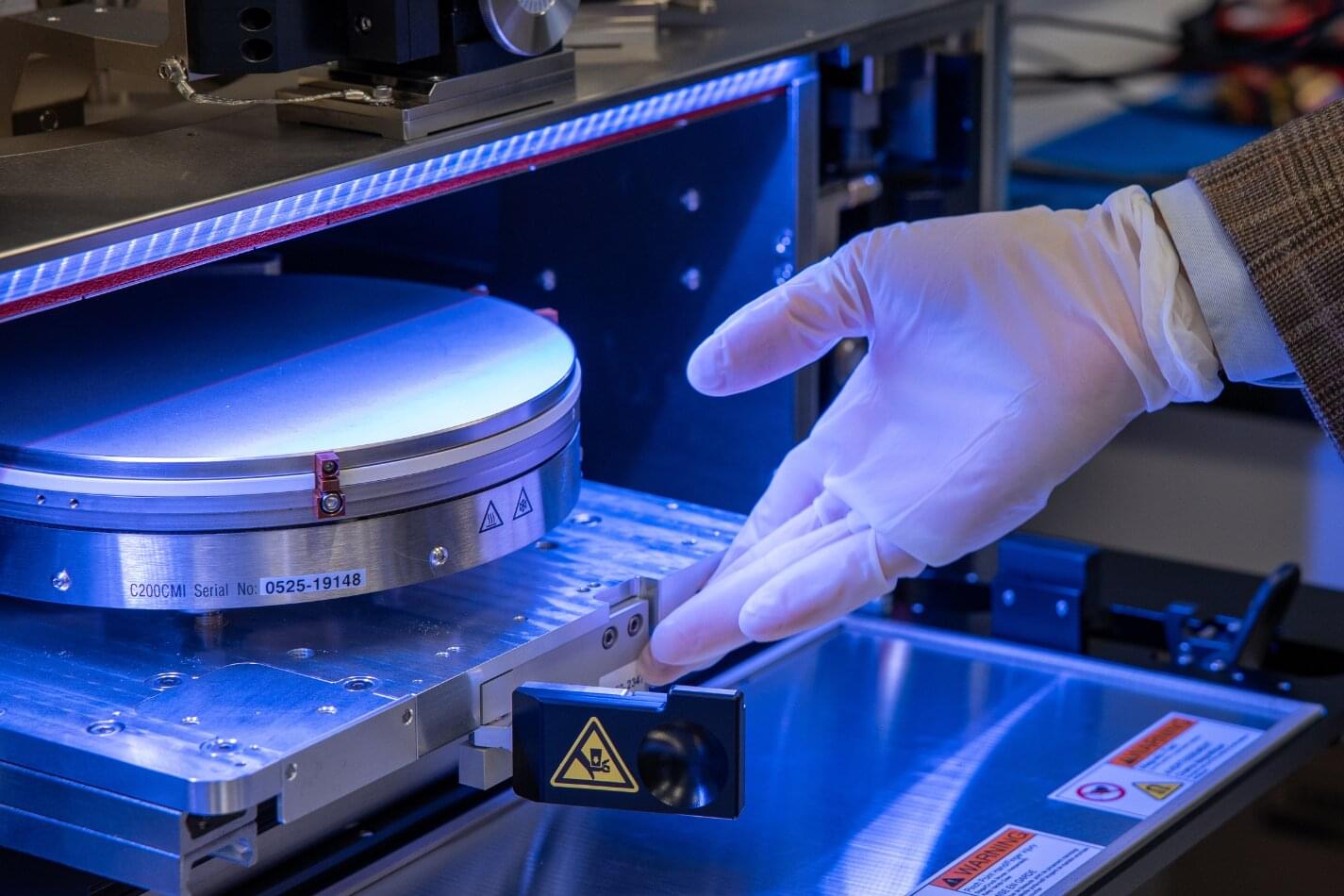
A collaborative team has achieved the first monolithic 3D chip built in a U.S. foundry, delivering the densest 3D chip wiring and order-of-magnitude speed gains.
Engineers at Stanford University, Carnegie Mellon University, University of Pennsylvania, and the Massachusetts Institute of Technology have collaborated with SkyWater Technology, the largest exclusively U.S.-based pure-play semiconductor foundry, to develop a novel multilayer computer chip whose architecture could help usher in a new era of AI hardware and domestic semiconductor innovation.
Unlike today’s largely flat, 2D chips, the new prototype’s key ultra-thin components rise like stories in a tall building, with vertical wiring acting like numerous high-speed elevators that enable fast, massive data movement. Its record-setting density of vertical connections and carefully interwoven mix of memory and computing units help the chip bypass the bottlenecks that have long slowed improvement in flat designs. In hardware tests and simulations, the new 3D chip outperforms 2D chips by roughly an order of magnitude.
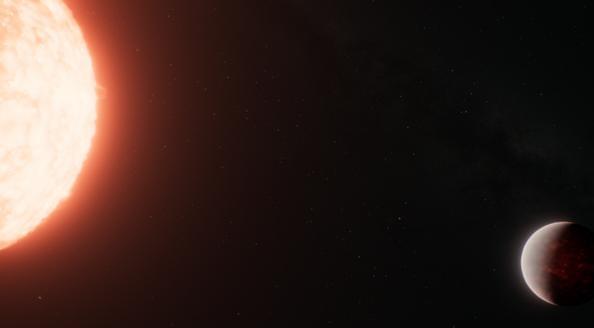
“What really sets this planet apart is its anomalously low density. It is less dense than you would expect if it had an Earth-like composition,” said Dr. Johanna Teske.
What can a rocky molten exoplanet with an atmosphere teach astronomers about planetary formation and evolution? This is what a recent study published in The Astrophysical Journal Letters hopes to address as a team of scientists investigated a thick atmosphere enveloping an exoplanet where previous hypotheses state it shouldn’t exist. This study has the potential to help scientists not only challenge longstanding hypotheses regarding exoplanets but also gain new insight into planetary formation and evolution.
For the study, the researchers used NASA’s James Webb Space Telescope (JWST) to observe TOI-561 b, which is located approximately 86 parsecs (280 light-years) from Earth and whose radius is 1.4 times of Earth. What makes TOI-561 unique is its orbit is only 11 hours long, resulting in an equilibrium temperature of approximately 2,500 Kelvin (2,227 degrees Celsius/4,040 degrees Fahrenheit).

Scientists found that nanopores’ electrical charges control how ions flow and when pores temporarily shut down. The discovery could allow engineers to design nanopores that “learn” like synapses for next-generation computing.
Pore-forming proteins appear across many forms of life. In humans, they help protect the body by supporting immune defenses. In bacteria, they often function as toxins that create openings in cell membranes. These natural pores regulate the movement of ions and molecules, and their precise control over molecular transport has made them valuable in biotechnology, including DNA sequencing and molecular sensing.
Unpredictable Behavior in Ion Flow.
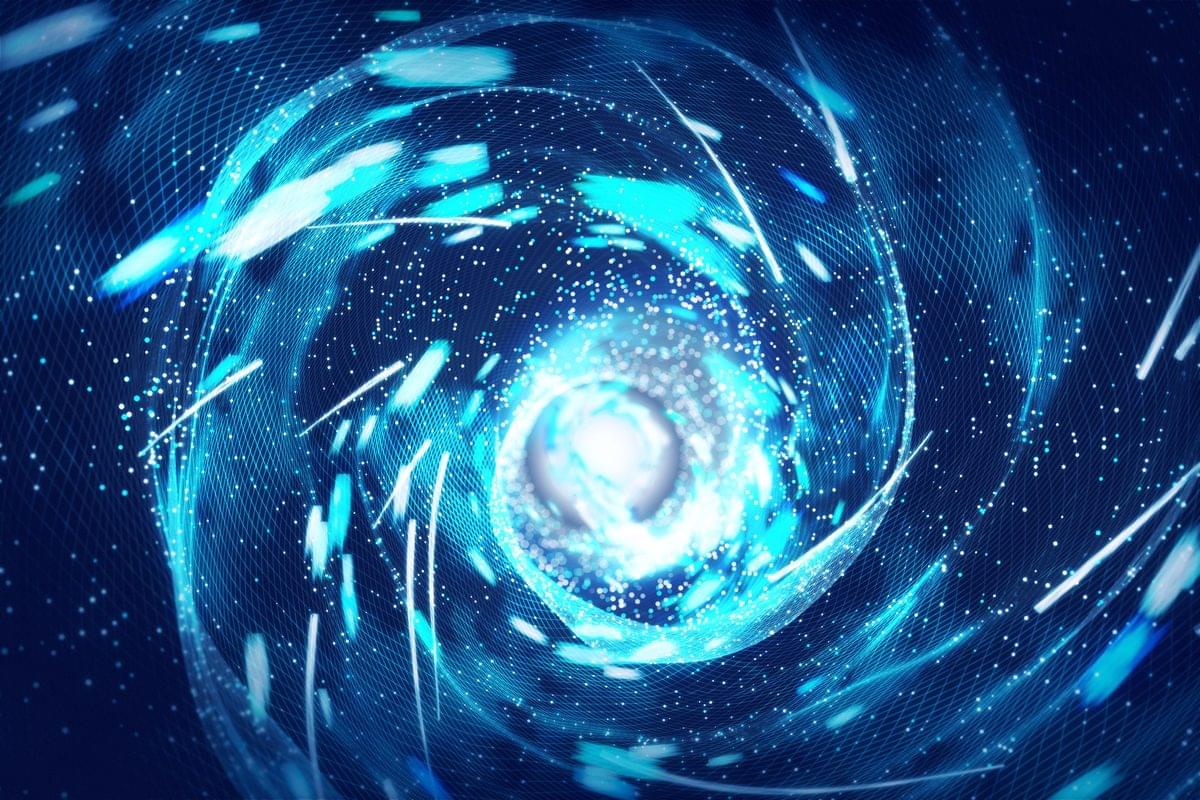
Consider two events, A and B, such as flashes of light made by two sources in different places.
Cause and effect means there are three possibilities: 1) Flash A happened before flash B, and via some mechanism, could have triggered B; 2) Flash B happened before Flash A and could have triggered it; 3) Neither one could have triggered the other because they are too far apart in space and too close in time for a triggering signal to have been sent from one location to the other.
Now, Einstein’s Special Theory of Relativity states that all observers, no matter how fast they’re moving relative to each other, see light travelling at the same constant speed.
This strange but simple fact can lead to observers seeing events happening in different orders.
For option above, two observers moving relative to each other close to the speed of light might disagree on the ordering of flashes.
Thankfully, there’s no danger of an effect coming before its cause (known as a ‘violation of causality’) since the events are too far apart for either to cause the other.
However, what if options and coexisted in a quantum superposition? The causal order of the two events would no longer be fixed.