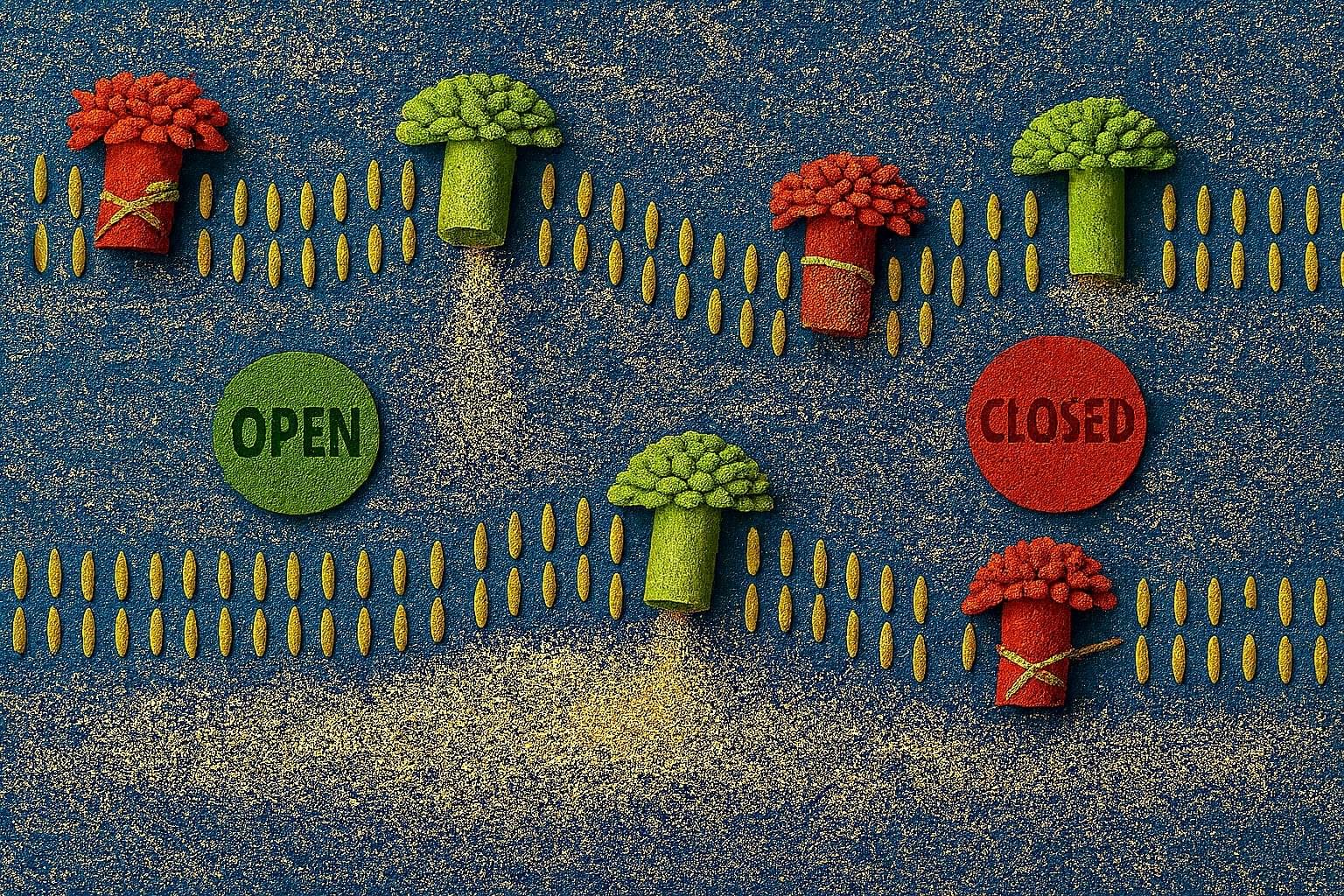
Scientists found that nanopores’ electrical charges control how ions flow and when pores temporarily shut down. The discovery could allow engineers to design nanopores that “learn” like synapses for next-generation computing.
Pore-forming proteins appear across many forms of life. In humans, they help protect the body by supporting immune defenses. In bacteria, they often function as toxins that create openings in cell membranes. These natural pores regulate the movement of ions and molecules, and their precise control over molecular transport has made them valuable in biotechnology, including DNA sequencing and molecular sensing.
Unpredictable Behavior in Ion Flow.