His ideas challenge the core idea of quantum mechanics: that events are truly random.


Great article. I should note that it actually has nothing to do with slow and boring research — it’s about the importance of scientists practicing good communication and public engagement to facilitate fundraising from non-governmental sources.
As federal research funding shrinks, scientists are looking to other sources of support. Can they learn to sell their work without selling out?
Since the middle of the twentieth century, the National Institutes of Health and the National Science Foundation have embodied an imperfect social contract: Federal agencies would fund basic research at scale, and in return, that research would serve the public good through medical advances, technological progress, and economic growth.
For scientists, this system created a reliable pathway: Do good work, write strong grants, and federal agencies would keep your lab running. It was never a perfectly fair system, but it was predictable enough that you could build a life around it. If your work was solid and your grants were strong, the system would fund you.
The first topic of discussion at the 2025 Maintainers Summit has been in the air for a while: what role — if any — should machine-learning-based tools have in the kernel development process? While there has been a fair amount of controversy around these tools, and concerns remain, it seems that the kernel community, or at least its high-level maintainership, is comfortable with these tools becoming a significant part of the development process.
Sasha Levin began the discussion by pointing to a summary he had sent to the mailing lists a few days before. There is some consensus, he said, that human accountability for patches is critical, and that use of a large language model in the creation of a patch does not change that. Purely machine-generated patches, without human involvement, are not welcome. Maintainers must retain the authority to accept or reject machine-generated contributions as they see fit. And, he said, there is agreement that the use of tools should be disclosed in some manner.
But, he asked the group: is there agreement in general that these tools are, in the end, just more tools? Steve Rostedt said that LLM-generated code may bring legal concerns that other tools do not raise, but Greg Kroah-Hartman answered that the current developers certificate of origin (“Signed-off-by”) process should cover the legal side of things. Rostedt agreed that the submitter is ultimately on the hook for the code they contribute, but he wondered about the possibility of some court ruling that a given model violates copyright years after the kernel had accepted code it generated. That would create the need for a significant cleanup effort.
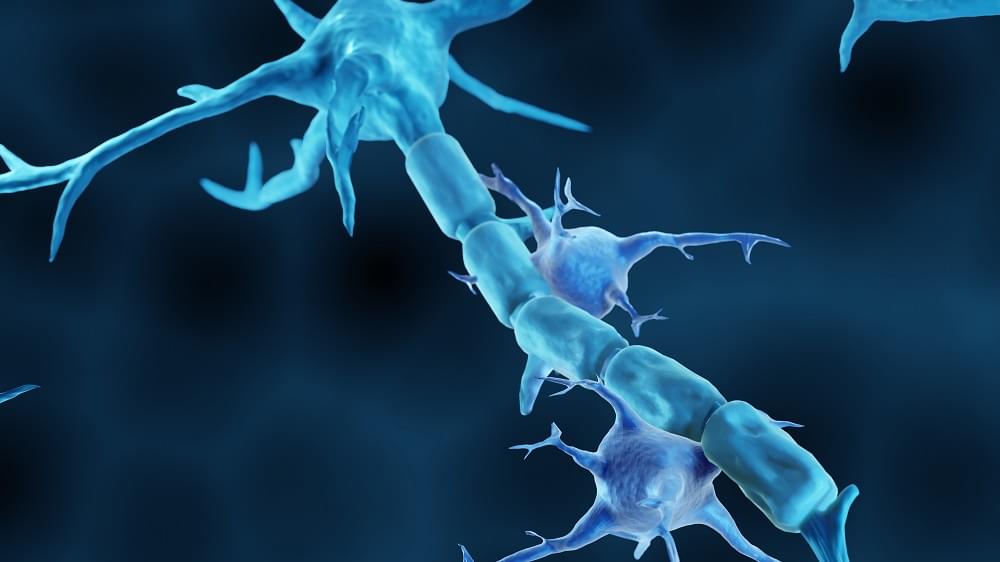
A new study shows that the overexpression of somatostatin (SST), a neuropeptide produced in neurons and acting mostly on microglia, lowers inflammation and amyloid β burden, improving cognitive abilities in a mouse model of Alzheimer’s. Drugs affecting this pathway are already available [1].
The unusual suspect
In Alzheimer’s disease, many signaling pathways in the brain become dysregulated. Since going after the main hallmarks of the disease (amyloid β and tau protein accumulation) has only yielded modest results so far, scientists are exploring various secondary targets whose levels correlate with the disease.
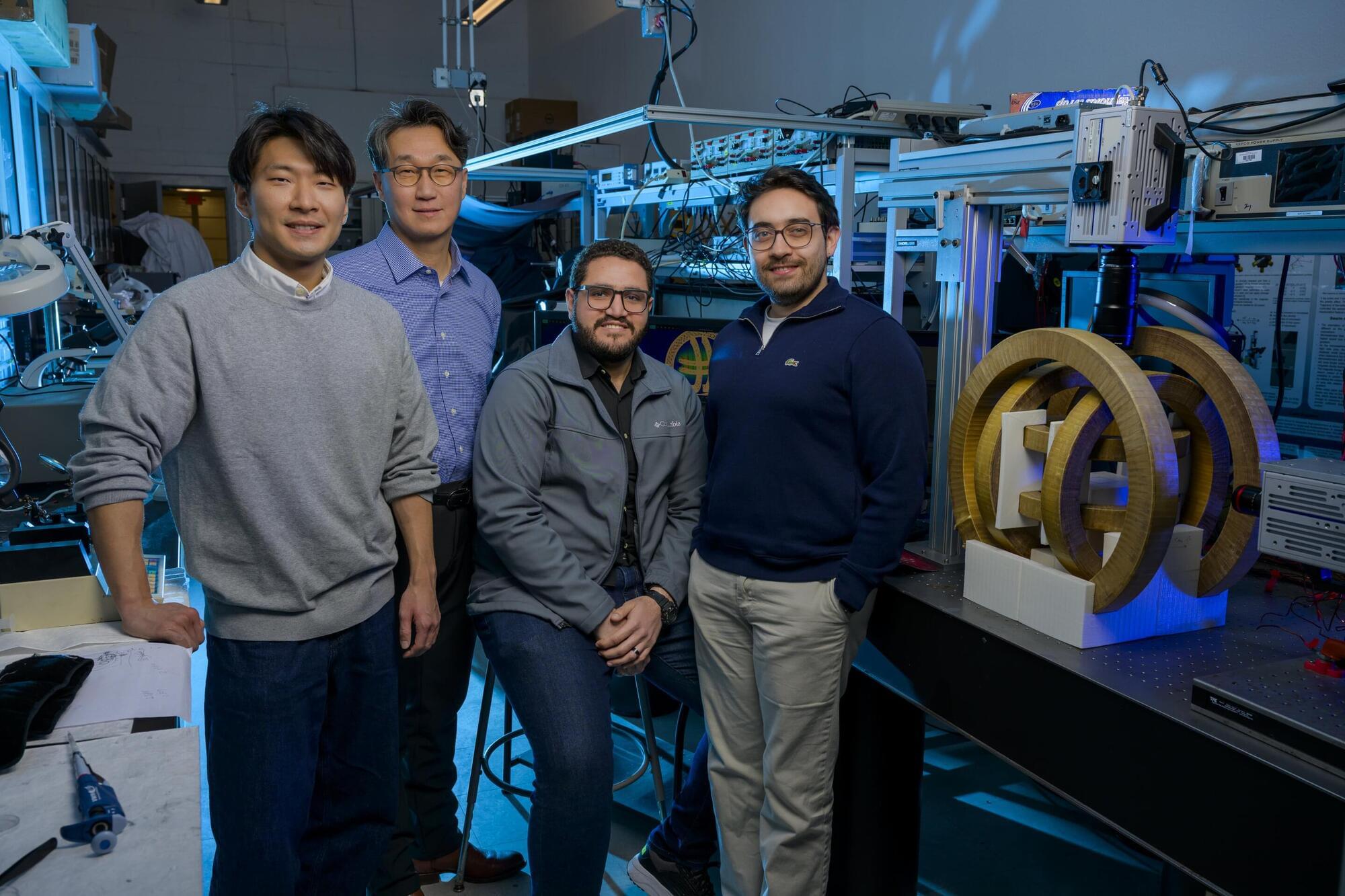
SMU researchers have created an electromagnetic coil system that can control microrobots without requiring continuous visual tracking of their position—a significant advancement that could enable microrobots to operate inside the body, within industrial pipes and other places that aren’t always visible with a camera.
“In real-world settings, imaging methods can be complex, slow, expensive, or unreliable,” said lead inventor Sangwon Lee, a postdoctoral researcher at the BAST Lab at SMU. “By reducing or eliminating the need for position tracking, the system can be simpler, more robust, and more practical for those hard-to-see environments, while still providing controlled motion.”
The instrument works by creating a uniform magnetic field gradient that applies consistent force to microrobots regardless of their location within the workspace, eliminating the need for constant position updates that have long been an obstacle for microrobot control systems, explained co-inventor MinJun Kim is the Robert C. Womack Chair Professor in the Lyle School of Engineering at SMU and principal investigator of the BAST Lab.
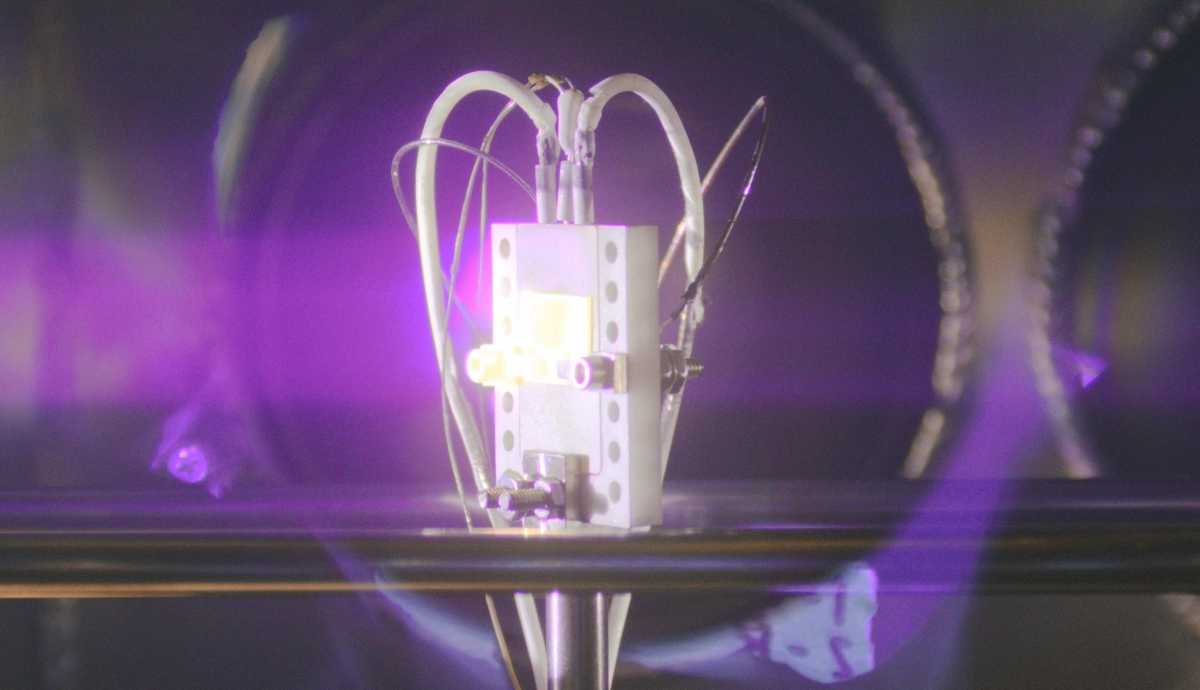
Fusion reactions release tremendous amounts of energy by fusing two lighter atoms into a heavier one. But harvesting that energy has proven challenging. The most common approach is to heat water and spin a steam turbine, but that approach isn’t terribly efficient, harnessing at best around 60% of the power.
Avalanche Energy thinks it can capture more of that energy by developing new materials known as radiovoltaics. Radiovoltaics are similar to photovoltaics — traditional solar panels — in that they use semiconductors to transform radiation into electricity. They’ve been around for a while, but they’re not very effective. Existing radiovoltaics are easily damaged by the very radiation they harness and don’t produce that much electricity.
Today, Avalanche was awarded a $5.2 million contract from DARPA to develop new radiovoltaics, the company exclusively told TechCrunch.
Sign up to our newsletter 👉 https://absolutelyagentic.com/?modal=signupAI is accelerating faster than almost anyone predicted, but the most important questi…
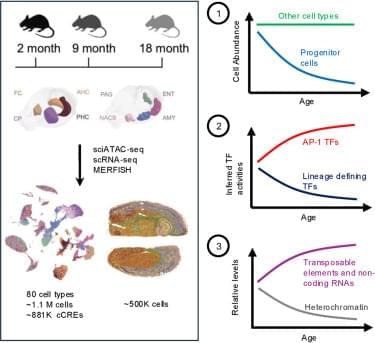
Amaral et al. present a single-cell atlas of brain aging, revealing coordinated chromatin and gene expression changes across multiple regions from young to old mice. Their analyses show that aging involves loss of progenitor cells, dysregulation of master transcription factors, and destabilization of heterochromatin, driving a gradual erosion of cellular identity.

Why mammals cannot regenerate limbs like amphibians do presents a long-standing puzzle in biology. To uncover the underlying differences, we compared amputation responses of embryonic mouse (Mus musculus) and Xenopus laevis tadpole limbs. Lowering environmental oxygen or stabilizing the oxygen-sensitive hypoxia-inducible factor 1A (HIF1A) induced rapid wound healing in mouse limbs. This response was accompanied by altered cellular mechanics, metabolism, and a histone landscape that primed regenerative cell states. Conversely, Xenopus tadpole limbs retained these features even under high oxygen levels. Their reduced oxygen-sensing capacity was associated with decreased HIF1A-regulating gene expression. Our results thus identify species-specific oxygen-sensing capacity as a fundamental, targetable mechanism that can unlock latent regenerative programs in mammals.
【】 Full article: (Authored by Nader Butto, from Petah Tikva, Israel.)
This work presents a vortex-based geometric interpretation of atomic structure, in which electrons are described as localized vortex excitations embedded in a structured vacuum, offering a physically intuitive framework for understanding shells, subshells, orbitals, quantum numbers, and electron configurations without altering the formal structure of quantum mechanics. QUANTUM_NUMBERS vortex_geometry ElectronConfiguration.
The atomic structure of matter represents one of the foundational achievements of modern physics and chemistry. Early experimental investigations by Rutherford established the nuclear model of the atom [1], while Bohr introduced the concept of discrete electronic energy levels to explain atomic spectra [2]. Sommerfeld subsequently extended this picture by incorporating angular momentum quantization and relativistic corrections [3]. These developments paved the way for the formulation of quantum mechanics, which replaced classical electron orbits with a wave-based description of electronic states.
The quantum-mechanical framework, formalized through the work of Schrödinger, Pauli, Born, and Dirac, provides a mathematically rigorous and highly successful description of atomic behavior [4]-[7]. Within this formalism, electrons are described by wavefunctions whose squared modulus gives the probability density of finding an electron in a given region of space. Atomic orbitals arise as solutions of the Schrödinger equation and are characterized by a set of quantum numbers that determine their energy, angular momentum, spatial orientation, and spin. This approach accurately predicts atomic spectra, selection rules, and chemical periodicity.