Toggle light / dark theme

Get the latest international news and world events from around the world.

Log in for authorized contributors

Why eye contact may help babies learn: A hidden link between two brains

Have you ever noticed how babies get hooked the moment someone makes eye contact with them? That eye contact is not only cute; it may also send a powerful message to a baby. For years, scientists have been investigating whether social messages like eye contact and baby talk do more than engage babies. They may help synchronize babies’ brains with adult brain waves. But the biggest question remained: Does it actually help babies learn?

A new study, published in Nature Communications, offers an answer. Scientists found that 9-month-old infants were able to learn a novel language when the face in a video looked directly at them with fully visible eyes.

Using electroencephalography, or EEG, brain scanning, scientists detected a kind of “neural handshake” between the adult’s and infant’s brains, synchronized through eye contact.

3D lifespan map suggests mouse ovaries keep a constant share of eggs primed

As mice age, their total egg reserve collapses around tenfold. Yet, according to a new study published in Nature Aging, the proportion of eggs in the brief window where a follicle is shifting from dormant to growing stays constant throughout life, at approximately 14%.

“The same percentage of oocytes are being activated regardless of how old the mouse is. That means the ovary has a sensing mechanism that knows how many oocytes are in there and only awakens a fixed proportion. No one has ever known that before. It is completely new biology,” says Dr. Elvan Böke, group leader at the Center for Genomic Regulation (CRG) in Barcelona and senior author of the study.

The finding challenges the perception that ovaries are a passive reservoir of eggs. The study’s authors reframe the female reproductive organ as an actively monitored system and suggest the ovary could be counting its own egg supply through a yet-to-be-identified hormone or neuronal signaling.

In vivo CRISPR screen identifies gene edits that strengthen CAR-T therapy against solid tumors

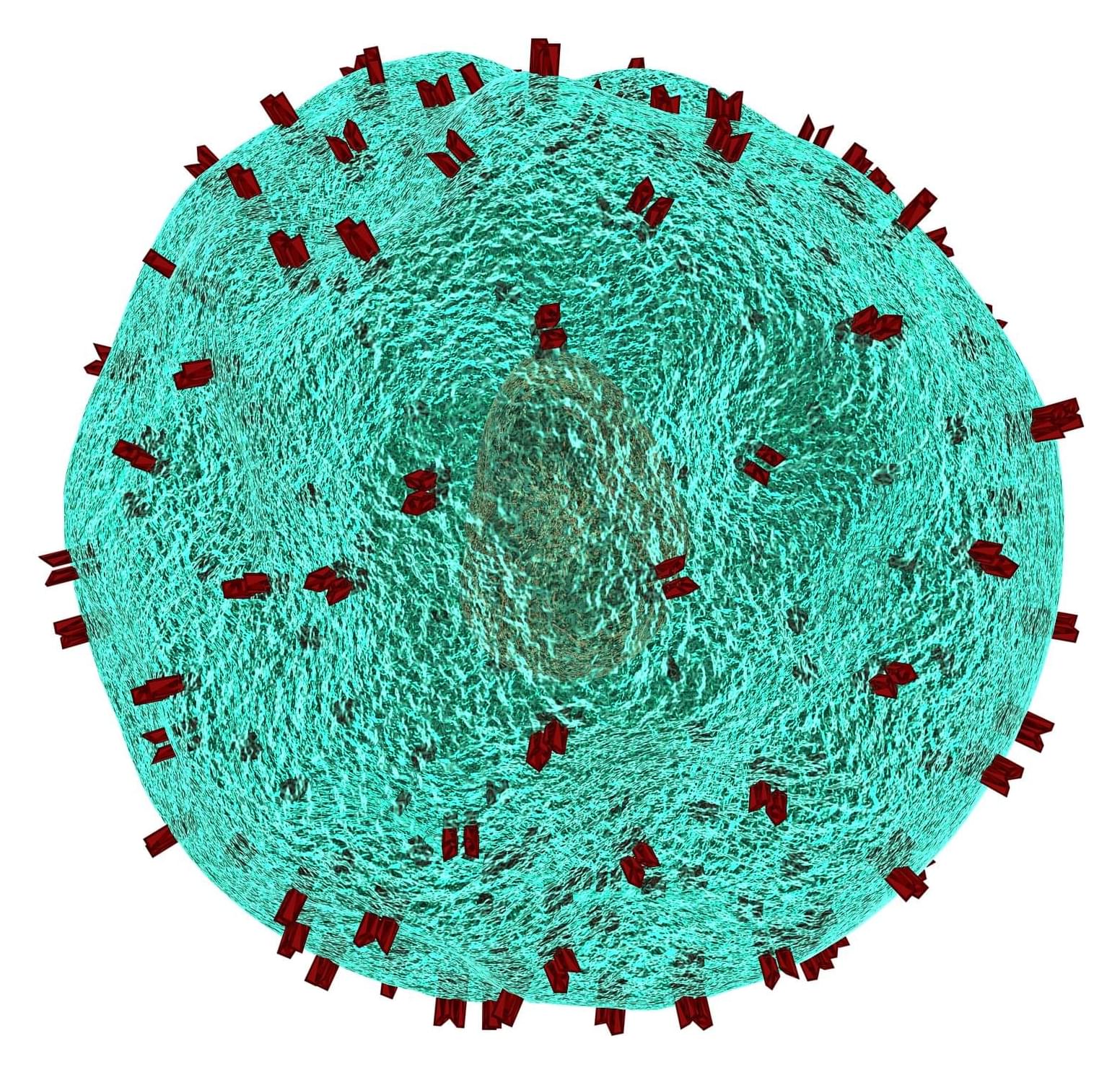
For patients with blood cancers like leukemia and lymphoma, the immunotherapy known as CAR-T cell therapy can be lifesaving. Doctors remove a patient’s immune cells, called T cells, engineer them in the lab to better recognize and attack cancer, and infuse them back into the bloodstream. But for solid tumors—which include lung, pancreatic, ovarian, colon, breast and other cancer types—these engineered immune cells still face too much resistance to effectively treat the disease.

Now, scientists at Gladstone Institutes and UC San Francisco (UCSF) have discovered a pair of genetic edits that make CAR-T cells more effective at infiltrating and fighting solid tumors. In mice, T cells with these edits dramatically outperformed standard CAR-T cells, clearing tumors in many cases where unedited CAR-T cells had little or no effect.

The discovery, published in Nature, was made using the world’s first in vivo genome-wide CRISPR screen in human T cells. Developed by the same team, this platform enabled researchers to study the effects of gene edits on CAR-T cells inside living mice across the entire genome, rather than only in isolated cell cultures in a dish.

Famous oddball quasar isn’t X-ray weak after all, astronomers say

For more than two decades, the quasar PHL 1811 has been considered the prototype of a rare class of “intrinsically X-ray weak” quasars, thought to produce unusually little X-ray radiation. But in 2024, the Einstein Probe spacecraft caught the object in a bright X-ray flare. In a new study, astronomers combined that observation with more than 20 years of archival data to revisit the mystery. The findings were published in The Astrophysical Journal on July 28.

In active galactic nuclei (AGN), material spiraling into the central black hole releases enormous amounts of energy. The accretion disk—the swirling ring of hot gas around the black hole—releases this energy primarily in optical and ultraviolet (UV) light. Additionally, a separate region of extremely hot plasma, called the corona, sits above the disk and is responsible for the X-ray emission. The link between these two emissions is well established.

A rare subset of AGNs breaks this pattern, appearing far dimmer in X-rays than expected, often linked to black holes feeding faster than the theoretical limit. This could mean either that gas is blocking the X-rays without dimming the optical/UV, or that it is “intrinsically weak” as the X-ray-emitting corona itself is genuinely suppressed.

Recyclable glue bonds underwater in seconds and holds for years

Most glues need a dry surface to stick properly. Bonding materials underwater is challenging because water forms a thin film on any surface, so instead of an adhesive touching a material directly, it touches a layer of water, which weakens the bond. But scientists from China have now created a superglue that repels water and forms a strong, recyclable bond within seconds, as they report in a paper published in Nature Communications.

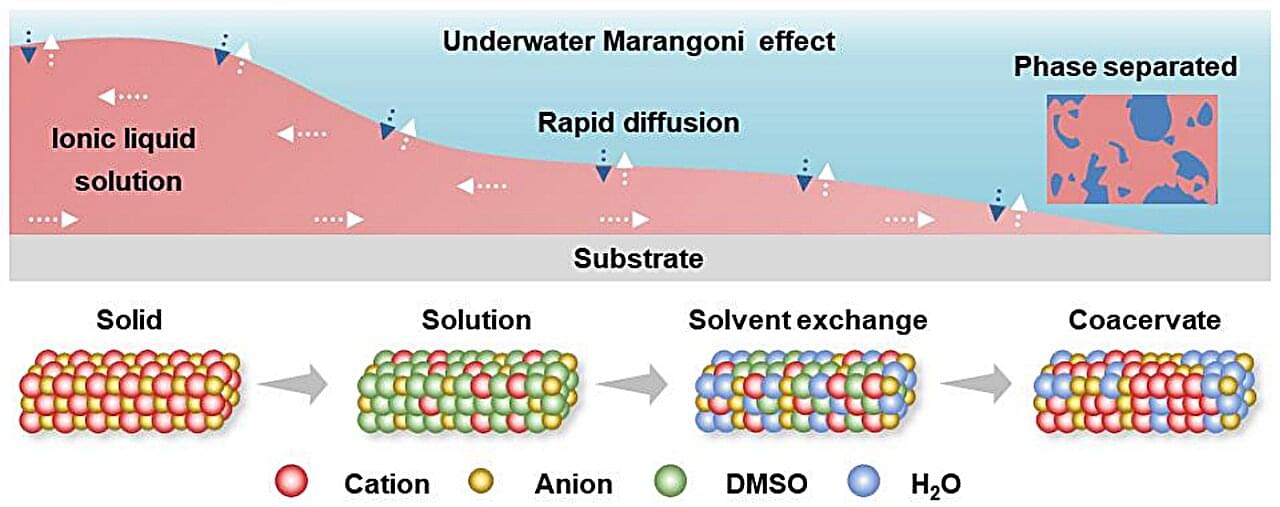
To make their glue, the research team synthesized a supramolecular ionic liquid, a salt-like material whose molecules are held together by temporary, reversible interactions. They mixed it with a solvent called dimethyl sulfoxide (DMSO) and applied the solution directly onto submerged objects made of ceramic, copper, epoxy resin and polyamide.

When the mixture hits the underwater surface, differences in surface tension trigger a rapid motion called Marangoni flow that disrupts the thin layer of water on the surface. The DMSO solvent then diffuses outward, causing the molecules to reassemble into a tough, water-resistant adhesive within seconds.

Long-sought Zhang-Rice singlet visualized directly in cuprate superconductor

Superconductors are materials that conduct electricity with zero electrical resistance below specific temperatures. Most of these materials become superconducting at very low temperatures, but some also exhibit superconductivity at higher temperatures.

Superconductors have proved advantageous for the development of numerous technologies, ranging from medical imaging instruments to particle accelerators, nuclear reactors, power transmission lines and quantum computers. While past studies have shed light on the physical underpinnings of conventional, low-temperature superconductivity, the processes contributing to high-temperature superconductivity remain poorly understood.

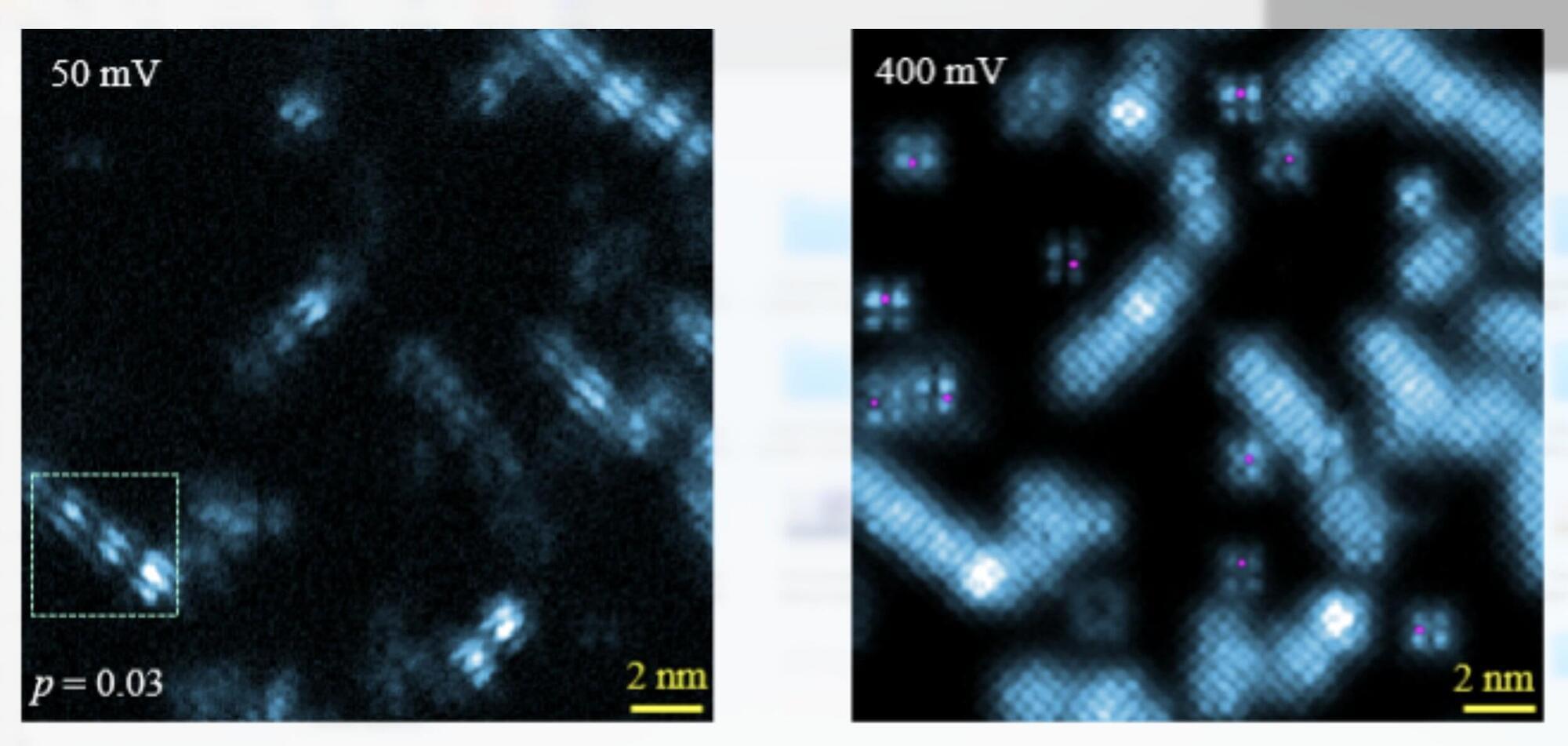
Researchers at Tsinghua University and the Chinese Academy of Sciences recently carried out a study aimed at better understanding the physical processes that give rise to superconductivity in hole-doped Ca₂CuO₂Cl₂ (CCOC), an unconventional cuprate superconductor.

Single synthetic peptide forms electrically polarized, self-healing hydrogel

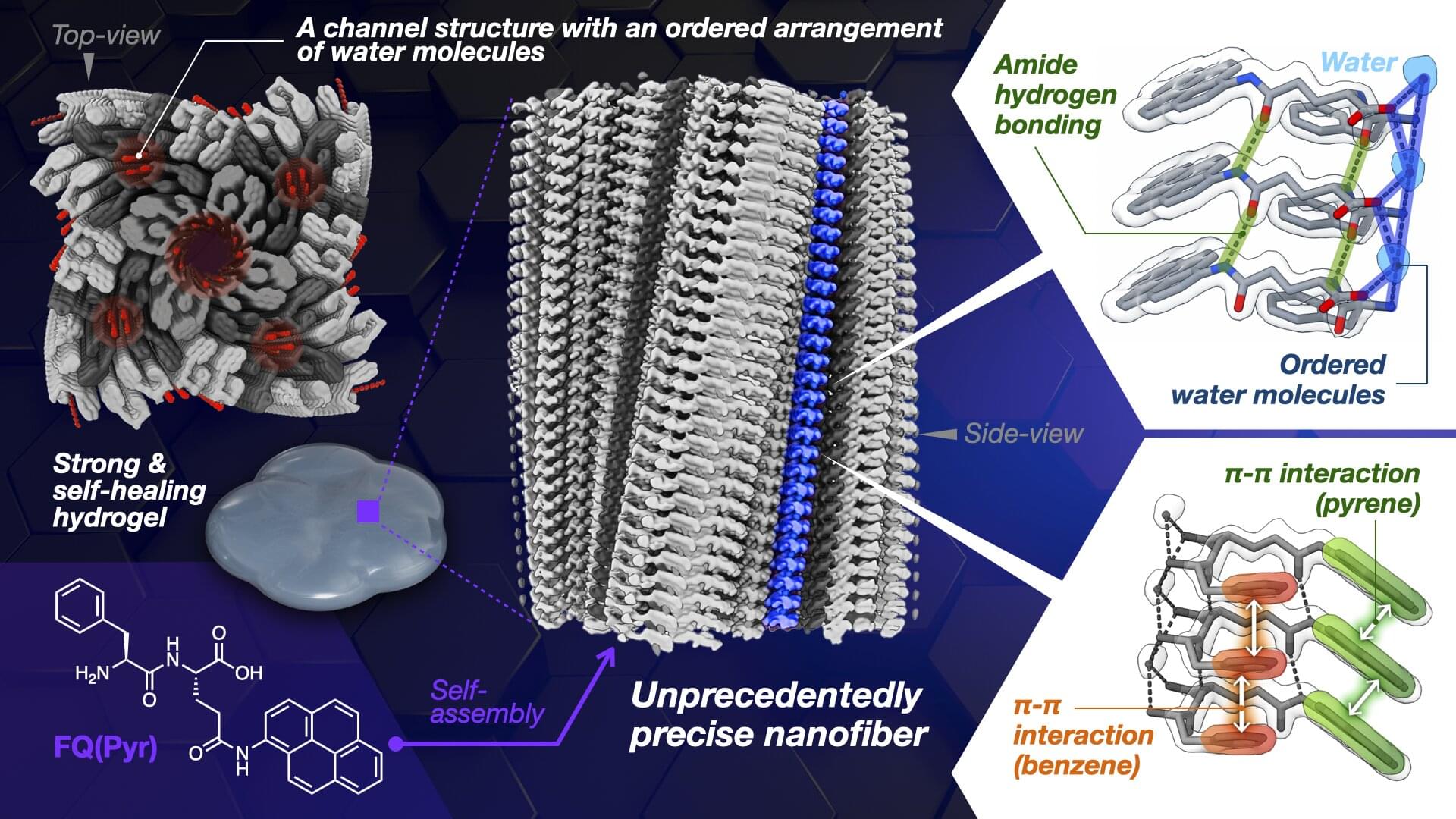
Researchers from the RIKEN Center for Sustainable Resource Science (CSRS) and RIKEN Pioneering Research Institute (PRI) in Japan, together with collaborators from the University of Münster, Germany, have developed a new hydrogel that offers significant advantages over others currently on the market in the field of biomaterials.

Based on a single synthetic peptide called FQ(Pyr), the new hydrogel has a highly organized structure made of nanofibers containing tiny water channels. The molecules within each nanofiber all point in the same direction, creating electrical polarization along the fiber. This means that, in addition to being strong and flexible, the new gel could be used to transport ions, generate electrical signals when squeezed or have other advanced interactions with biological tissues.

The findings were published in Nature Communications.

/* */