Toggle light / dark theme

Get the latest international news and world events from around the world.

Log in for authorized contributors

New MacSync malware dropper evades macOS Gatekeeper checks

The latest variant of the MacSync information stealer targeting macOS systems is delivered through a digitally signed, notarized Swift application.

Security researchers at Apple device management platform Jamf say that the distribution method constitutes a significant evolution from past iterations that used less sophisticated “drag-to-Terminal” or ClickFix tactics.

“Delivered as a code-signed and notarized Swift application within a disk image named zk-call-messenger-installer-3.9.2-lts.dmg, distributed via https://zkcall.net/download, it removes the need for any direct terminal interaction,” the researchers say in a report today.


Interpol-led action decrypts 6 ransomware strains, arrests hundreds

An Interpol-coordinated initiative called Operation Sentinel led to the arrest of 574 individuals and the recovery of $3 million linked to business email compromise, extortion, and ransomware incidents.

Between October 27 and November 27, the investigation, which involved law enforcement in 19 countries, took down more than 6,000 malicious links and decrypted six distinct ransomware variants.

Interpol says that the cybercrime cases investigated are connected to more than $21 million in financial losses.

Identification of CDC25 as a Common Therapeutic Target for Triple-Negative Breast Cancer

(Cell Reports 23, 112–126; April 3, 2018)

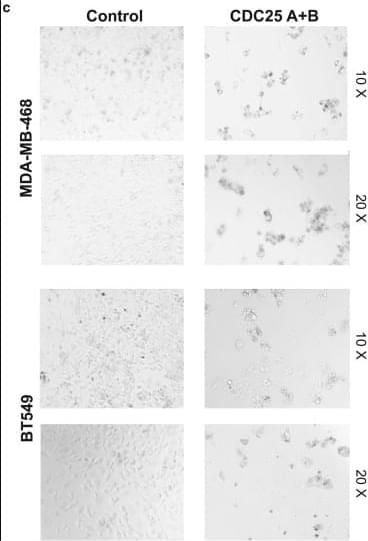
In the originally published version of this article on April 3, 2018, Figure 5C contained two representative images for each treatment condition. One image was inadvertently duplicated in the panel depicting the combined knockdown of CDC25a and CDC25b. The authors have reviewed the original experimental data and provided corrected images. The revised Figure 5C now accurately presents the results for MDA-MB-468 and BT549 cells following double transfection with CDC25a and CDC25b RNAi. The error and correction thereof do not affect the conclusions of the original manuscript. The authors sincerely apologize for any inconvenience or confusion that may have been caused.

Investigating the rise of early-onset cancer | Four Corners Documentary

Australians in their 30s and 40s are facing an alarming surge in cancer diagnoses and researchers are scrambling to understand why.

From bowel and breast to liver and kidney, aggressive cancers are hitting younger people; they’re often detected late, with devastating outcomes.

Dr Norman Swan investigates what’s behind the change.

Could it be ultra-processed foods, stress, or exposures dating back to childhood, even pregnancy?

He meets those grappling with a diagnosis and searching for answers.

Generation Cancer asks what can be done to curb the rise, and are we ready?

A new tool is revealing the invisible networks inside cancer

Spanish researchers have created a powerful new open-source tool that helps uncover the hidden genetic networks driving cancer. Called RNACOREX, the software can analyze thousands of molecular interactions at once, revealing how genes communicate inside tumors and how those signals relate to patient survival. Tested across 13 different cancer types using international data, the tool matches the predictive power of advanced AI systems—while offering something rare in modern analytics: clear, interpretable explanations that help scientists understand why tumors behave the way they do.

A third path to explain consciousness: Biological computationalism

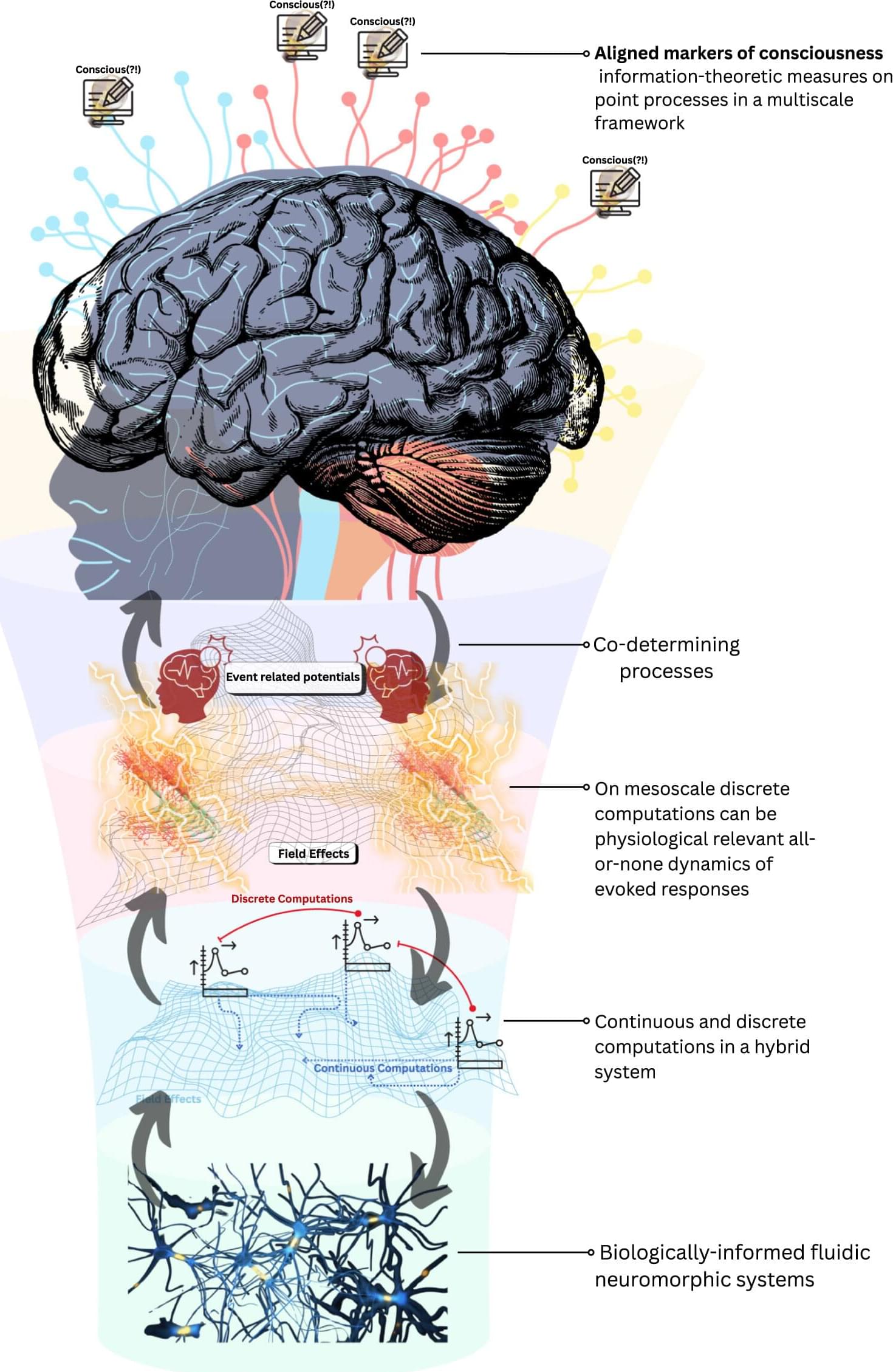
Right now, the debate about consciousness often feels frozen between two entrenched positions. On one side sits computational functionalism, which treats cognition as something you can fully explain in terms of abstract information processing: get the right functional organization (regardless of the material it runs on) and you get consciousness.

On the other hand is biological naturalism, which insists that consciousness is inseparable from the distinctive properties of living brains and bodies: biology isn’t just a vehicle for cognition, it is part of what cognition is. Each camp captures something important, but the stalemate suggests that something is missing from the picture.

In our new paper, we argue for a third path: biological computationalism. The idea is deliberately provocative but, we think, clarifying. Our core claim is that the traditional computational paradigm is broken or at least badly mismatched to how real brains operate.

Optogenetic Cancer Therapy Using the Light-Driven Outward Proton Pump Rhodopsin Archaerhodopsin-3 (AR3)Click to copy article linkArticle link copied!

Medicines used for cancer treatment often cause serious side effects by damaging normal cells due to nonspecific diffusion. To address this issue, we previously developed an optical method to induce apoptotic cell death via intracellular pH alkalinization using the outward proton pump rhodopsin, Archaerhodopsin-3 (AR3) in various noncancer model cells in vitro and in vivo. In this study, we applied this method to cancer cells and tumors to evaluate its potential as an anticancer therapeutic strategy. First, we confirmed that AR3-expressing murine cancer cell lines (MC38, B16F10) showed apoptotic cell death upon green light irradiation, as indicated by increased levels of cell death and apoptosis-related markers. Next, we established stable AR3-expressing MC38 and B16F10 cells by using viral vectors. When these AR3-expressing cells were subcutaneously transplanted into C57BL/6 mice, the resulting tumors initially grew at a rate comparable to that of control tumors lacking AR3 expression or light stimulation. However, upon green light irradiation, AR3-expressing tumors exhibited either a marked reduction in size or significantly suppressed growth, accompanied by the induction of apoptosis signals and decreased proliferation signals. These results demonstrate that AR3-mediated cell death has potent antitumor effects both in vitro and in vivo. This optical method thus holds promise as a novel cancer therapy with potentially reduced side effects.

/* */