Study finds Claude in Arabic uses more ‘polite phrasing’ and showed ‘greater warmth’ than other language models


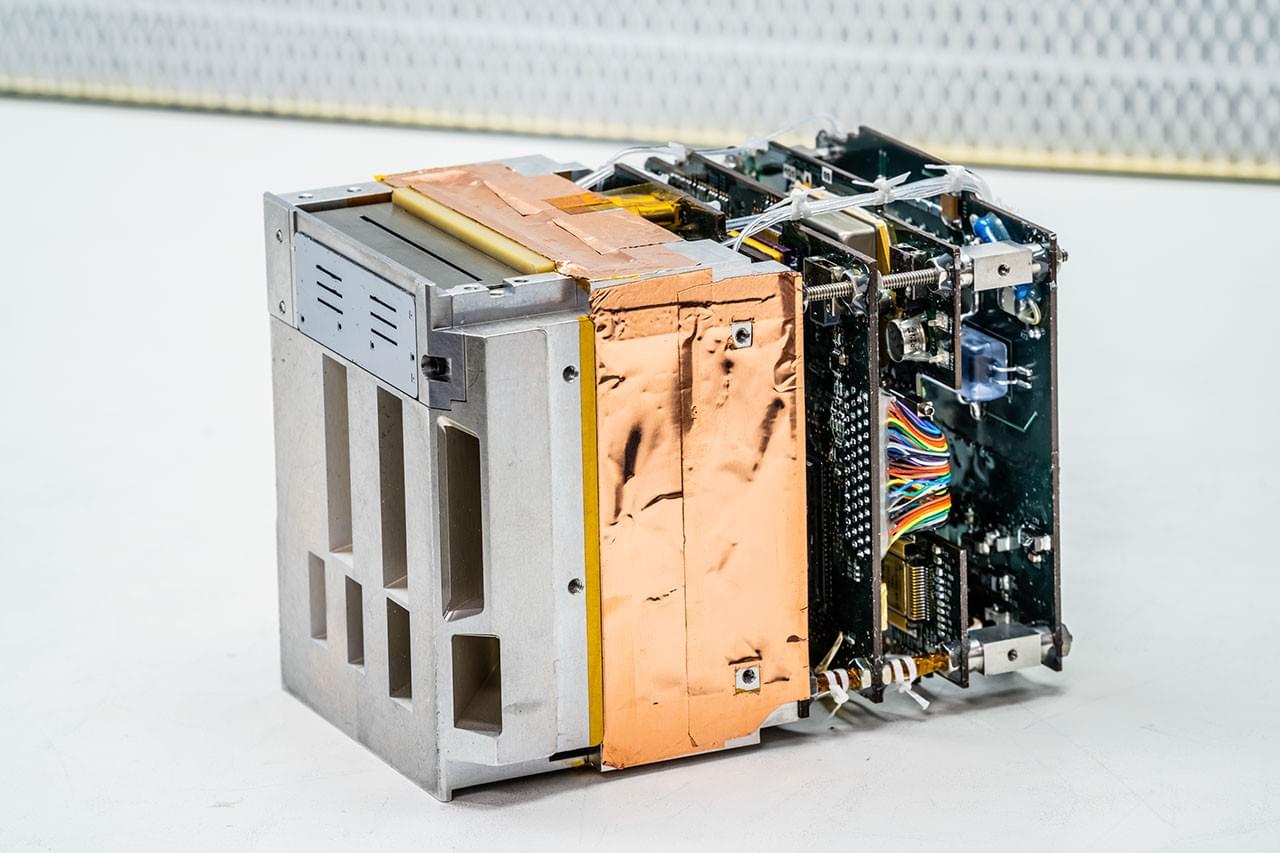
Successfully launched on July 23, 2025, the REAL instrument can distinguish between these potential modes, making it possible to investigate their relative importance and determine which, if any, waves are responsible for electron fallout. Leveraging recent advancements in sensor miniaturization, the instrument includes three sensor heads — a low-, medium-, and high-energy head with two, five, and four simultaneous look directions, respectively — integrated with four electronic boards. Together, they occupy only about half of the REAL CubeSat and use a time resolution sufficient to resolve microbursts of electrons with energies ranging from 40 keV up to 2 MeV. As its parent 3U CubeSat flies in LEO, REAL points along Earth’s magnetic field and can simultaneously measure the quantity, energy, and angle of the particles as they fall into the atmosphere — a first-of-its-kind capability.
“Most CubeSats can observe particles from only a single direction, so they have to spin in order to build up a full picture — and that takes a few seconds, too slow to capture microbursts,” said space physicist Robyn Millan of Dartmouth College, who serves as the REAL mission principal investigator. “With REAL, we’ve managed to squeeze three sensors, each with multiple look directions, into the top of this 100-by-100-millimeter head, allowing us to capture those measurements all at once. We’re really proud of that.”
The high-energy head consists of a 30-millimeter-thick aluminum collimator with four apertures, each spanning 20 degrees of pitch angle. Each aperture connects to an active area on a solid-state detector (SSD) at the base. The medium-energy head similarly uses an SSD base but instead employs five active areas that connect to a 22-millimeter-thick aluminum collimator with five apertures, each spanning 20 degrees of pitch angle. The low-energy head, on the other hand, is a miniature electrostatic analyzer (ESA) consisting of titanium electrodes sandwiched between etched silicon selector slits. These lie on top of a microchannel plate (MCP). The low-energy head uses 36 apertures, two look directions (±40 degrees), and 15 channels to measure electrons with lower energies, from 1 keV to 40 keV.

Researchers have developed a reversible, vapor-controlled system capable of toggling the physical and optical traits of advanced fluids on demand.
Led by Nagoya University and Kyoto University in Japan, the study demonstrates a method to control the optical and physical properties of materials from the molecular level to the macroscopic scale.
At the core of the development is host–guest chemistry. It is a process where two distinct molecules lock together purely through physical forces, completely avoiding permanent chemical bonds.