Patch Tuesday delivers fixes for 59 Microsoft flaws, six exploited zero-days, plus critical SAP and Intel TDX vulnerabilities.




Microsoft has fixed a “remote code execution” vulnerability in Windows 11 Notepad that allowed attackers to execute local or remote programs by tricking users into clicking specially crafted Markdown links, without displaying any Windows security warnings.
With the release of Windows 1.0, Microsoft introduced Notepad, a simple, easy-to-use text editor that, over the years, became popular for quickly jotting notes, reading text files, creating to-do lists, or acting as a code editor.
For those who needed a rich text format (RTF) editor that supported different fonts, sizes, and formatting tools like bold, italics, and lists, you could use Windows Write and later WordPad.

A member of the Crazy ransomware gang is abusing legitimate employee monitoring software and the SimpleHelp remote support tool to maintain persistence in corporate networks, evade detection, and prepare for ransomware deployment.
The breaches were observed by researchers at Huntress, who investigated multiple incidents where threat actors deployed Net Monitor for Employees Professional alongside SimpleHelp for remote access to a breached network, while blending in with normal administrative activity.
In one intrusion, attackers installed Net Monitor for Employees Professional using the Windows Installer utility, msiexec.exe, allowing them to deploy the monitoring agent on compromised systems directly from the developer’s site.

The AgreeTo add-in for Outlook has been hijacked and turned into a phishing kit that stole more than 4,000 Microsoft account credentials.
Originally a legitimate meeting scheduling tool for Outlook users, the module was developed by an independent publisher and has been on the Microsoft Office Add-in Store since December 2022.
Office add-ins are just URLs pointing to content loaded into Microsoft products from the developer’s server. In the case of AgreeTo, the developer used a Vercel-hosted URL (outlook-one.vercel.app) but abandoned the project, despite the userbase it formed.
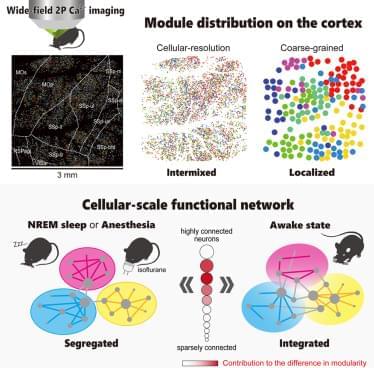
The common neural mechanisms underlying the reduction of consciousness during sleep and anesthesia remain unclear. Previous studies have examined changes in network structure by only using recordings with limited spatial resolution, which has hindered the investigation of the critical spatial scales for the reduction of consciousness. To address this issue, we recorded calcium signals from approximately 10,000 neurons across multiple cortical regions in awake, sleeping, and anesthetized mice and compared network structure at different spatial scales by leveraging single-cell resolution and wide-field two-photon microscopy. At the single-cell scale, both sleep and anesthesia exhibit higher network modularity than an awake state, indicating a segregated network, but modules are spatially intermixed in all three states.
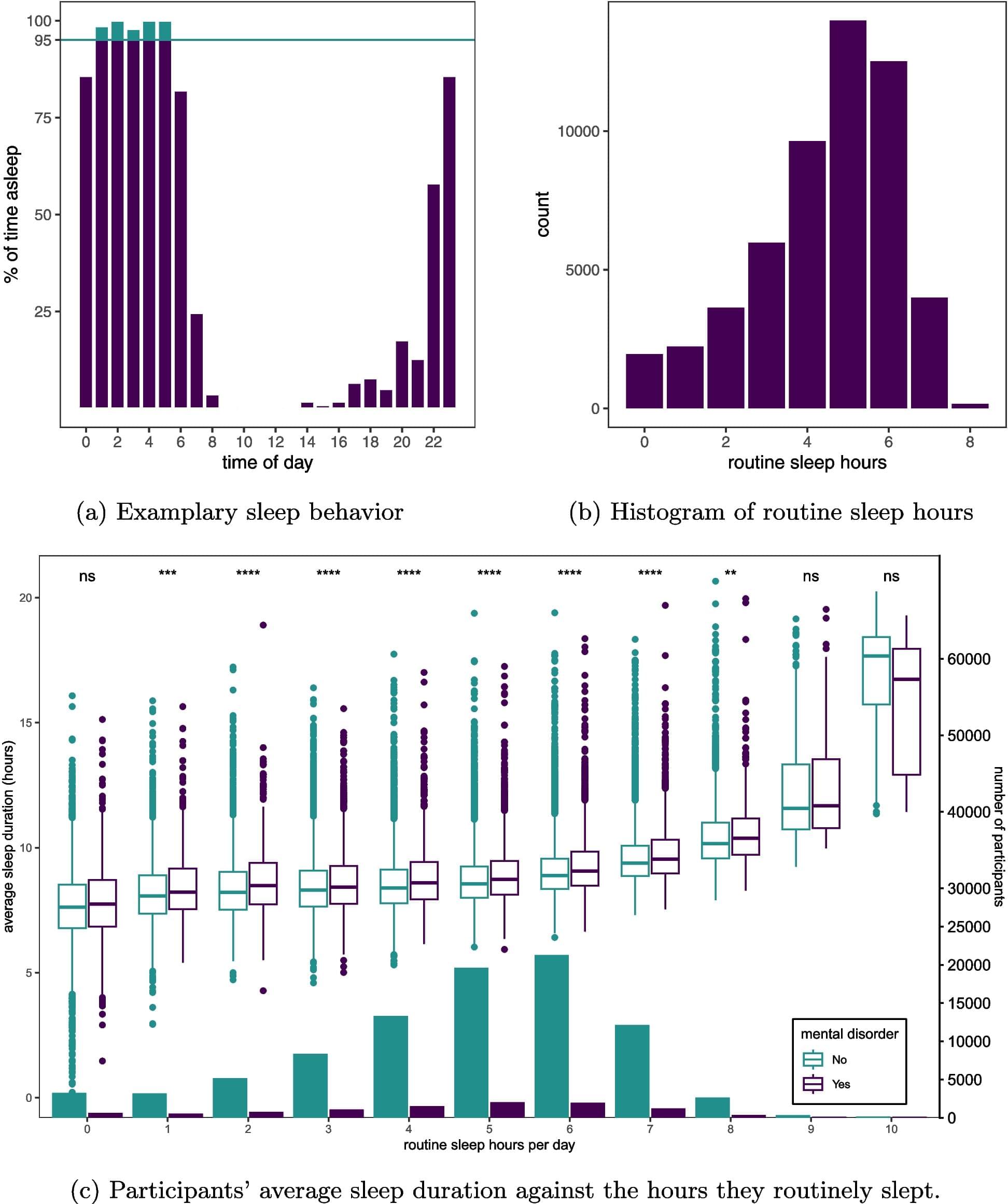
Sleep duration has a well-established effect on mental health and well-being, with durations of 7 to 9 hours being the general recommendation. Here, we analyze the significance of sleep patterns and find that a consistent routine reduces the risk of developing mental disorders far more than simply ensuring a certain average sleep duration.
We analyzed the sleep behavior of 100,000 adults for one week using motion data from wrist-worn devices. We modeled sleep behavior using multivariate generalized additive Cox proportional hazard models, incorporating a smooth 2D interaction effect of sleep duration and routine sleep hours. We calculated C-statistics and E-values to evaluate model performance and assess the robustness against hidden confounders. We also stratified analyses by age and gender.
Most participants slept for 7 to 9 hours as recommended, yet they consistently only slept during the same 4.8 hours each night. We found that an average sleep duration around 8 hours minimizes the risk of future mental disorders—but only if integrated into a rigorous sleep routine spanning at least the same 7 hours each night. Our study provides evidence that adopting such sleep behavior could reduce the population incidence rate of mental disorders by 23% (HR: 0.79, \(p0.0001\), for the average participant). The models showed a strong fit (C-statistics: 0.63), robustness to hidden confounders (E-value: 1.8), and stability under age-and gender-based stratification. We identified weekend behavior as a frequent reason for low sleep routines, with over 25% of the population disrupting their weekly sleep routine during weekend nights—raising the risk of future mental disorders by 10%.
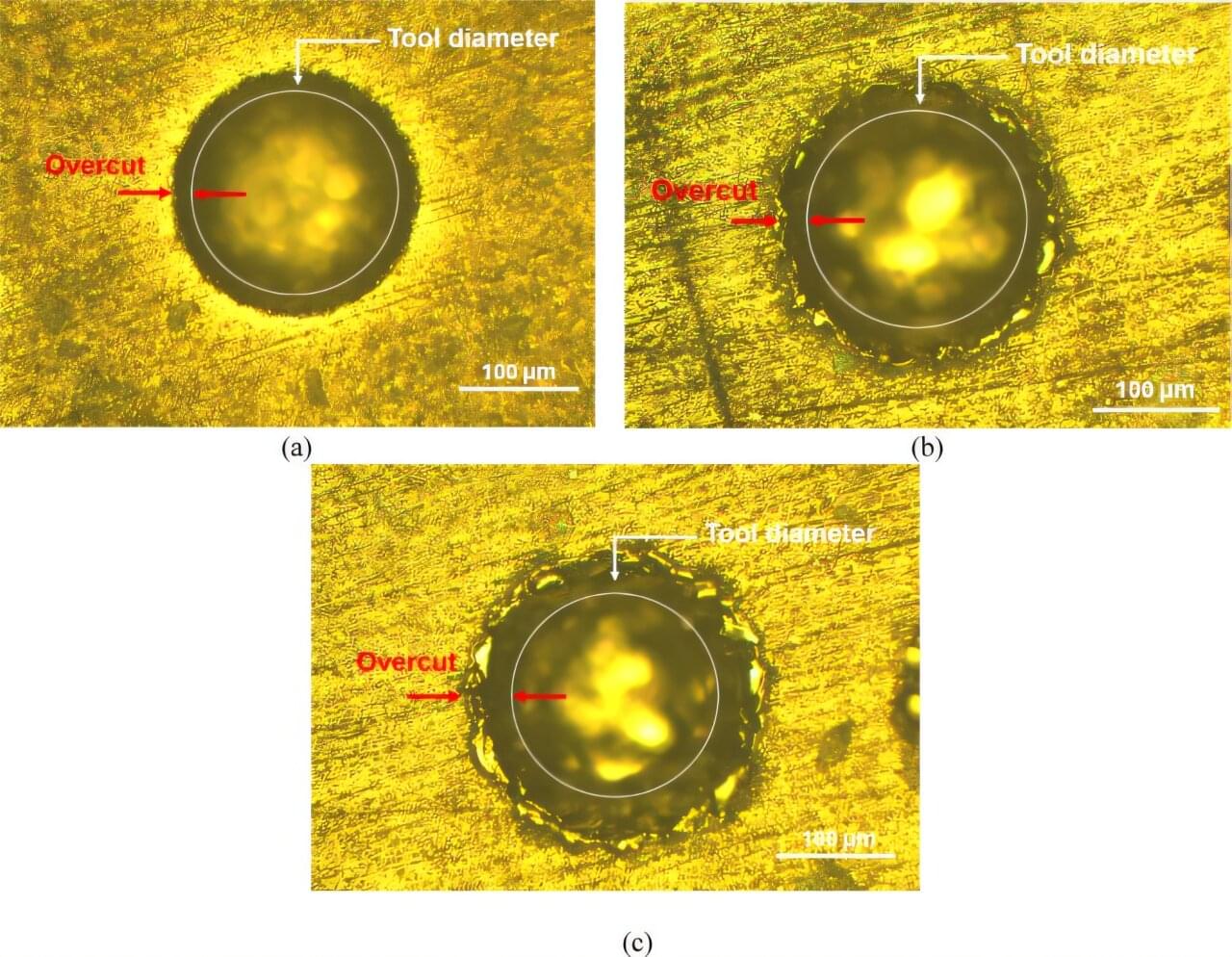
Researchers have developed a new machine-learning-assisted approach to optimize micro-electro-discharge machining (µ-EDM) of a next-generation biocompatible titanium alloy, potentially improving the manufacturing of advanced medical and aerospace components.
The work is published in the journal Scientific Reports.
Titanium alloys are widely used in biomedical implants, aerospace systems, and automotive engineering due to their strength, corrosion resistance, and low weight. However, the commonly used alloy Ti–6Al–4V contains aluminum and vanadium, elements associated with long-term toxicity risks in biomedical applications.
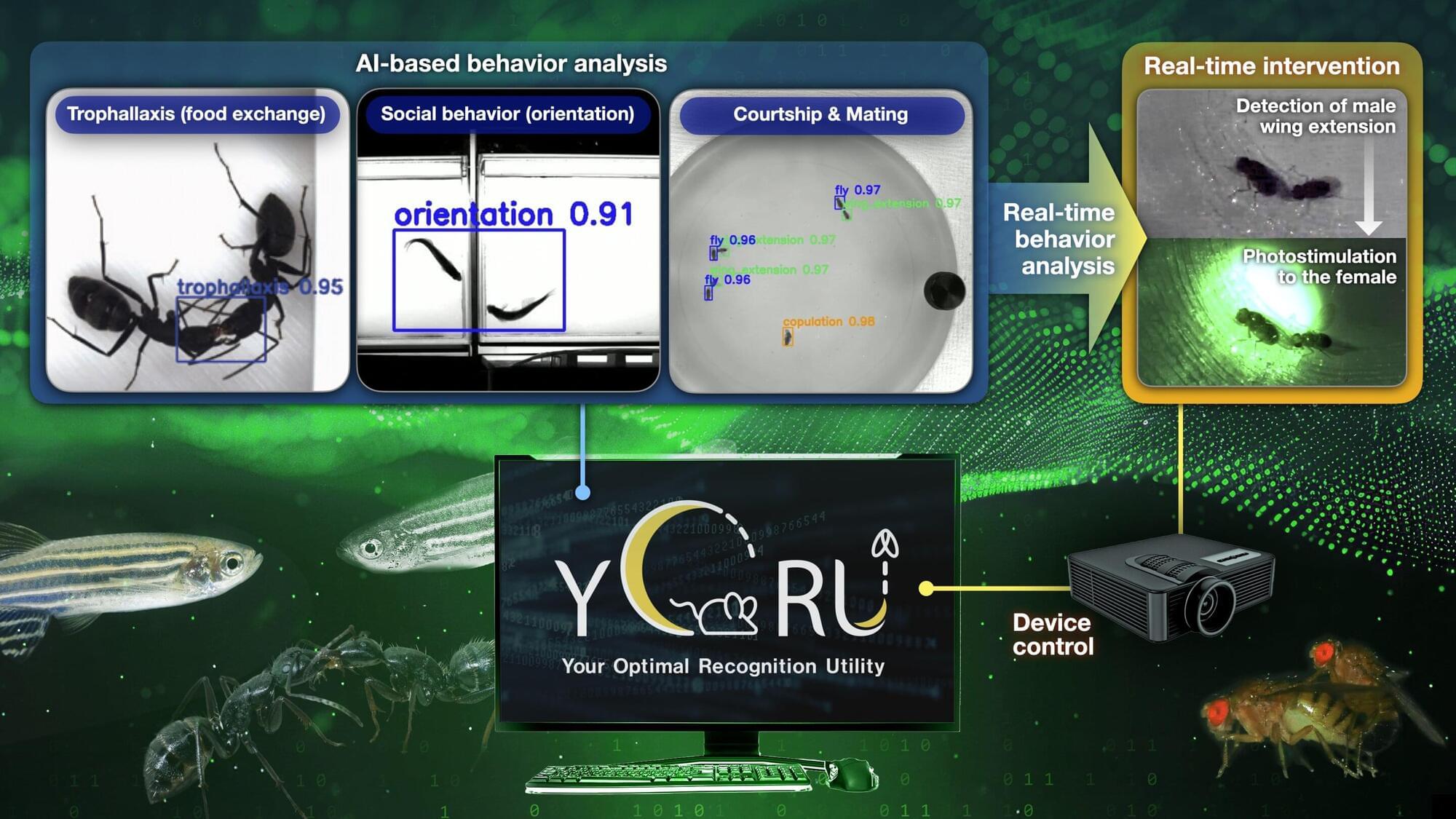
A male fruit fly in a laboratory chamber extends his wings and vibrates them to produce his species’ version of a love song. A female fly stays nearby listening. Suddenly, a green light flashes across the chamber for a fraction of a second. The male’s song cuts off mid-note and his wings fold. The female, not impressed by the interrupted serenade, walks away. The culprit? An AI system that watched the male begin his courtship dance and shut down his song-producing brain cells.
Developed by scientists at Nagoya University and their collaborators from Osaka University and Tohoku University, the AI can watch and recognize animal behaviors and control the specific brain circuits that drive them.
Published in Science Advances, the study presents an advanced AI system that can identify which animal performs a behavior in a group and selectively target only that animal’s brain cells during social interactions.