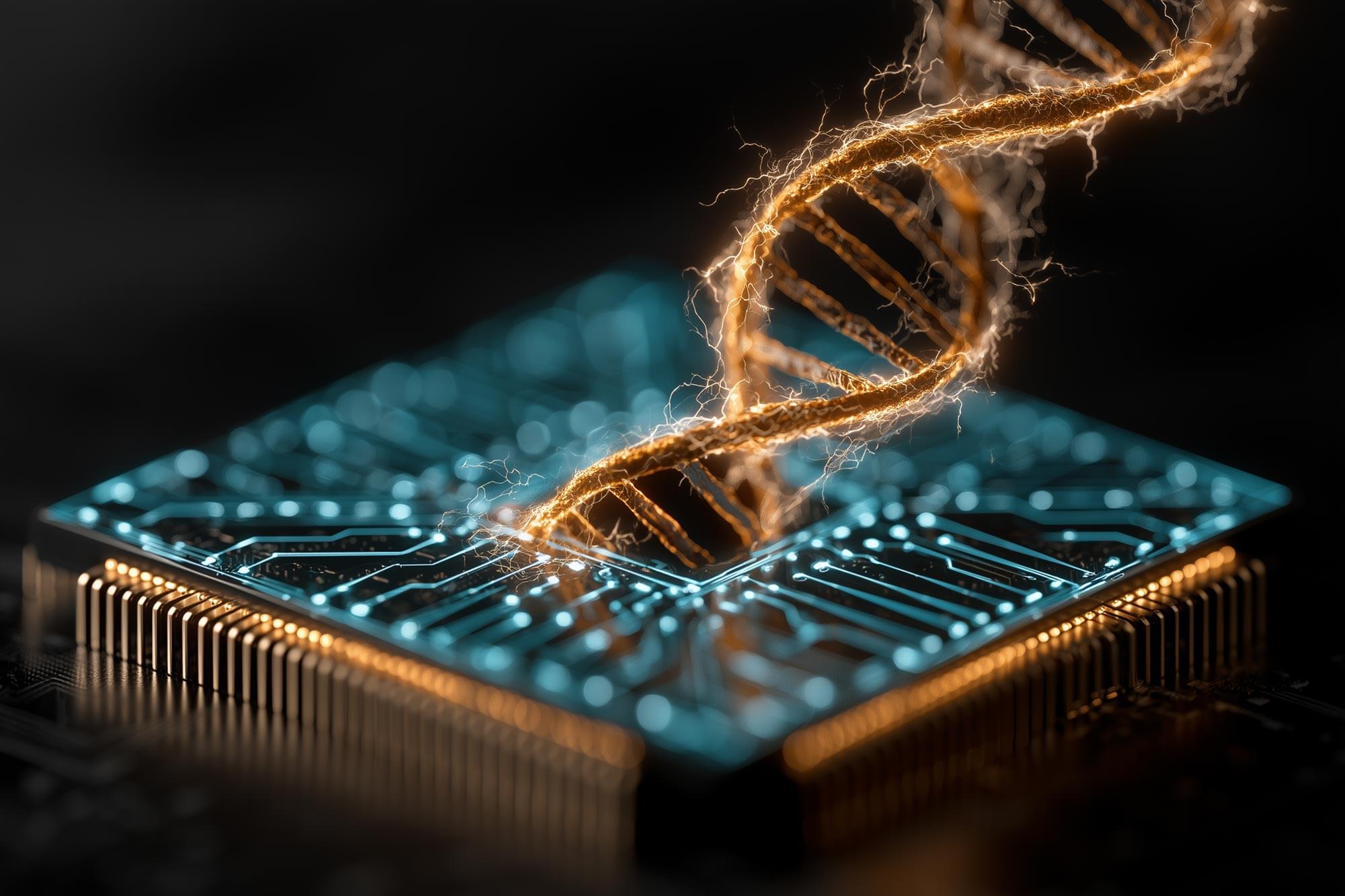
Harvard scientists have built a silicon chip that writes DNA using electricity and water, pointing toward a cleaner future for DNA manufacturing and biotechnology.
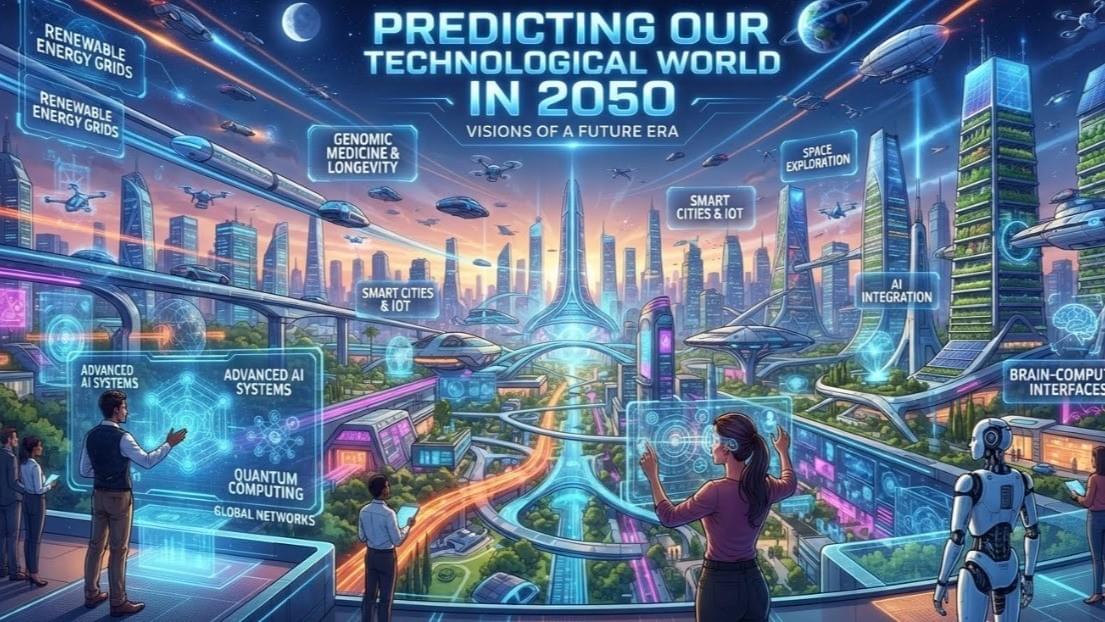
Dear Friends and Colleagues, In this issue of the Security & Tech Insights newsletter titled Predicting 2050: The Convergent Power of Emerging Technologies, I offer insights on what our world may technologically appear to be in the not-so-distant future. I compiled much of the content from my prior writings and podcasts and they are my perspectives. I would enjoy your feedback and also what you perceive will impact life as we know it in 2050. Thanks Chuck Brooks.
#tech #ai #quantum #biotech #future #space #computing #artificialintelligence #smartcities #security #cybersecurity

By Chuck Brooks
From normal maintenance to strategic resilience, cyber hygiene is changing. The AI era is incredibly promising. It can enhance government services, healthcare, education, productivity, scientific research, and economic expansion. However, those same technologies are giving cybercriminals previously unheard-of capabilities. Fear is not the answer. It is getting ready.
The easiest, cheapest, and most successful cybersecurity investment is still cyber hygiene. It serves as the cornerstone for the development of trustworthy digital societies when combined with Zero Trust architectures, AI-enabled defense, identity-centric security, ongoing education, governance, and resilience planning.
Cyber hygiene is an ongoing discipline rather than a one-time endeavor. Organizations that regularly practice excellent cyber hygiene will be much better able to protect against new threats, keep consumer trust, and build long-lasting digital resilience in an era of AI, cloud computing, quantum technologies, and hyperconnectivity.


Researchers have created cosmic dust from scratch by recreating space-like conditions inside glass tubes. The dust contains complex carbon-rich molecules built from elements essential to life and produces infrared signals similar to real material found in space. By studying these laboratory samples, scientists can explore how organic chemistry unfolds around stars and how comets, asteroids and meteorites may have carried those ingredients to Earth.
In a recent demo, Lisa Su showed off a compact AI PC powered by AMD’s Ryzen AI Max+ 395.
The key feature is not just speed. It is memory.
Ryzen AI Halo systems support up to 128GB of unified memory, which gives the CPU and GPU access to a much larger shared memory pool than most consumer PCs usually have for AI workloads.
That matters because large AI models do not just need compute. They need enough memory to actually fit and run.
For developers, researchers, founders, and power users, that is why cloud GPUs, hosted AI tools, API credits, and monthly subscriptions have become such a normal part of the workflow.
If hardware like this makes local AI more practical, the economics start to change.
Instead of renting compute every month, you own the machine. Instead of uploading sensitive files to external servers, more work stays on your desk. And instead of dealing with usage limits, you have a local system you can keep using.
Cloud AI platforms like ChatGPT, Claude, Gemini, and Cursor are not going away. For most people, they are still easier and more capable.
But for local agents, private documents, coding workflows, research, and anyone juggling multiple AI subscriptions, this feels like a serious step toward a different model.
The future of AI will still include massive data centers. But more of it may also run on personal computers than people expect.
Source: AMD
#amd #ai #artificialintelligence #technology #localai #lisasu #founder #ceo #entrepreneur #businessmindset
Join us on Patreon! / michaellustgartenphd.
Discount Links/Affiliates:
Blood testing (where I get the majority of my labs, for those who blood test with Quest): https://www.ultalabtests.com/partners… those who blood test with LabCorp: https://www.anrdoezrs.net/click-10161… At-Home Metabolomics: https://www.iollo.com?ref=michael-lus… Use Code: CONQUERAGING At Checkout Clearly Filtered Water Filter: https://get.aspr.app/SHoPY Epigenetic, Telomere Testing: https://trudiagnostic.com/?irclickid=… Use Code: CONQUERAGING NAD+ Quantification: https://www.jinfiniti.com/intracellul… Use Code: ConquerAging At Checkout Oral Microbiome: https://www.bristlehealth.com/?ref=mi… Enter Code: ConquerAging SiphoxHealth Blood Testing (ApoB, GrimAge): https://siphoxhealth.com/mlustgarten Green Tea: https://www.ochaandco.com/?ref=fqbtflod Use Code: ML10OFF Diet Tracking: https://shareasale.com/r.cfm?b=139013… If you’d like to support the channel, you can do that with the website, Buy Me A Coffee: https://www.buymeacoffee.com/mlhnrca Conquer Aging Or Die Trying Merch! https://my-store-d4e7df.creator-sprin…
Blood Testing Essentials (Biological Age, CVD-Risk, Kidney Health and Function):
PhenoAge (Biological Age): https://www.ultalabtests.com/partners…
Measure the Bortz biological clock biomarkers: https://www.ultalabtests.com/partners…
Calculate your biological age using the Bortz clock: https://www.longevity-tools.com/human…
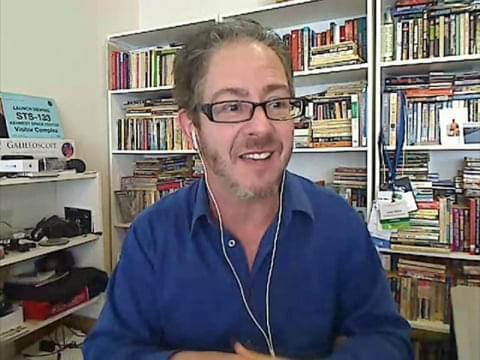
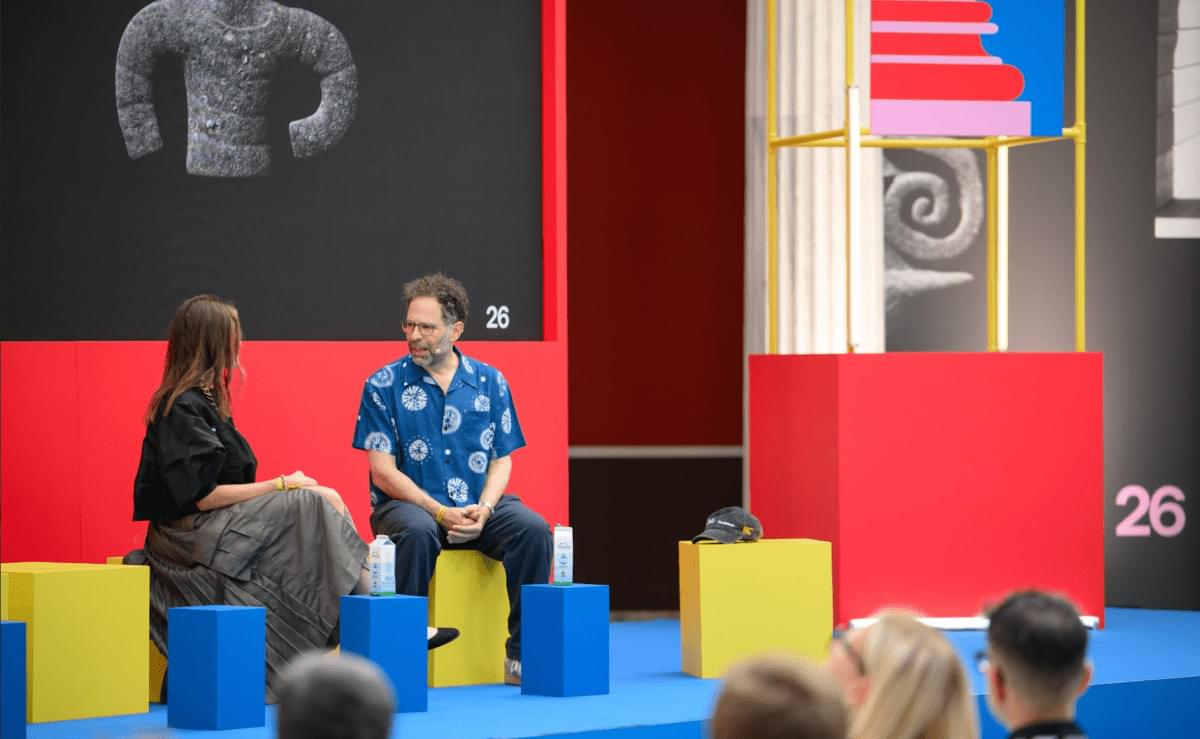
Fifteen years ago, I sat down with a man whose job title made no sense: science comedian.
Brian Malow has performed for Apple, JPL, NIST, and the American Chemical Society. He made audio essays for Neil deGrasse Tyson and trained scientists to speak like humans for the National Science Foundation. He got laughs from rooms full of chemists, which may be the hardest crowd in comedy.
But the reason this 2011 conversation still matters is not the resume. It’s the thesis.
Brian argued that comedy and science are the same discipline. Both refuse to accept the world as presented. Both look deeper. Both require you to see the familiar with fresh eyes and notice what everyone else walked past.
We covered the tension between humor and scientific truth, his favorite science fiction writers, his insect photography, and his take on the technological singularity, including our chances of surviving it.
His answer to that last question? Listen for yourself.