Toggle light / dark theme

Get the latest international news and world events from around the world.

Log in for authorized contributors

AI headphones automatically learn who you’re talking to—and let you hear them better

Holding a conversation in a crowded room often leads to the frustrating “cocktail party problem,” or the challenge of separating the voices of conversation partners from a hubbub. It’s a mentally taxing situation that can be exacerbated by hearing impairment.

As a solution to this common conundrum, researchers at the University of Washington have developed smart headphones that proactively isolate all the wearer’s conversation partners in a noisy soundscape. The headphones are powered by an AI model that detects the cadence of a conversation and another model that mutes any voices that don’t follow that pattern, along with other unwanted background noises. The prototype uses off-the-shelf hardware and can identify conversation partners using just two to four seconds of audio.

The system’s developers think the technology could one day help users of hearing aids, earbuds and smart glasses to filter their soundscapes without the need to manually direct the AI’s “attention.”

Infant-inspired framework helps robots learn to interact with objects

Over the past decades, roboticists have introduced a wide range of advanced systems that can move around in their surroundings and complete various tasks. Most of these robots can effectively collect images and other data in their surroundings, using computer vision algorithms to interpret it and plan their future actions.

In addition, many robots leverage large language models (LLMs) or other natural language processing (NLP) models to interpret instructions, make sense of what users are saying and answer them in specific languages. Despite their ability to both make sense of their surroundings and communicate with users, most robotic systems still struggle when tackling tasks that require them to touch, grasp and manipulate objects, or come in physical contact with people.

Researchers at Tongji University and State Key Laboratory of Intelligent Autonomous Systems recently developed a new framework designed to improve the process via which robots learn to physically interact with their surroundings.

First human DNA-cutting enzyme that senses physical tension discovered

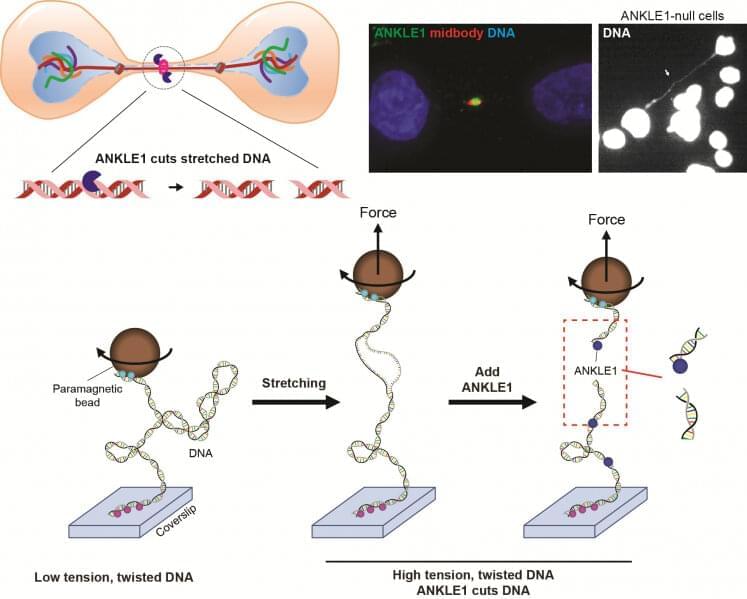
An international research team has identified a human protein, ANKLE1, as the first DNA-cutting enzyme (nuclease) in mammals capable of detecting and responding to physical tension in DNA. This “tension-sensing” mechanism plays a vital role in maintaining genetic integrity during cell division—a process that, when disrupted, can lead to cancer and other serious diseases.

The study, titled “ANKLE1 processes chromatin bridges by cleaving mechanically stressed DNA,” published in Nature Communications, represents a major advance in the understanding of cellular DNA protection.

The research was conducted through a cross-disciplinary collaboration between Professor Gary Ying Wai Chan’s laboratory at the School of Biological Sciences, The University of Hong Kong (HKU) and Dr. Artem Efremov’s biophysics team at Shenzhen Bay Laboratory (SZBL), with additional contributions from researchers at the Hong Kong University of Science and Technology (HKUST) and the Francis Crick Institute in London.

Mini-vortices in nanopores accelerate ion transport for faster supercapacitor charging

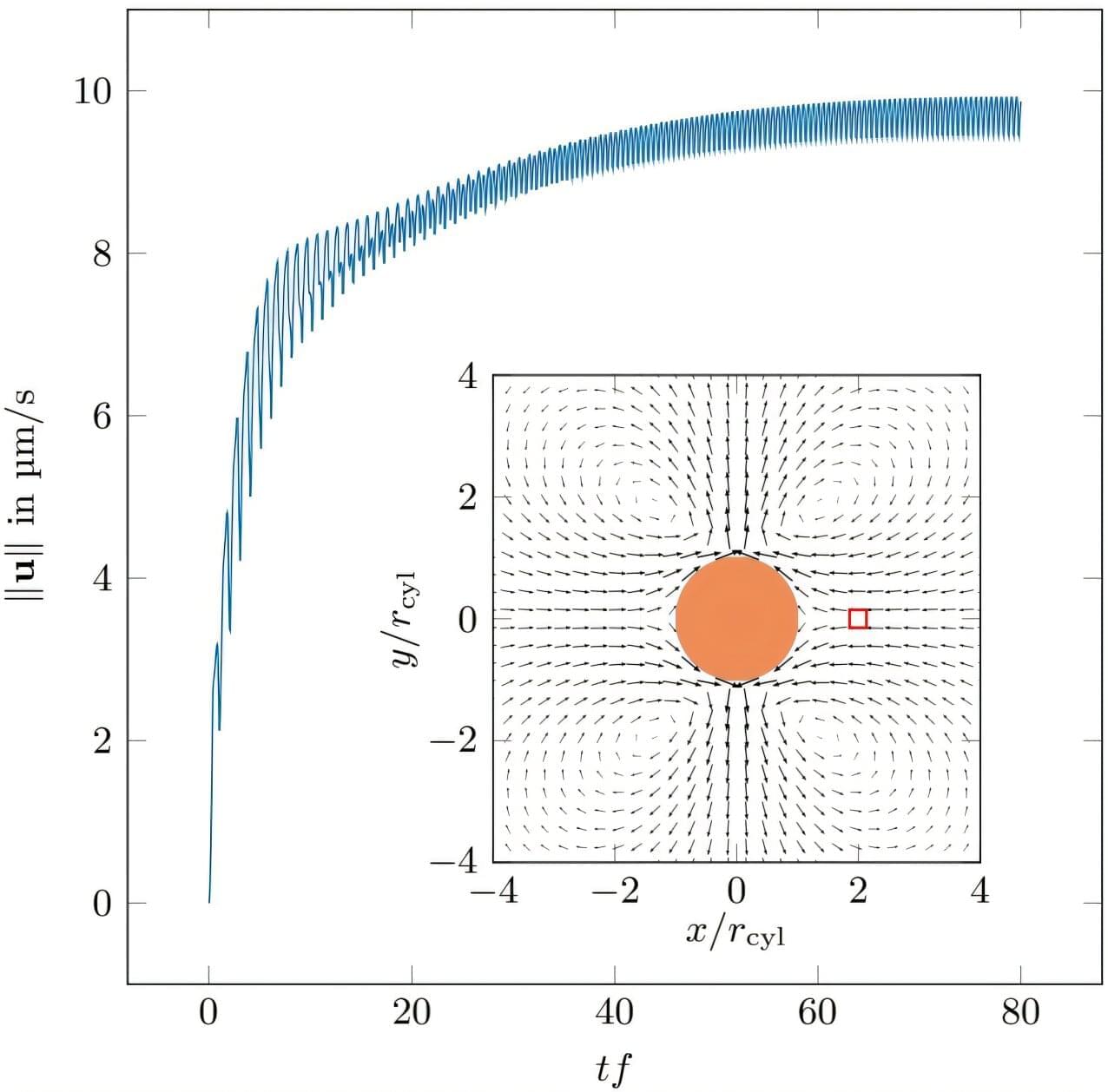
Tiny cavities in energy storage devices form small vortices that help with charging, according to a research team led by TU Darmstadt. This previously unknown phenomenon could advance the development of faster storage devices.

Solar and wind are the energy sources of the future, but they are subject to significant natural fluctuations. Storage solutions are therefore particularly important for a successful energy transition. Rechargeable batteries achieve very high energy densities by storing energy chemically. However, this high energy density comes at the price of long charging times and a dependence on precious raw materials such as cobalt.

In contrast to rechargeable batteries, so-called supercapacitors store energy in electric double layers: a voltage is applied between two electrodes. They are immersed in a liquid in which tiny charged particles, ions, float. The positive and negative ions move in opposite directions and accumulate in charged, nanometer-thick layers, the electric double layers, on the surfaces of the electrodes. In order to provide as much surface area as possible for the accumulation of ions, supercapacitors use porous electrodes that have many tiny pores, like a sponge.

New nanomagnet production process improves efficiency and cuts costs

Researchers at HZDR have partnered with the Norwegian University of Science and Technology in Trondheim, and the Institute of Nuclear Physics in the Polish Academy of Sciences to develop a method that facilitates the manufacture of particularly efficient magnetic nanomaterials in a relatively simple process based on inexpensive raw materials.

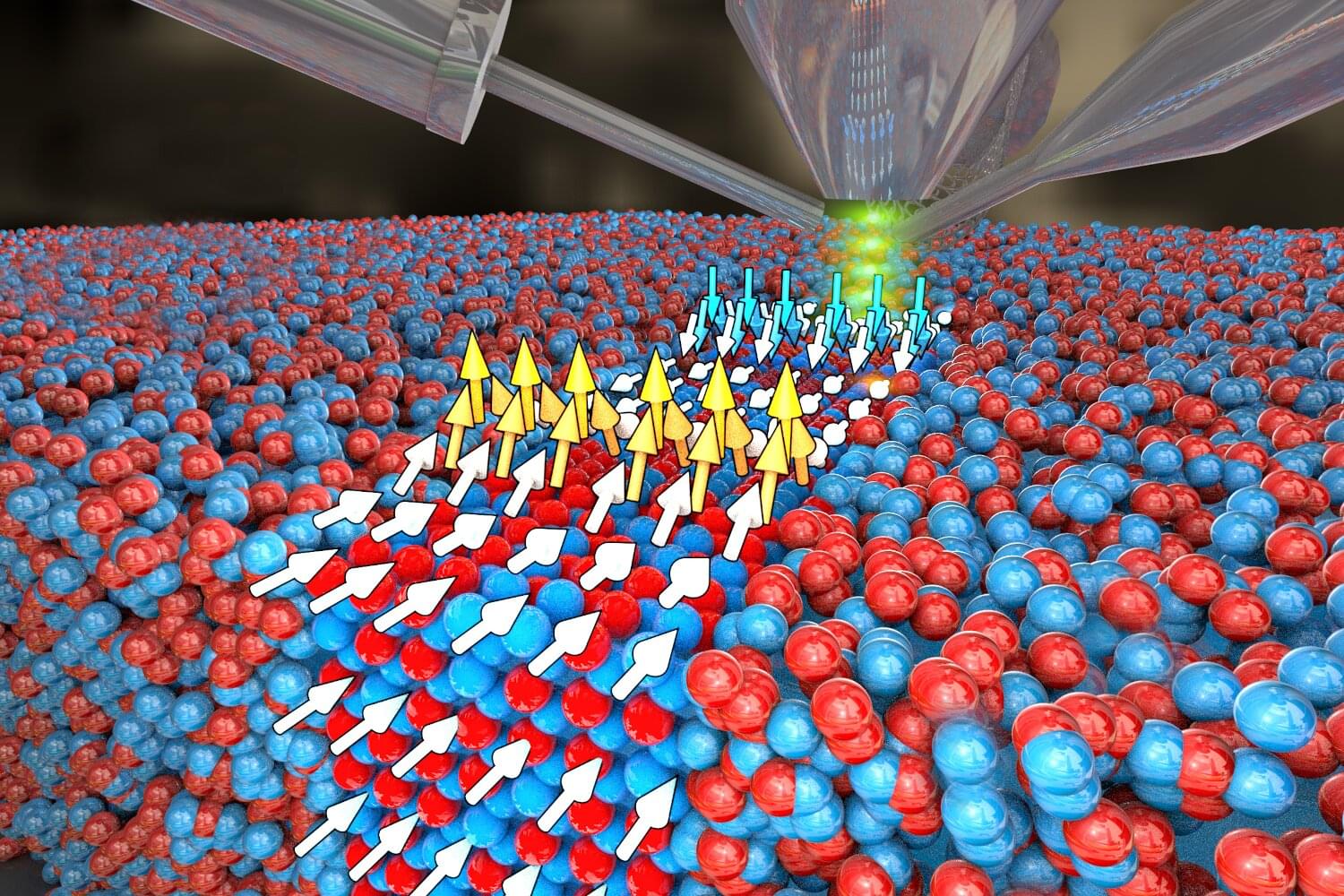
Using a highly focused ion beam, they imprint magnetic nanostrips consisting of tiny, vertically aligned nanomagnets onto the materials. As the researchers have reported in the journal Advanced Functional Materials, this geometry makes the material highly sensitive to external magnetic fields and current pulses.

Nanomagnets play a key role in modern information technologies. They facilitate fast data storage, precise magnetic sensors, novel developments in spintronics, and, in the future, quantum computing. The foundations of all these applications are functional materials with particular magnetic structures that can be customized on the nanoscale and precisely controlled.

Student researcher leads discovery of fastest gamma-ray burst ever recorded

Sarah Dalessi, a fifth-year student in the College of Science at The University of Alabama in Huntsville (UAH), a part of The University of Alabama System, is the lead author of a paper published in The Astrophysical Journal detailing the discovery of the fastest gamma-ray burst (GRB) ever recorded.

GRB 230307A is a gamma-ray burst in the ultrarelativistic category, meaning the velocity of the GRB’s jet, a focused beam of high-energy particles and photons, came within 99.99998% of the speed of light—186,000 miles per second—making it the fastest GRB ever observed. The observation was made possible with data from the Fermi Gamma-ray Burst Monitor, one of two instruments on NASA’s Fermi Gamma-ray Space Telescope.

“The Lorentz factor is the measure of speed of the jet here, and 1,600 is the highest we ever measured,” explains Dr. Peter Veres, an assistant professor who works in the UAH Center for Space Plasma and Aeronomic Research (CSPAR) and is co-author on the study.

Durable catalyst shields itself for affordable green hydrogen production

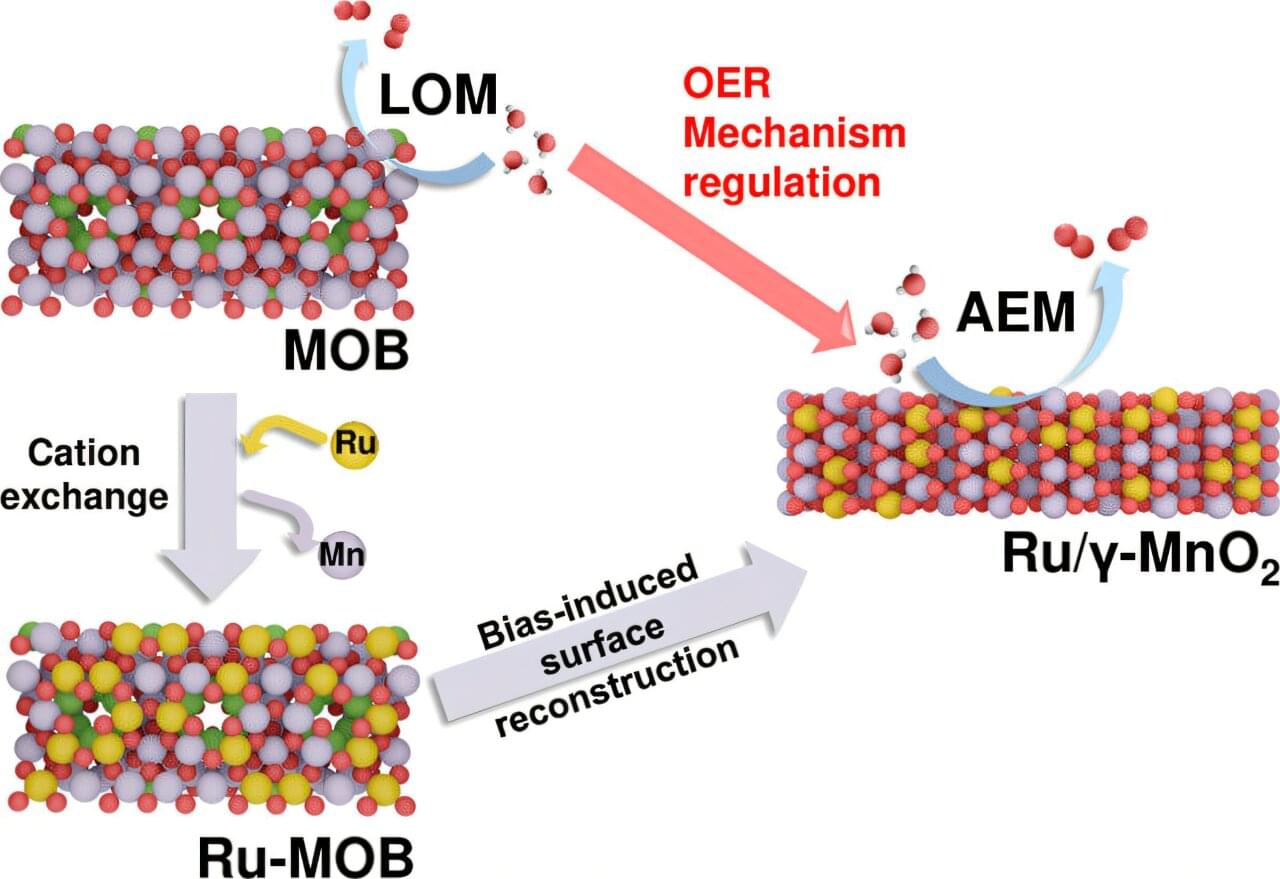
An international research team led by Professor Philip C.Y. Chow at The University of Hong Kong (HKU) has unveiled a new catalyst that overcomes a major challenge in producing green hydrogen at scale. This innovation makes the process of producing oxygen efficiently and reliably in the harsh acidic environment used by today’s most promising industrial electrolyzers.

Spearheaded by Ci Lin, a Ph.D. student in HKU’s Department of Mechanical Engineering, the team’s work was published in ACS Energy Letters.

Green hydrogen is seen as a clean fuel that can help reduce carbon emissions across industries like steelmaking, chemical production, long-distance transportation, and seasonal energy storage. Proton exchange membrane (PEM) electrolyzers are preferred for their compact design and rapid response, but they operate in acidic conditions that are exceptionally demanding on the oxygen evolution reaction (OER) catalyst.

From light to logic: Ultrafast quantum switching in 2D materials

Scientists from the Indian Institute of Technology Bombay have found a way to use light to control and read tiny quantum states inside atom-thin materials. The simple technique could pave the way for computers that are dramatically faster and consume far less power than today’s electronics.

The materials studied are just one atom thick—far thinner than a human hair—and are known as two-dimensional (2D) semiconductors. Inside these materials, electrons can sit in one of two distinct quantum states, called valleys. These valleys, named K and K′, can be thought of as two different “locations” that an electron can choose between. Because there are two options, researchers have long imagined using them like the 0 and 1 of digital computing, but on a quantum level. This idea is the foundation of a rapidly growing research field called valleytronics.

However, being able to reliably control which valley electrons occupy—and to switch between them quickly and on demand—has been a major challenge. “Previous methods required complicated experimental setups with carefully tuned circularly polarized lasers and often multiple laser pulses, and they only worked under specific conditions,” said Prof. Gopal Dixit.

CERN upbeat as China halts particle accelerator mega-project

The chief of the CERN physics laboratory says China’s decision to pause its major particle accelerator project presents an “opportunity” to ensure Europe’s rival plan goes ahead.

Ten years ago, China announced its intention to build the Circular Electron Positron Collider (CEPC), which at 100 kilometers (62 miles) long would be the world’s largest particle accelerator.

But Beijing recently put the project on ice, CERN’s director-general Fabiola Gianotti told a small group of journalists at a recent briefing.

Surprising nanoscopic heat traps found in diamonds

Diamond is famous in material science for being the best natural heat conductor on Earth—but new research reveals that, at the atomic scale, it can briefly trap heat in unexpected ways. The findings could influence how scientists design diamond-based quantum technologies, including ultra-precise sensors and future quantum computers.

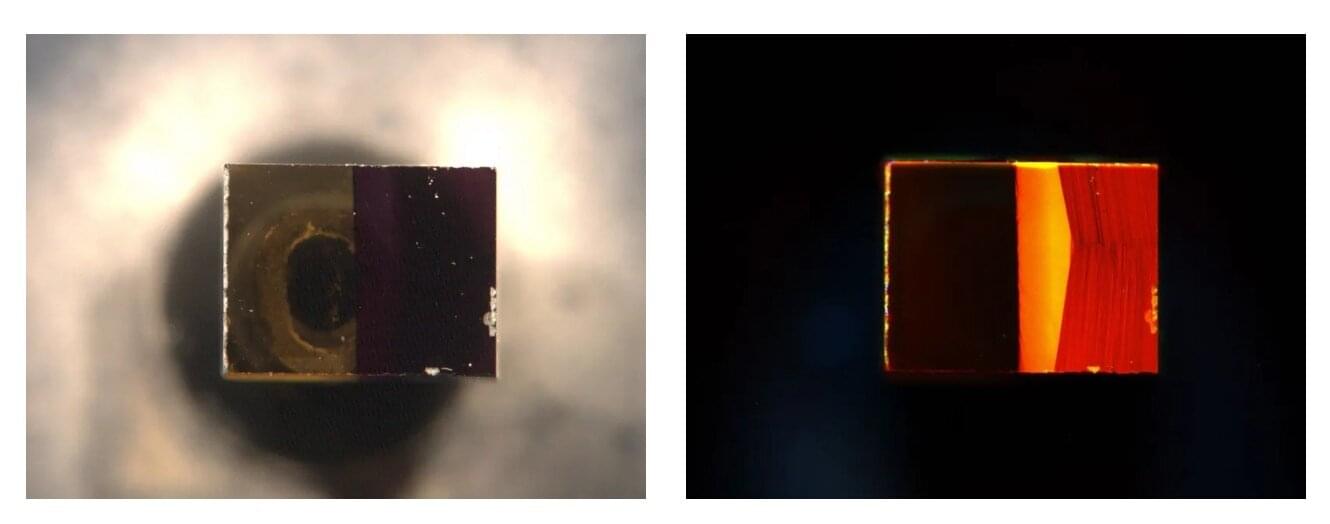
In a study published in Physical Review Letters, researchers from the University of Warwick and collaborators showed that when certain molecular-scale defects in diamond are excited with light, they create tiny, short-lived “hot spots” that momentarily distort the surrounding crystal. These distortions last only a few trillionths of a second but are long enough to affect the behavior of quantum-relevant defects.

“Finding a hot ground state for a molecular-scale defect in diamond was extremely surprising for us,” explained Professor James Lloyd-Hughes, Department of Physics, University of Warwick. “Diamond is the best thermal conductor, so one would expect energy transport to prevent any such effect. However, at the nanoscale, some phonons—packets of vibrational energy—hang around near the defect, creating a miniature hot environment that pushes on the defect itself.”

/* */