
A gene called SDR42E1 has been identified as a key player in how our bodies absorb and process vitamin D. Researchers found that disabling this gene in colorectal cancer cells not only crippled their survival but also disrupted thousands of other genes tied to cancer and metabolism. This opens the door to highly targeted cancer therapies—by either cutting off vitamin D supply to tumors or enhancing the gene’s activity to boost health. The findings hint at vast possibilities in treating diseases influenced by vitamin D, though long-term impacts remain uncertain.
Get the latest international news and world events from around the world.

The first observation of a giant nonlinear Nernst Effect in trilayer graphene
The generation of electricity from heat, also known as thermoelectric energy conversion, has proved to be advantageous for various real-world applications. For instance, it proved useful for the generation of energy during space expeditions and military missions in difficult environments, as well as for the recovery of waste heat produced from industrial plants, power stations or even vehicles.

Study reveals hidden regulatory roles of ‘junk’ DNA
A new international study suggests that ancient viral DNA embedded in our genome, which were long dismissed as genetic “junk,” may actually play powerful roles in regulating gene expression. Focusing on a family of sequences called MER11, researchers from Japan, China, Canada, and the US have shown that these elements have evolved to influence how genes turn on and off, particularly in early human development.
The findings are published in the journal Science Advances.
Transposable elements (TEs) are repetitive DNA sequences in the genome that originated from ancient viruses. Over millions of years, they spread throughout the genome via copy-and-paste mechanisms.
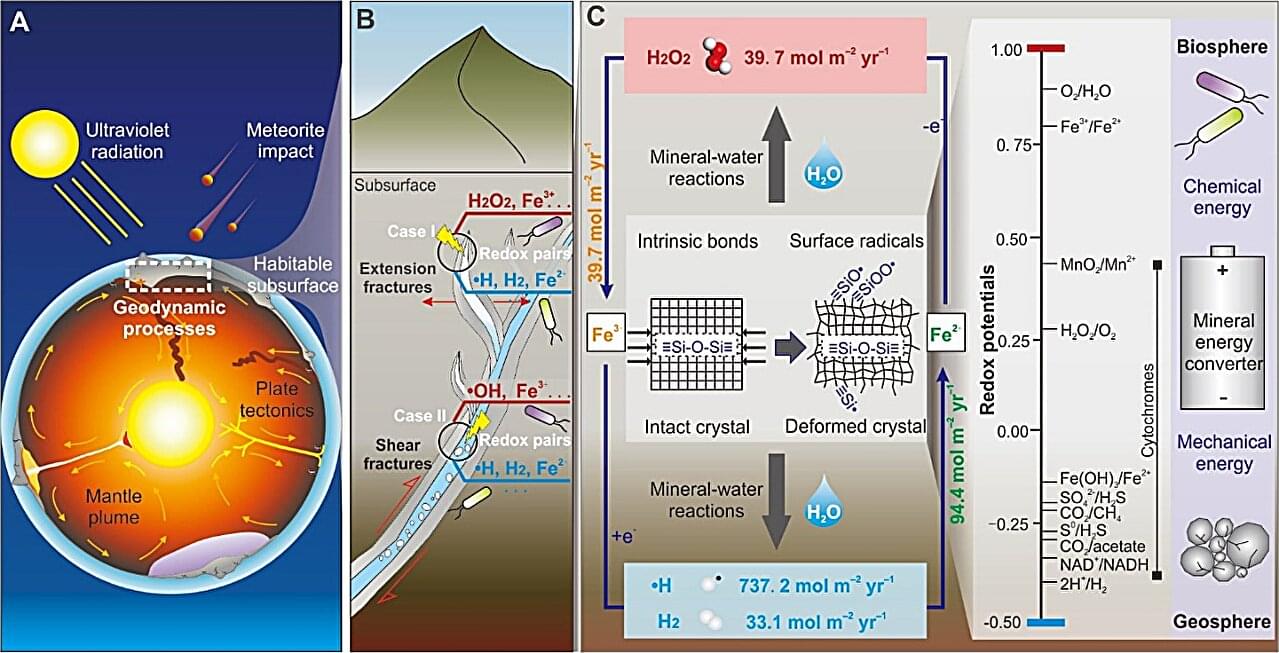
Deep life’s survival secret: Crustal faulting generates key energy sources, study shows
Chinese researchers have recently challenged the long-held belief that “all life depends on sunlight.” In a study published in Science Advances, the researchers identified how microbes in deep subsurface areas can derive energy from chemical reactions driven by crustal faulting, offering critical insights into life deep below Earth’s surface.
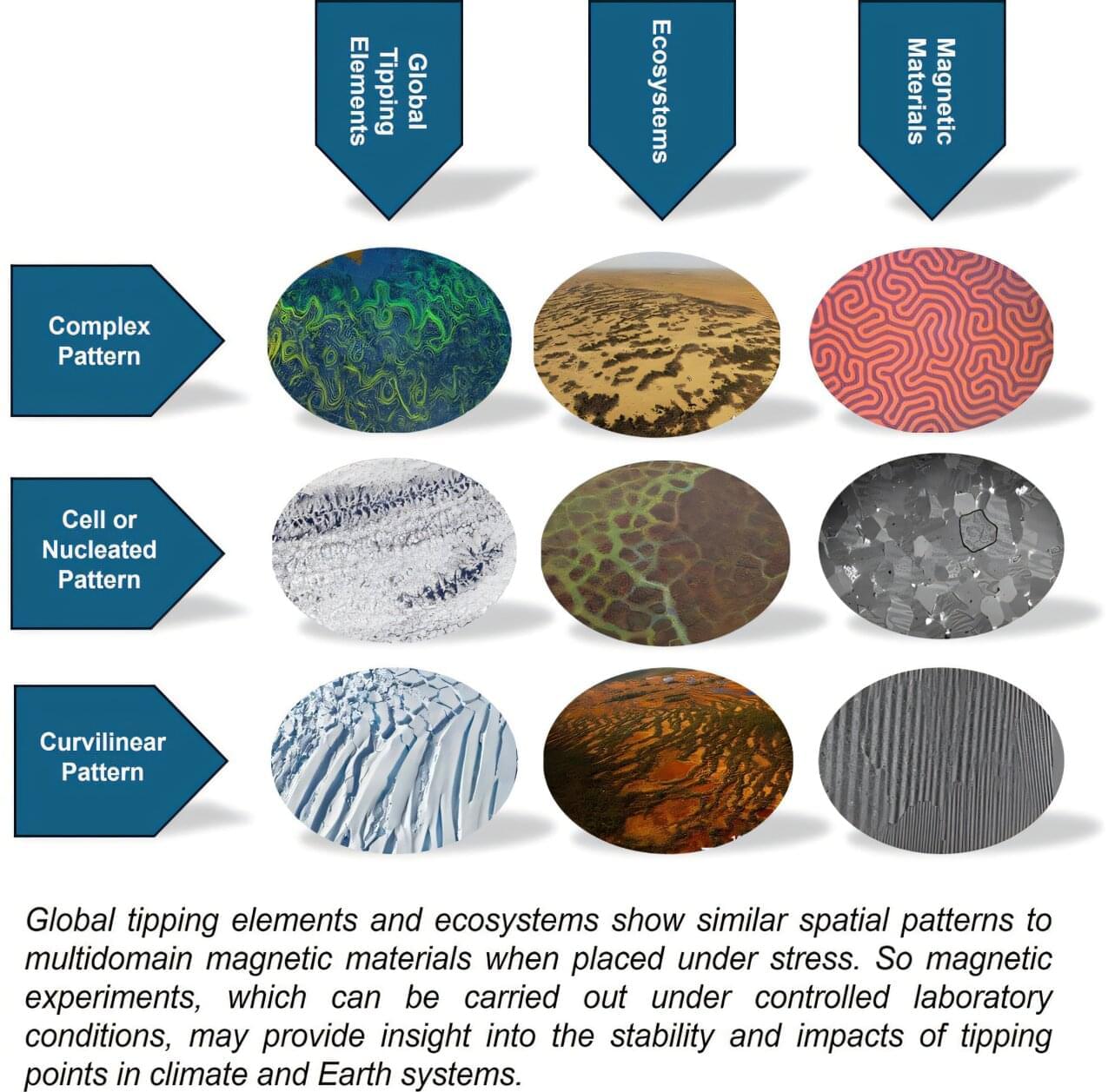
Ecosystem collapse patterns mirror magnetic material behavior under stress
A new study published in the journal One Earth reveals that the way ecosystems collapse—abruptly or gradually—may depend on internal complexity, much like how magnetic materials behave under stress.
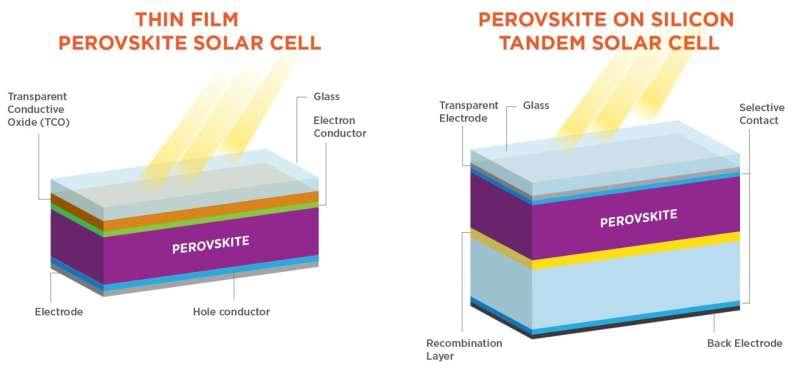
New perovskite-silicon solar cell pushes the limits of efficiency
Commercial silicon-based solar cells have made significant improvements in efficiency over the past decade, increasing from around 15% efficiency in 2015 to just shy of 25% in 2025.

Common feature between forest fires and neural networks reveals universal framework
Researchers from the University of Tokyo in collaboration with Aisin Corporation have demonstrated that universal scaling laws, which describe how the properties of a system change with size and scale, apply to deep neural networks that exhibit absorbing phase transition behavior, a phenomenon typically observed in physical systems. The discovery not only provides a framework describing deep neural networks but also helps predict their trainability or generalizability. The findings were published in the journal Physical Review Research.
In recent years, it seems no matter where we look, we come across artificial intelligence in one form or another. The current version of the technology is powered by deep neural networks: numerous layers of digital “neurons” with weighted connections between them. The network learns by modifying the weights between the “neurons” until it produces the correct output. However, a unified theory describing how the signal propagates between the layers of neurons in the system has eluded scientists so far.
“Our research was motivated by two drivers,” says Keiichi Tamai, the first author. “Partially by industrial needs as brute-force tuning of these massive models takes a toll on the environment. But there was a second, deeper pursuit: the scientific understanding of the physics of intelligence itself.”

Psychologists introduce third path to ‘good life’—one full of curiosity and challenge
New research suggests that psychological richness—a life of perspective-changing experiences—may matter just as much as happiness or meaning.
For centuries, scholars and scientists have defined the “good life” in one of two ways: a life that is rooted in happiness, characterized by positive emotions, or one that is centered on meaning, guided by purpose and personal fulfillment. But what if there is another, equally valuable path—one that prioritizes challenge, change and curiosity?
This third dimension, which may result in a more psychologically rich life for some, is being explored in a new study published in Trends in Cognitive Sciences, led by University of Florida psychologist Erin Westgate, Ph.D., in collaboration with Shigehiro Oishi, Ph.D., of the University of Chicago. According to their research, some people prioritize variety, novelty, and intellectually stimulating experiences, even when those experiences are difficult, unpleasant, or lack clear meaning.

Scanning tunneling microscopy reveals subsurface atomic structure
Scientists use scanning tunneling microscopy to understand how a material’s electronic or magnetic properties relate to its structure on the atomic scale. When using this technique, however, they can normally investigate only the uppermost atomic layer of a material.

Engineers achieve efficient integration of quantum dot lasers on silicon chiplets
Lasers that are fabricated directly onto silicon photonic chips offer several advantages over external laser sources, such as greater scalability. Furthermore, photonic chips with these “monolithically” integrated lasers can be commercially viable if they can be manufactured in standard semiconductor foundries.
III-V semiconductor lasers can be monolithically integrated with photonic chips by directly growing a crystalline layer of laser material, such as indium arsenide, on silicon substrate. However, photonic chips with such integrated laser source are challenging to manufacture due to mismatch between structures or properties of III-V semiconductor material and silicon. “Coupling loss” or the loss of optical power during transfer from laser source to silicon waveguides in the photonic chip is yet another concern when manufacturing photonic chips with monolithically integrated lasers.
In a study that was recently published in the Journal of Lightwave Technology, Dr. Rosalyn Koscica from the University of California, United States, and her team successfully integrated indium arsenide quantum dot (QD) lasers monolithically on silicon photonics chiplets.