Toggle light / dark theme

Get the latest international news and world events from around the world.

Log in for authorized contributors

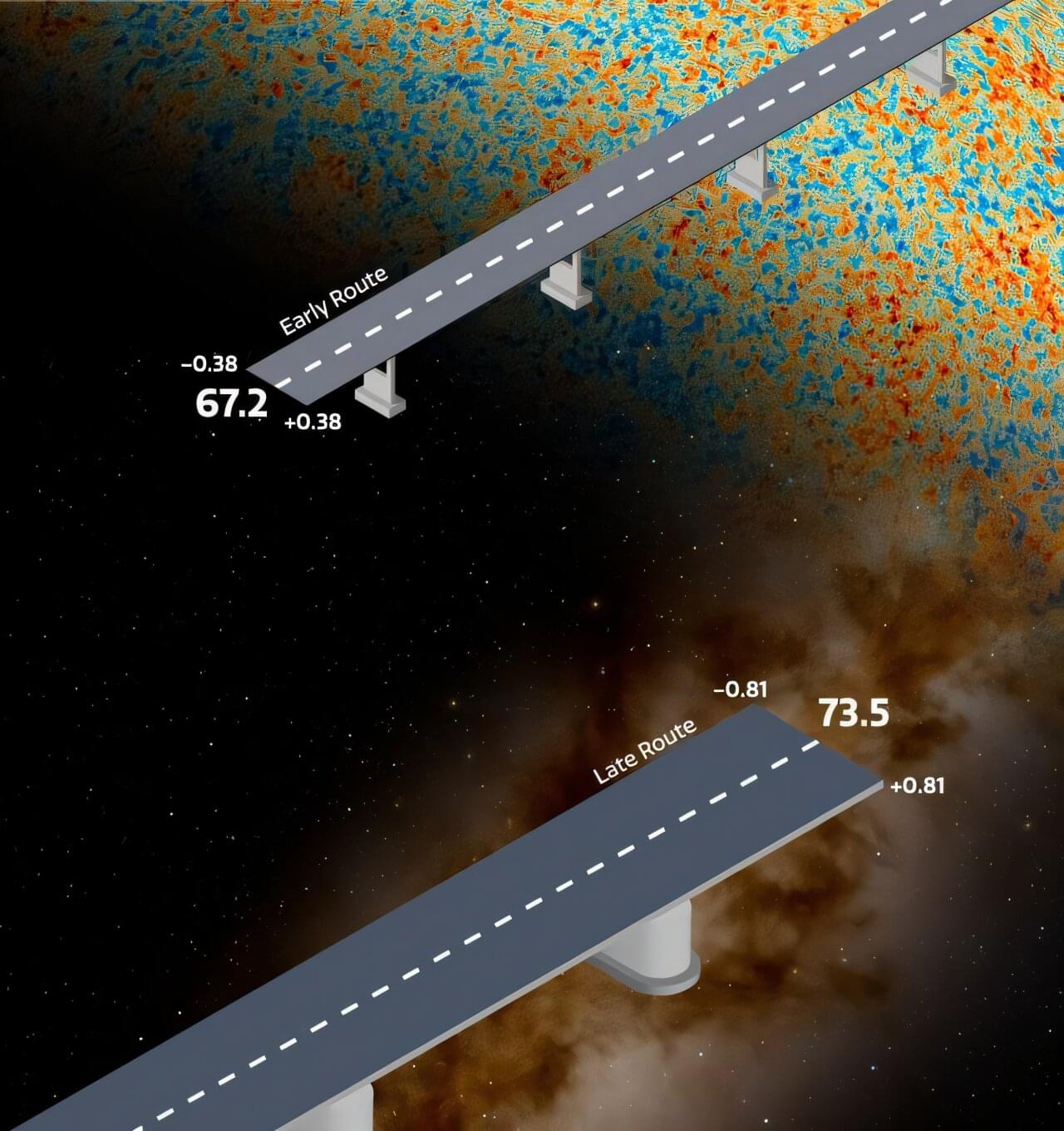
When the Virus Knows the Answer Before We’ve Asked the Question : How Scientists Are Learning to Forecast Pandemics Before They Happen

Climate change as the macro engine for viral emergence The BA.3.2 “Cicada” variant’s hidden evolution Yeast-display technology and viral forecasting Pan-coronavirus vaccine development at La Jolla Institute How conserved viral regions unlock universal defenses.


Scientists can now force a virus to evolve in a test tube — and predict a pandemic before it starts. Heliox explores the 2026 yeast-display breakthrough that reproduced Omicron’s exact mutations in just two generations, connects it to the climate-driven migration of bat populations worldwide, and asks: are we approaching the day when we vaccinate against a pandemic that hasn’t happened yet?

Blocking a female-only GABA signal that helps glioblastoma evade immunity may boost survival

Researchers have identified a critical biological difference in how glioblastoma develops in male and female laboratory models, pinpointing an immune pathway that fuels tumor growth only in females. The study shows that the neurotransmitter GABA boosts the cancer-protecting activity of immune cells in female models—but not male models—and that blocking that signal improved outcomes. The findings could one day lead to new drug targets and therapeutics specifically for women. The paper is published in the journal Nature Cancer.

Men and women experience many diseases very differently. Certain diseases present more commonly in one sex than in the other, some conditions may cause different symptoms in men and women, and some treatments work better—or not at all—for one sex over the other.

Cancer is no exception. There are major differences in male and female immune systems, and this system is critical both for cancer growth and for successfully becoming cancer-free. For example, some immunotherapies work better in men than in women, and vice versa.

Thirty years of proof: celebrating Sir Andrew Wiles and Fermat’s Last Theorem

The 23rd of June 2023 marks 30 years since Andrew Wiles delivered his first proof of Fermat’s Last Theorem, right here at INI. In this article, podcast and video interview, we celebrate this tremendous milestone for one of mathematics’ most compelling stories.

An AAV variant selected through NHP screens robustly transduces the brain and drives secreted protein expression in NHPs and mice

Tecedor et al. used directed evolution to engineer AAVs with enhanced ependymal and brain delivery after injection into the cerebrospinal fluid. I think it would be interesting to try lumbar puncture delivery of these AAVs as well to see if they maintain decent biodistribution. (See my other post about Hinderer et al.’s paper: https://doi.org/10.1016/j.omtm.2020.04.012).


AAV capsid variants enriched for transduction of ventricular lining cells and brain parenchyma reduce the dose required for gene therapy to the CNS.

Exclusive: Janelia sunsets rodent work, launches transparent fish project

Wow, this is an interesting turn of events: Janelia launching a 10-year $1B effort to study the Danionella fish as a model organism for understanding the nervous system. (Note: this is different from zebrafish). I’m intrigued by the direction, but I also feel for those researchers at Janelia who had the rug pulled out from under them. It’s a tricky situation.


The Janelia Research Campus is launching two new projects: whole-brain imaging of a transparent fish called Danionella and an “AI-in-the-loop” tool to help parse all the imaging data, the facility announced last week.

As part of the change, Janelia is also shuttering two programs and plans to phase out projects that use rodent models, The Transmitter has learned. Janelia is funded by the Howard Hughes Medical Institute (HHMI), a private nonprofit biomedical research institution.

Investigators who run rodent labs have roughly three years to wrap up their projects and find new positions, and Janelia plans to provide each researcher with an additional $1 million in transition funding, says Gerald Rubin, head of biology and senior group leader at Janelia. The move does not affect external research funded by the HHMI, including the HHMI Investigators and Hanna H. Gray Fellows programs, Rubin adds.

/* */