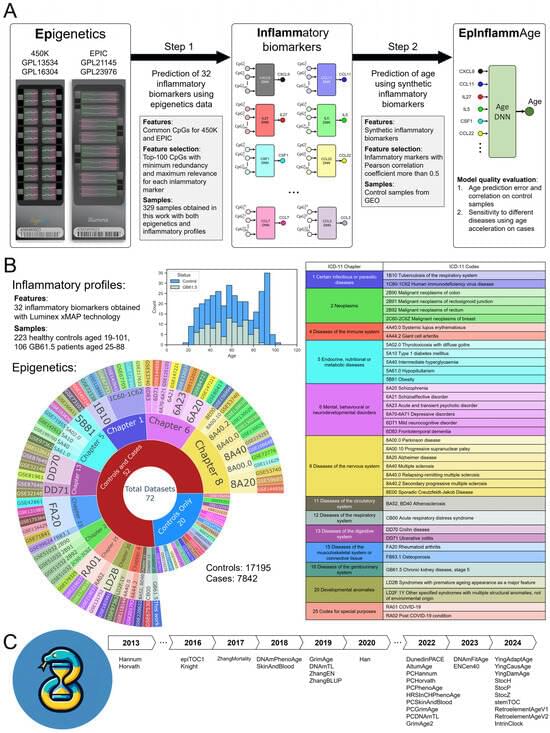
We present EpInflammAge, an explainable deep learning tool that integrates epigenetic and inflammatory markers to create a highly accurate, disease-sensitive biological age predictor. This novel approach bridges two key hallmarks of aging—epigenetic alterations and immunosenescence. First, epigenetic and inflammatory data from the same participants was used for AI models predicting levels of 24 cytokines from blood DNA methylation. Second, open-source epigenetic data (25 thousand samples) was used for generating synthetic inflammatory biomarkers and training an age estimation model. Using state-of-the-art deep neural networks optimized for tabular data analysis, EpInflammAge achieves competitive performance metrics against 34 epigenetic clock models, including an overall mean absolute error of 7 years and a Pearson correlation coefficient of 0.85 in healthy controls, while demonstrating robust sensitivity across multiple disease categories. Explainable AI revealed the contribution of each feature to the age prediction. The sensitivity to multiple diseases due to combining inflammatory and epigenetic profiles is promising for both research and clinical applications. EpInflammAge is released as an easy-to-use web tool that generates the age estimates and levels of inflammatory parameters for methylation data, with the detailed report on the contribution of input variables to the model output for each sample.
Get the latest international news and world events from around the world.
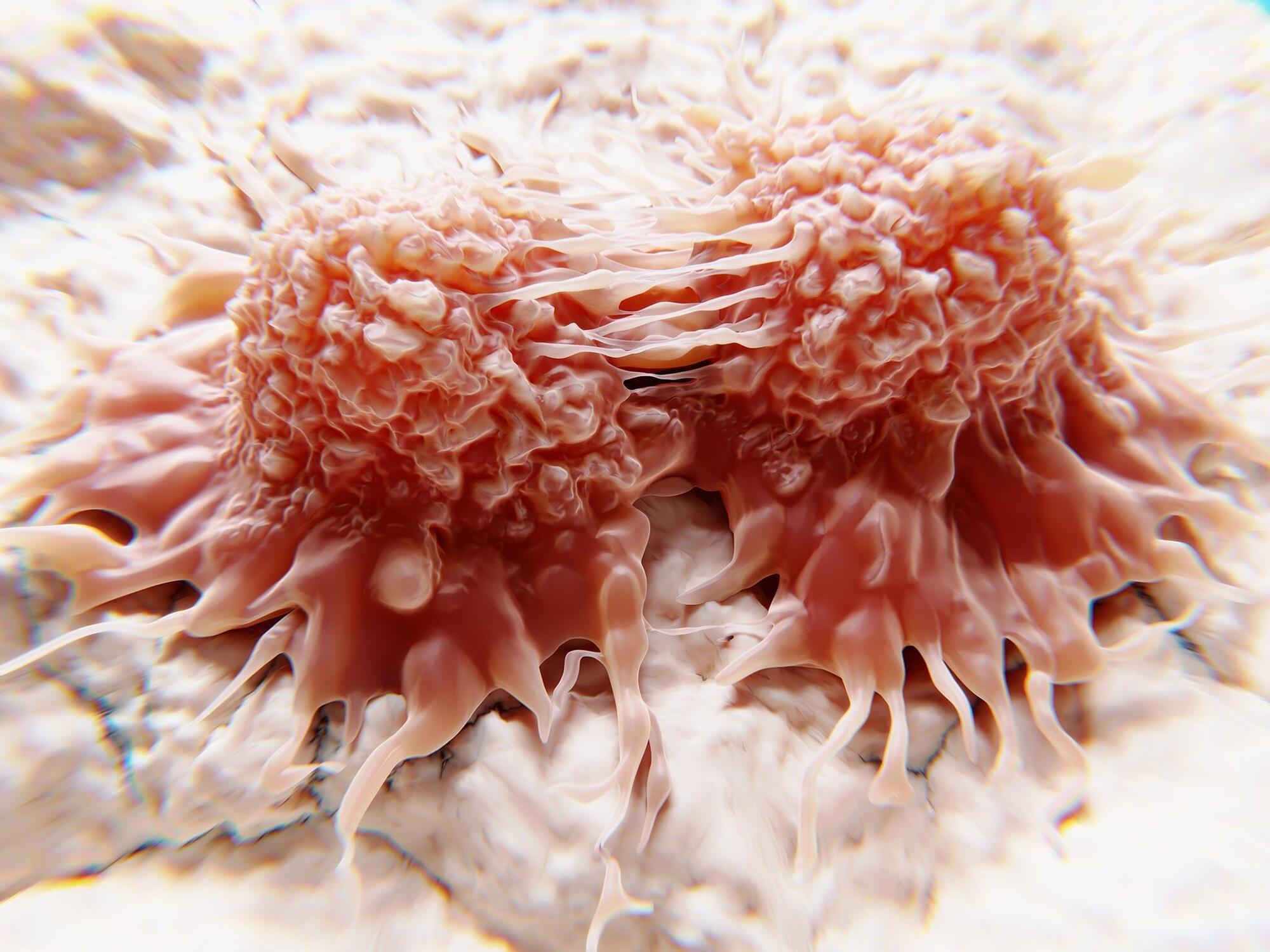
Respiratory Viruses Can Wake Up Breast Cancer Cells in Lungs
Researchers at the University of Colorado Anschutz Medical Campus, Montefiore Einstein Comprehensive Cancer Center (MECCC), and Utrecht University have found the first direct evidence that common respiratory infections, including COVID-19 and influenza, can awaken dormant breast cancer cells that have spread to the lungs, setting the stage for new metastatic tumors. The findings published today in Nature, obtained in mice, were supported by research showing increases in death and in metastatic lung disease among cancer survivors infected with SARS-CoV-2, the virus that causes COVID-19.
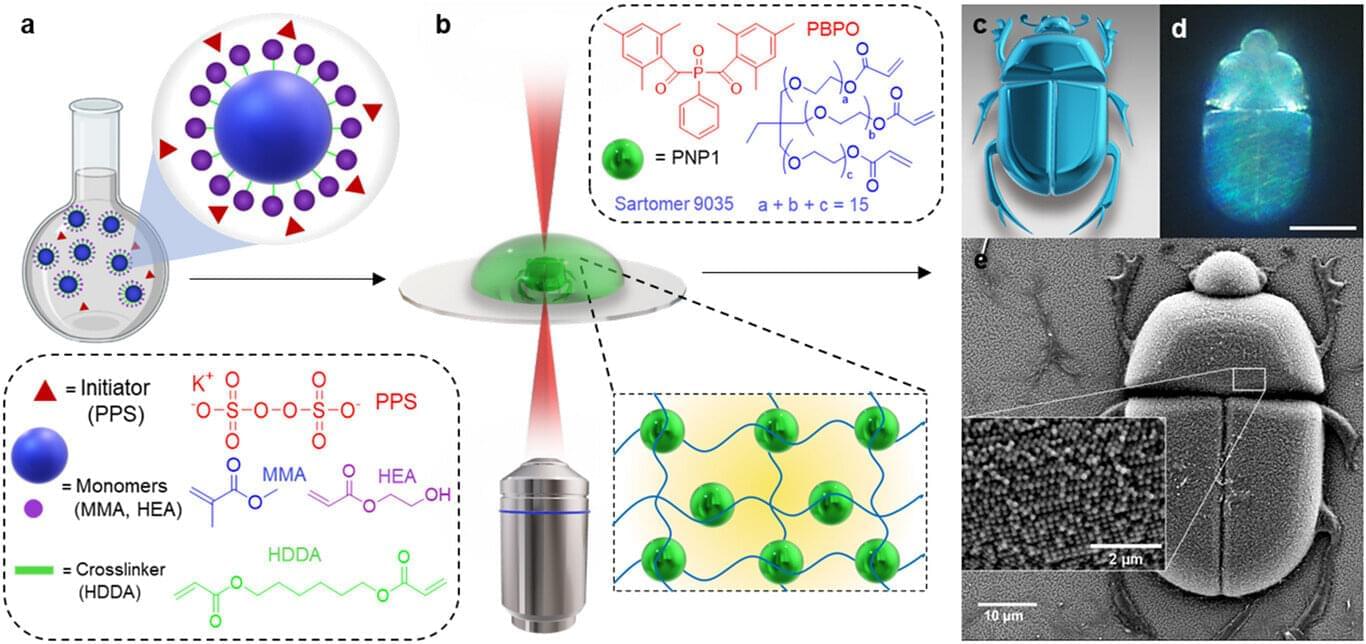
Programmable nanospheres unlock nature’s 500-million-year-old color secrets
Half a billion years ago, nature evolved a remarkable trick: generating vibrant, shimmering colors via intricate, microscopic structures in feathers, wings and shells that reflect light in precise ways. Now, researchers from Trinity have taken a major step forward in harnessing it for advanced materials science.
A team led by Professor Colm Delaney from Trinity’s School of Chemistry and AMBER, the Research Ireland Center for Advanced Materials and BioEngineering Research, has developed a pioneering method, inspired by nature, to create and program structural colors using a cutting-edge microfabrication technique.
The work could have major implications for environmental sensing, biomedical diagnostics, and photonic materials. The research is published in the journal Advanced Materials.

Columbia scientists turn yogurt into a healing gel that mimics human tissue
Scientists at Columbia Engineering have developed an injectable hydrogel made from yogurt-derived extracellular vesicles (EVs) that could revolutionize regenerative medicine. These EVs serve both as healing agents and as structural components, eliminating the need for added chemicals. The innovation leverages everyday dairy products like yogurt to create a biocompatible material that mimics natural tissue and enhances healing.
“Rarest Baryon Decay Ever Observed So Far” Found In Experiment That Wasn’t Even Looking For It
It happens only once every 100 million decays of the Σ+ particle.
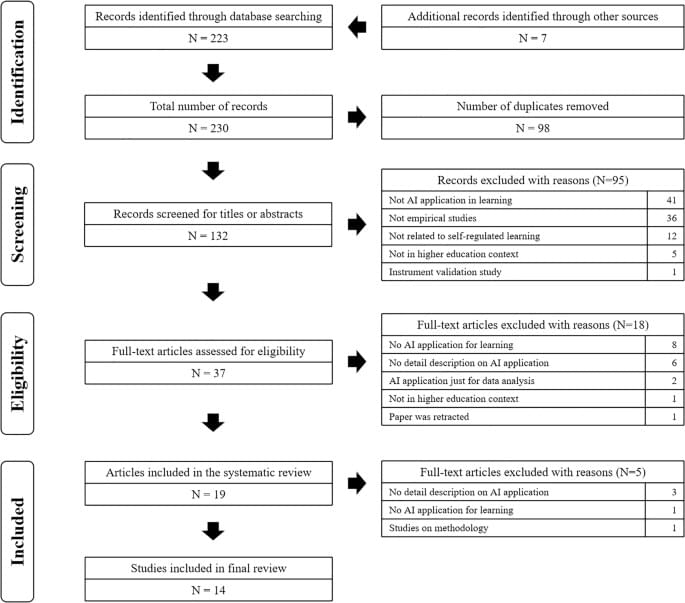
A qualitative systematic review on AI empowered self-regulated learning in higher education
npj Science of Learning — A qualitative systematic review on AI empowered self-regulated learning (SRL) in higher education. Aiming to synthesize empirical studies, we employed a qualitative approach to scrutinize AI’s role in supporting SRL processes. Through a meticulous selection process adhering to PRISMA guidelines, we identified 14 distinct studies that leveraged AI applications, including chatbots, adaptive feedback systems, serious games, and e-textbooks, to support student autonomy. Our findings reveal a nuanced landscape where AI demonstrates potential in facilitating SRL’s forethought, performance, and reflection phases, yet also highlights whether the agency is human-centered or AI-centered leading to variations in the SRL model. This review underscores the imperative for balanced AI integration, ensuring technological advantages are harnessed without undermining student self-efficacy. The implications suggest a future where AI is a thoughtfully woven thread in the SRL fabric of higher education, calling for further research to optimize this synergy.

Seeing sick faces may prime the immune system to repel invaders
Seeing sick-looking faces in virtual reality triggers brain circuit changes related to threat detection and boosts activity of certain immune cells.

This Tiny Device Could Turn Your Phone Into a Lab-Grade Spectrometer
A tiny, fast, and powerful light analyzer could soon bring lab-grade spectroscopy to your pocket.
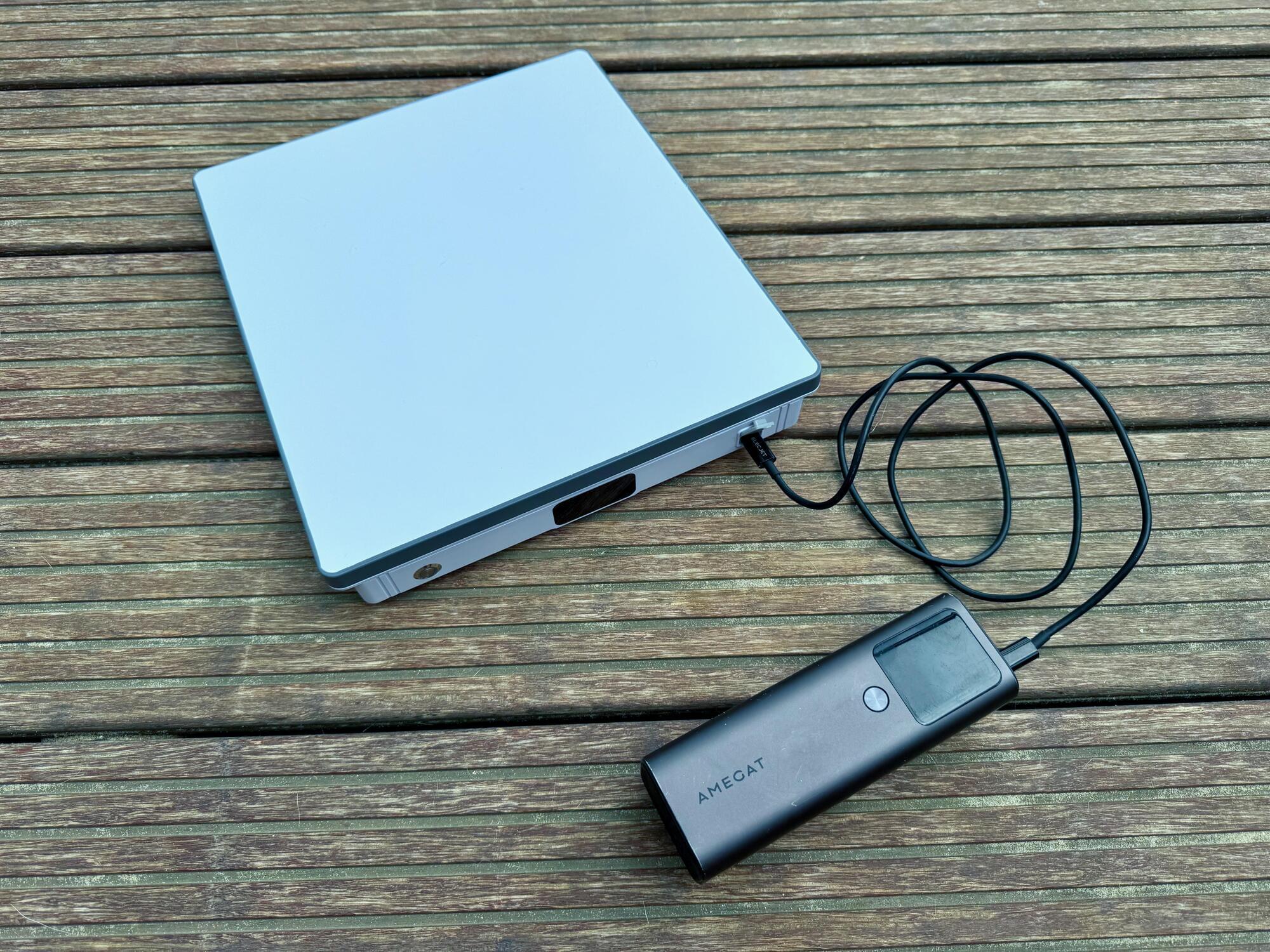
The battery-powered Starlink Mini is here
Starlink is a life-changing Internet service that connects people and villages too remote for towers and cables to reach. My own Starlink Mini has been critical in helping me pursue life as a digital nomad from almost anywhere in Europe. And right now, Starlink’s the only game in town for relatively cheap and fast consumer internet that can be quickly deployed into data dead spots.
My overriding thought after using the PeakDo LinkPower for the last few weeks is this: why doesn’t SpaceX make one of these?

T-Mobile Launches Its Cellular Starlink Service: What You Need to Know
Although T-Satellite is a T-Mobile service, US users on rival carriers can access the satellite connectivity too for $10 per month. Here’s how it works and how to sign up.