This week’s ThreatsDay Bulletin covers AI in malware, botnets, GDI flaws, election cyberattacks, and the latest global security threats.
The human brain comprises hundreds of interconnected regions that drive our thoughts, emotions, and behaviours. Existing brain atlases can identify major structures in MRI scans – such as the hippocampus, which supports memory and learning – but their finer sub-regions remain hard to detect. These distinctions matter because sub-regions of areas like the hippocampus, for example, are affected differently during Alzheimer’s disease progression.
Examining the brain at the cellular level is achievable using microscopy (histology), but cannot be done in living individuals, limiting its potential for understanding how the human brain changes during development, ageing and disease.
Published in Nature, the new study introduces NextBrain, an atlas of the entire adult human brain that can be used to analyse MRI scans of living patients in a matter of minutes and at a level of detail not possible until now.
The creators of the atlas, which is freely available, hope it will ultimately help to accelerate discovery in brain science and its translation into better diagnosis and treatment of conditions such as Alzheimer’s.
&
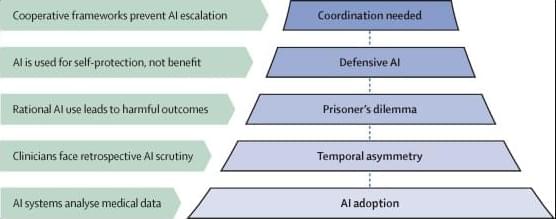
Artificial intelligence (AI) systems that can analyse medical images, records, and claims are becoming accessible to everyone. Although these systems outperform physicians at specific tasks, such as detecting cancer on CT scans, they are still imperfect. But as AI performance progresses from occasionally correct to reliably superior, there will be increasing pressure to conform to algorithmic outputs.

face_with_colon_three fungi is even better than current medicines and frankly better for you. We can also ingest fungi that can help be a natural food medicine to help prevent worse diseases.
While all attention is on the pandemic right now, the SARS-CoV-2 virus isn’t the only microbial threat we face.
While we’re all rightly focused on the COVID-19 pandemic at the moment, the SARS-CoV-2 virus isn’t the only microbial threat we face.
Back in 2014, the World Health Organization (WHO) warned that within a decade, antibiotic-resistant bacteria could make routine surgery, organ transplantation and cancer treatment life-threateningly risky — and spell the end of modern medicine as we know it.
face_with_colon_three Fungi can save all life on earth. This lecture teaches that mushrooms are outperforming even age old medicines.
Watch my 15 minute speech at the United Nations General Assembly’s AUDACITY 100 Disruptors Summit was a powerful reminder of how interconnected we all are.
I spoke about how fungal mycelium can help heal ecosystems, strengthen food systems, and strengthens the health.
of the residents of the planet. Mycelium supports our collective immunity.
When Mycelium Running: How Mushrooms Can Help Save the World was published in 2005, it foretold the mycelial revolution that continues to sweep the planet. This book is as relevant today as it was then. What has happened since? The scientific community continues to verify that mycelium is essential for our collective health, whether as nutritional supplements, or as the core fabric of our food webs.
Aproveite vídeos e músicas que você ama, envie e compartilhe conteúdo original com amigos, parentes e o mundo no YouTube.
For the first time, a quantum computer has successfully measured pairing correlations (quantum signals that show electrons teaming up in pairs), which is essential to helping scientists find one of the holy grails of physics—superconductors that work at room temperature.
Superconductors are materials that can conduct electricity with zero resistance, meaning no energy is lost as heat. To work, they need to be cooled to extremely low temperatures, which makes them expensive and impractical for widespread use. Physicists have been trying to tweak their structure to make them work at room temperature, and many believe that understanding and manipulating electron-pairing correlations are key to that breakthrough.
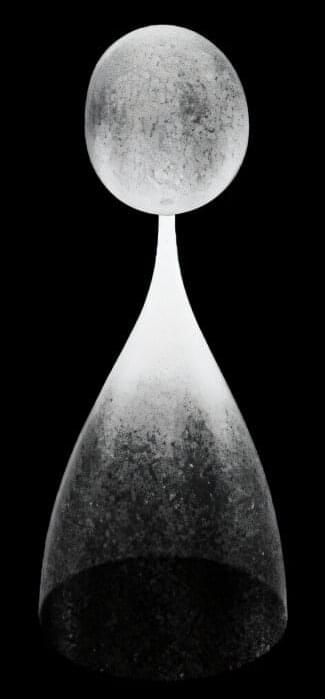
In the world of optics, tiny structures called microcavities—often no wider than a human hair—play a crucial role in technologies ranging from lasers to sensors.
These microscopic resonators trap light, allowing it to circulate millions of times within their boundaries. When they are perfectly shaped, light inside them moves in smooth, circular paths. But when their symmetry is slightly disturbed, the light begins to behave unpredictably, following chaotic routes that can lead to surprising effects like one-way laser emission or stronger light–matter interactions.
Until now, most research on this chaotic behavior has focused on flat, two-dimensional microcavities. These are easier to study because their shape can be seen and measured under a microscope. But truly three-dimensional (3D) microcavities—where deformation occurs in all directions—have remained largely unexplored. Their internal geometry is difficult to capture without cutting or damaging the sample, making it hard to understand how light behaves inside them.
Scientists from Oxford’s Radcliffe Department of Medicine have achieved the most detailed view yet of how DNA folds and functions inside living cells, revealing the physical structures that control when and how genes are switched on.
Using a new technique called MCC ultra, the team mapped the human genome down to a single base pair, unlocking how genes are controlled, or, how the body decides which genes to turn on or off at the right time, in the right cells. This breakthrough gives scientists a powerful new way to understand how genetic differences lead to disease and opens up fresh routes for drug discovery.
“For the first time, we can see how the genome’s control switches are physically arranged inside cells, said Professor James Davies, lead author of the study published in the journal Cell titled ” Mapping chromatin structure at base-pair resolution unveils a unified model of cis-regulatory element interactions.”
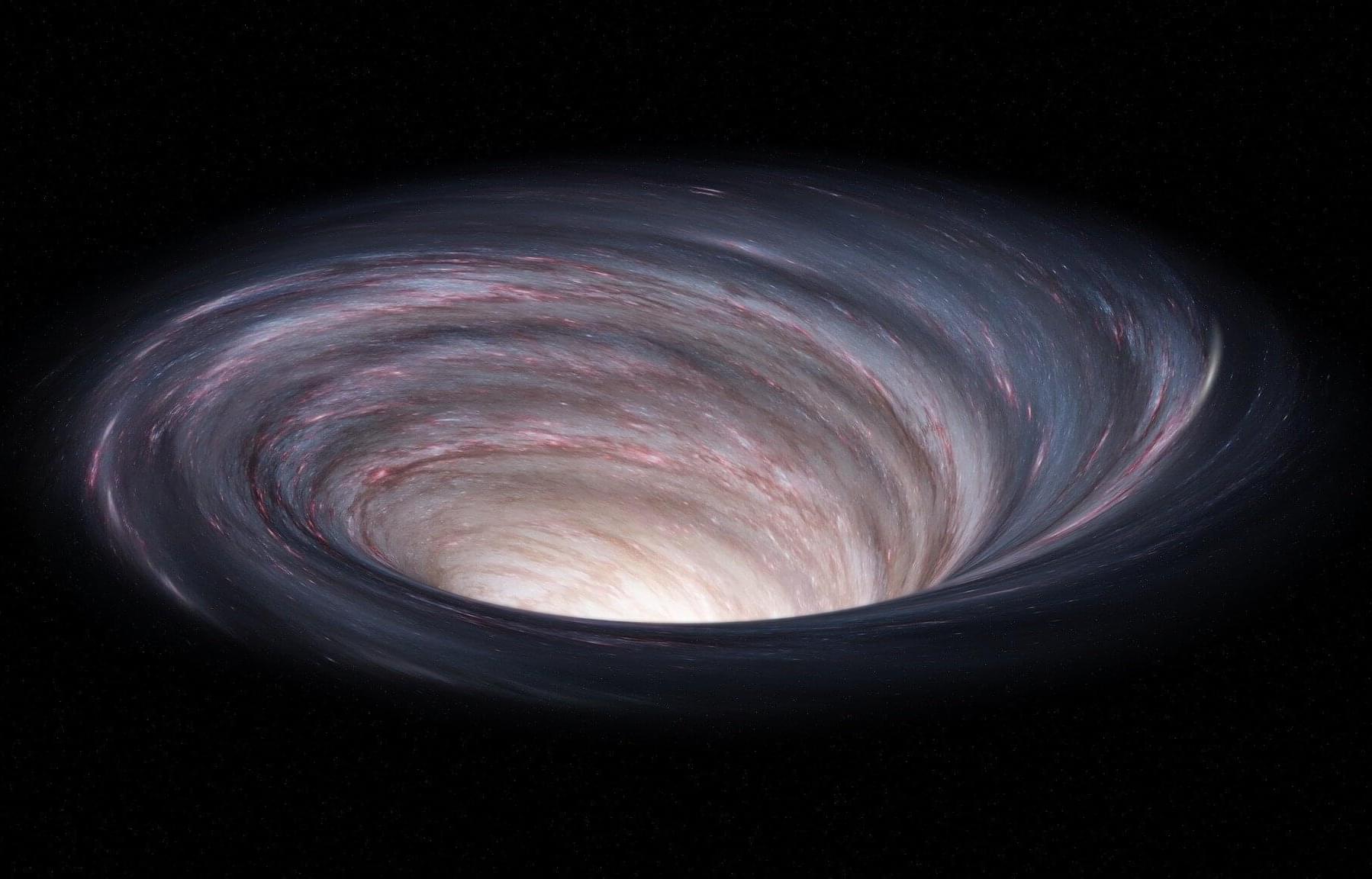
For obvious reasons, we do not know what the inside of a black hole looks like. But thanks to theoretical physics, we can ask what the inside should look like if Einstein’s theory of gravity and the rules of quantum mechanics are both true. A new study published in the journal Physical Review Letters has done exactly this by concentrating on two black holes that are deeply entangled (linked together by quantum rules).
The research by scientists from the U.S. and Argentina theoretically mapped the shared inner space between the two objects—the wormhole connecting them. They found that for a typical, messy entangled pair, the interior isn’t the smooth tunnel of science fiction.
Instead, it’s a long, lumpy structure they called the “Einstein-Rosen caterpillar.” It’s named after the Einstein-Rosen Bridge, the mathematical structure that connects two regions of spacetime, and “caterpillar” because of its bumpy, segmented shape. This discovery is a significant step toward proving that the bizarre rules of quantum mechanics can control the shape of spacetime inside a black hole.