
Daily fasting is an effective tool to reduce weight and lower blood pressure, according to a new study published by University of Illinois at Chicago researchers in the journal Nutrition and Healthy Aging.
Get the latest international news and world events from around the world.
Sit anywhere with this wearable chair
Sit anywhere, at any time, with this wearable chair 🤯.
This personal helicopter from the 1950s
This personal helicopter was way ahead of its time.

Google can use AI to predict when you’ll die
It works by matching up personal data with hospital records.
By.

Inside the controversial new surgery to transplant human wombs
Pioneering surgeons have made it possible to transplant a human uterus that can bear children, offering hope to millions of women who never thought they could give birth.

A Neuroscientist Explains What Happens to Your Brain When You Don’t Sleep
Sleep deprivation affects nearly all parts of your brain, but it is most detrimental to simple cognitive functions that we take for granted, such as memory and staying alert.
Ph.D. neuroscience candidate Shannon Odell says scientific research suggests that sleep deprivation majorly reduces cognitive performance. Studies have shown that patients have significantly reduced their thinking ability after just one night of sleep deprivation, specifically in the hippocampus, also known as the memory center.
Watch Your Brain on Blank on Facebook for more mind-expanding brain truths.

Colony ship to nearest star only needs crew of 100 to survive
A mission to Proxima Centauri b, the closest Earth-like exoplanet, would take over six thousand years – but you only need a small crew to get started.
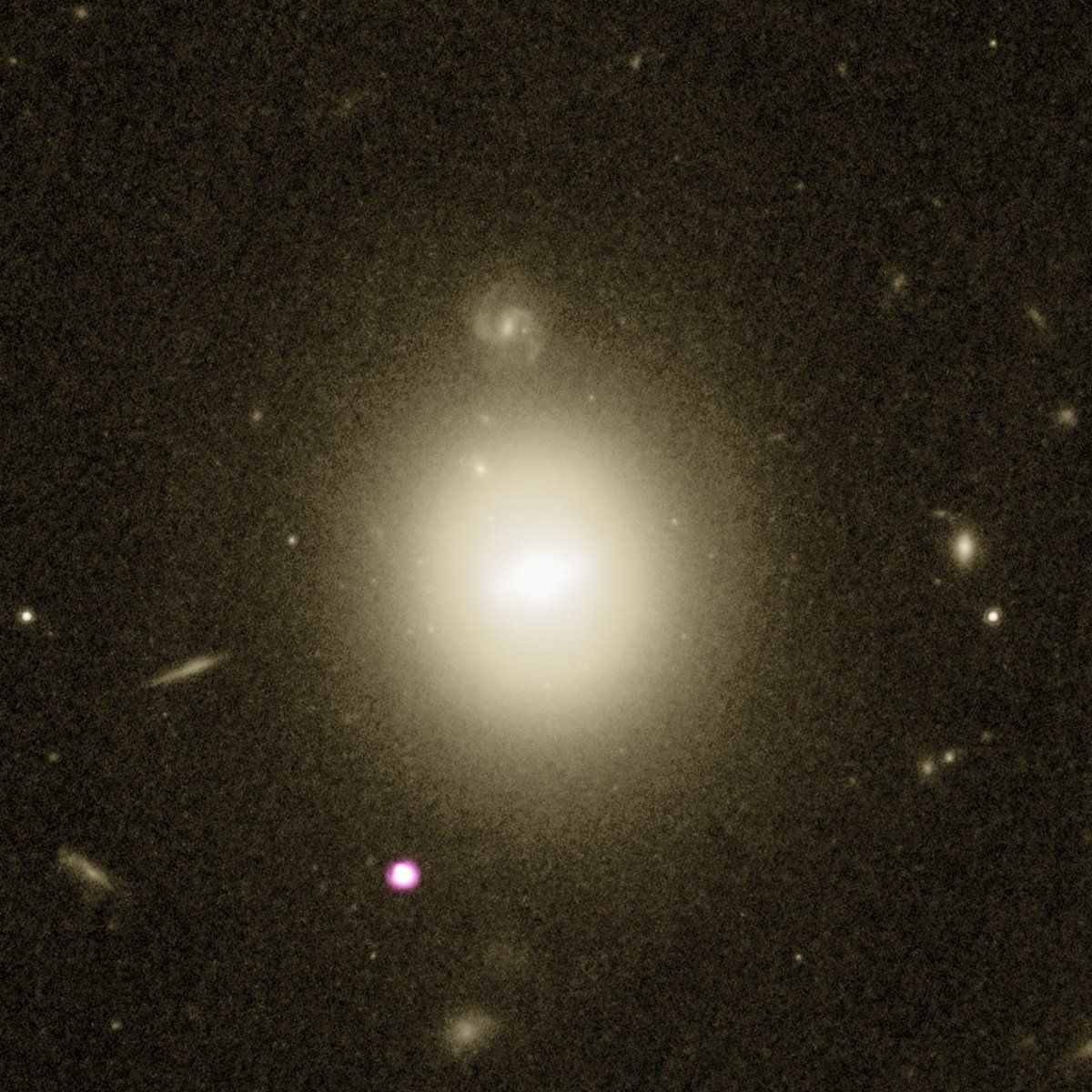
Researchers capture best ever evidence of rare black hole
ESA’s XMM-Newton observatory has discovered the best-ever candidate for a very rare and elusive type of cosmic phenomenon: a medium-weight black hole in the process of tearing apart and feasting on a nearby star.
There are various types of black hole lurking throughout the Universe: massive stars create stellar-mass black holes when they die, while galaxies host supermassive black holes at their centres, with masses equivalent to millions or billions of Suns.
Lying between these extremes is a more retiring member of the black hole family: intermediate-mass black holes. Thought to be seeds that will eventually grow to become supermassive, these black holes are especially elusive, and thus very few robust candidates have ever been found.