
Our future on Earth may also be our past. In a study published Monday (Dec. 10, 2018) in the Proceedings of the National Academy of Sciences, researchers show that humans are reversing a long-term cooling trend tracing back at least 50 million years. And it’s taken just two centuries.
Get the latest international news and world events from around the world.

Space mining: the new goldrush
While space mining is still a decade or so off, next year the industry is ramping up their efforts.

LIVE NOW: Do you like penguins?
Do you like space? 🌌 A science team is presenting about their expedition to document a supercolony of penguins in Antarctica — which they found by using NASA Earth satellite imagery! 🛰️ Learn all about how to study penguins from space! https://go.nasa.gov/2rsoF4y

Curry signals willingness to meet with NASA over Moon landing doubts
NASA offered to give Stephen Curry a tour of its lunar labs in Houston after the NBA superstar expressed doubts on the moon landings.
Three-time NBA champion Stephen Curry on Tuesday signaled that he is willing to take NASA up on its offer to tour its lunar lab in Houston after his pronouncement this week that he does not believe humans ever walked on the Moon.
During the “Winging It” podcast released on Monday, the Golden State Warriors guard asked fellow players Vince Carter and Kent Bazemore whether they believed humans had ever been to the Moon.
The players said they did not, to which two-time MVP Curry said: “They’re gonna come get us. I don’t think so either.”

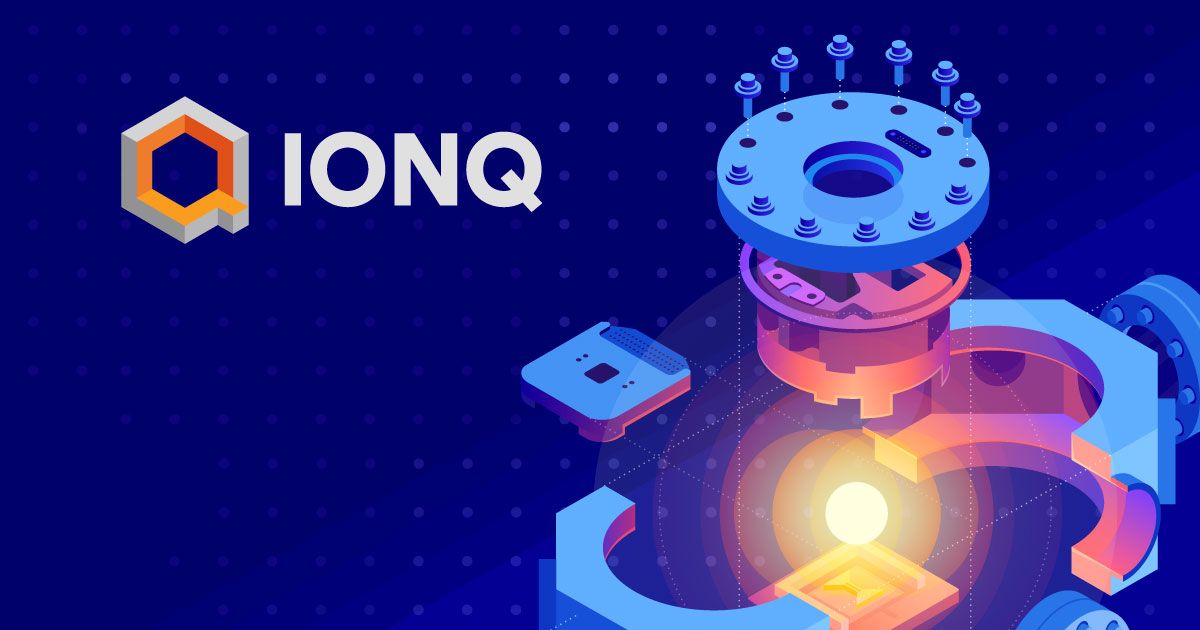

IonQ Has the Most Powerful Quantum Computers With 79 Trapped Ion Qubits and 160 Stored Qubits
IonQ just made a presentation on two new trapped ion quantum computers with 160 stored and 79 processing qubits. This is more qubits than the best noisy superconducting quantum computers which is currently the Google 72 Qubit Bristlecone processor.
* IonQ systems are at room temperature
* IonQ manipulates ions with magnets and lasers and have software control on mostly FPGA chips.

NASA’s InSight Takes Its First Selfie
First #selfie! I’m feeling healthy, energized and whole. This is me on #Mars. http://go.nasa.gov/2Qn6Pi6&h=AT3Q6ffKt6_9qmkSPTO3bdwJ0GlGXlT…Qbo516oeGQ

NASA to NBA star Steph Curry: Yes, we went to the moon, and we can prove it
NASA has offered to give NBA superstar Steph Curry a tour of one of its lunar labs after the Golden State Warriors guard said on a podcast that he doubts humans landed on the moon.
No, really.
Curry made the head-scratching comment on an episode of the “Winging It” podcast, which posted Monday. According to Bleacher Report, Curry brought up the subject himself during the more than hour-long podcast with fellow NBA players Vince Carter, Kent Bazemore and Andre Iguodala:

Best Bitcoin wallet: Hardware or hosted?
The question asked in the title has been edited from what was asked today at Quora, the Q&A forum at which I participate as expert columnist. The original question was a bit more ambiguous: “Which is better? — a digital bitcoin wallet or a physical one?” I have included the original question, to better distinguish products and terms.
All bitcoin wallets are all digital—even a paper wallet, whether a character string or a QR code. Conversely, an exchange may use “physical” wallets to host client assets, individual application wallets, or they may simply keep records of client assets that are stored, collectively, in their own master wallet. To complicate matters, Bitcoin is never really “stored” by you or an exchange service. It is stored on a public blockchain, where assets and transaction history can be traced through time by anyone. Therefore, all forms of user access are “digital”. What the reader really wants to know is “Which form of access control is better? — custodial or personal?”
Type 1: Custodial Wallets are Managed by a Trusted Party They hold your assets. You view a statement balance—just like a bank account.

 2. Deciding Factor
There are few individuals for whom direct and private ownership makes sense. In fact, until this month, it did not make sense for me. I am only now configuring my first hardware wallet. I still trust Coinbase to host and control most of my assets. The reasons boil down to security, forgetfulness, errors, legacy ownership and instant access. The ONLY factor that is arguably better with personal custody & control is privacy.
Due to a lack of education, standards, and definitive best practices, this option makes sense for fewer than 5% of Bitcoin owners. Take me, for example… I have been involved with Bitcoin since the first years of its existence, and have been a Bitcoin educator since shortly after Satoshi’s original bombshell. Today, I am a keynote presenter at blockchain and cryptocurrency conferences. I teach blockchain seminars, design courseware for colleges, and am co-chair of the Cryptocurrency Standards Association and partner in Blockchain Research Council.
Yet, I am only now configuring my first hardware wallet. I still trust Coinbase to host and control most of my cryptocurrency.
How do I know if I am a candidate for full / private control?
Using an exchange hosted wallet service is best for most individuals. But, for some, it makes sense to maintain private, local control of blockchain assets. If all criteria in the bulleted list below applies to you, then local and private ownership might make sense. But if you fail even one criteria, then WAIT! Wait until multisig becomes uniform and ubiquitous — and wait until a larger fraction of society is comfortable with the concept and practice of managing private keys. These are gradually becoming new norms. But, it will take a few more years for the world to become comfortable with an unfamiliar concept: personal control of a decentralized asset. You are a candidate for using a personal wallet if you plan to control and secure your own private keys, and if you meet all conditions listed below. The technical criteria will not be requisite in the future—but they are necessary today, because the market currently lacks simple, standardized, widespread tools and uniform practices for safely securing, accessing and passing on these credentials to your heirs. Do all of these criteria apply to you?
The reader uses the term “digital wallet” to mean a hosted wallet in which a trusted 3rd party holds the private keys, or aggregates the assets of many customers and tracks their individual ownership in their own accounting system, like a traditional bank or broker. In this case, the 3rd party is trusted to maintain security, privacy, and constant, robust user access.
It is possible that the reader may have used the term “digital wallet” to additionally refer to PC and smartphone applications, such as Bitcoin Core, Armory or Electrum. But, these are really personal and private wallets — because they are created and configured by the owner, and only the owner has the private keys. And so, we classify device wallet applications as “personal/private” along with hardware or paper wallets. Type 2: Personal Wallets are Private —but with privacy comes risk!
Wallets are personal if the private keys are generated and stored by the user, either on paper, in their PC or smart phone, on a thumbdrive, in a hardware wallet, or even uploaded to cloud storage. As long as the asset owner holds the keys and securely encrypted any uploaded file that contains the keys, the assets are accessible only with his consent.
So, which wallet class is better for securing cryptocurrency access credentials? Custodial or Personal? Which of these models best fits your needs?- A custodial wallet is like a bank a statement. Your assets are maintained by an exchange, rather than tucked into your mattress. The wallet and keys are not under your control, but the process that governs backup and security is rigorous & standardized. Availability to your heirs is governed by documents and laws.
- A personal wallet is completely controlled by you. The private keys must be stored where you will always find them (in your head, a lock box or an encrypted file that is distributed to family in a way that they will always be able to unlock it!). Ensuring future availability, swift transactions or passing wealth after death requires careful attention to tools, process and a secret.
2. Deciding Factor
There are few individuals for whom direct and private ownership makes sense. In fact, until this month, it did not make sense for me. I am only now configuring my first hardware wallet. I still trust Coinbase to host and control most of my assets. The reasons boil down to security, forgetfulness, errors, legacy ownership and instant access. The ONLY factor that is arguably better with personal custody & control is privacy.
Due to a lack of education, standards, and definitive best practices, this option makes sense for fewer than 5% of Bitcoin owners. Take me, for example… I have been involved with Bitcoin since the first years of its existence, and have been a Bitcoin educator since shortly after Satoshi’s original bombshell. Today, I am a keynote presenter at blockchain and cryptocurrency conferences. I teach blockchain seminars, design courseware for colleges, and am co-chair of the Cryptocurrency Standards Association and partner in Blockchain Research Council.
Yet, I am only now configuring my first hardware wallet. I still trust Coinbase to host and control most of my cryptocurrency.
How do I know if I am a candidate for full / private control?
Using an exchange hosted wallet service is best for most individuals. But, for some, it makes sense to maintain private, local control of blockchain assets. If all criteria in the bulleted list below applies to you, then local and private ownership might make sense. But if you fail even one criteria, then WAIT! Wait until multisig becomes uniform and ubiquitous — and wait until a larger fraction of society is comfortable with the concept and practice of managing private keys. These are gradually becoming new norms. But, it will take a few more years for the world to become comfortable with an unfamiliar concept: personal control of a decentralized asset. You are a candidate for using a personal wallet if you plan to control and secure your own private keys, and if you meet all conditions listed below. The technical criteria will not be requisite in the future—but they are necessary today, because the market currently lacks simple, standardized, widespread tools and uniform practices for safely securing, accessing and passing on these credentials to your heirs. Do all of these criteria apply to you?
- You have a comprehensive understanding of cryptography, including the principals of RSA public-key crypto.
- You have practiced multisig decryption for at least a year. For now, you will need to roll-your-own multisig, to ensure that your heirs or executor can access your wealth in the event of death, forgetfulness or incapacitation.
- You have experience and a clear, documented and standardized plan for separately encrypting and distributing your private keys.
- You understand how to implement a hard fork and have the time to do it after any hard fork split.
- You have an exceptional need for privacy or anonymity, and you feel that a custodian is more likely to “sing” in the event of an audit or court order.
- You have a rehearsal plan for testing your multisig recovery and a willing group of trusted friends (most of them younger than you) who can combine their keys to access your wealth.
- After ensuring that encrypted wallet works, is completely secure and is accessible to your heirs, you have replicated it in a sufficient number of places, that you are certain that your heirs will find it after you die, even if it is 90 years in the future.It must not only survive your lifetime, but the knowledge of where to look and *IF* to look, must be certain, even if your home burns down, your cloud accounts have been deleted and/or Google, Amazon, Microsoft & Apple are no longer in business.
Philip Raymond co-chairs CRYPSA, hosts the Bitcoin Event and is keynote speaker at Cryptocurrency Conferences. He advises The Disruption Experience in Singapore, sits on the New Money Systems board of Lifeboat Foundation and is a top writer at Quora. Book a presentation or consulting engagement.