Toggle light / dark theme

Get the latest international news and world events from around the world.

Log in for authorized contributors

Does dark energy really exist? Our work identifies cracks in the foundations of today’s cosmological model

According to our best understanding, the universe is expanding – and is doing so at an accelerating rate. This is believed to be caused by something called the “cosmological constant”, which was first proposed by Albert Einstein in his theory of general relativity. In recent decades, it has become better known as dark energy, which is believed to make up about 70% of the universe.

Crucial to this realisation were studies of Type Ia supernovae – exploding white dwarf stars. These are thought to emit a specific amount of light, which allows astronomers to determine their distances very accurately and thereby track the expansion of the universe. This work was awarded the 2011 Nobel prize in physics.

The accelerating expansion of the universe is thought to be due to negative pressure, an unusual property of dark energy that allows it to overcome the attractive force of gravity. Yet the exact nature of dark energy remains a puzzle. It cannot be explained by our best theory for the fundamental building blocks of the universe – known as the standard model of particle physics.

Nanopores can activate human T cells without biochemical signals

Immune cells protect and heal the human body. In medicine, they are specifically activated through biochemical reactions to treat certain diseases. Researchers at the Helmholtz-Zentrum Hereon, ETH Zurich, Humboldt University of Berlin, Charité Berlin and Inselspital Bern have now discovered that immune cells also respond to the surface structure of materials —without chemistry.

This finding opens up new possibilities for effective cancer and immunotherapies as well as implantology. The study is published in the journal ACS Nano.

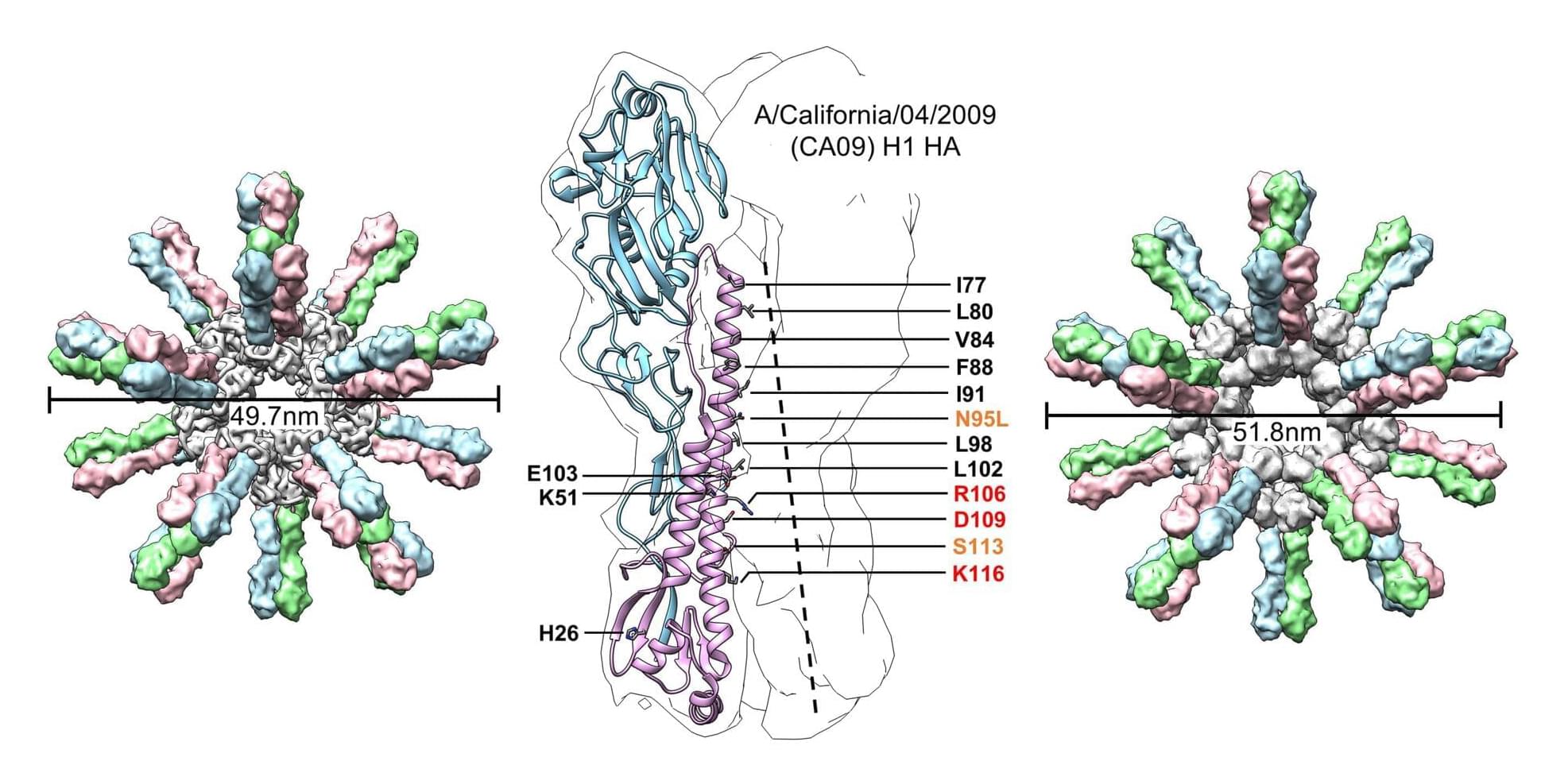
T cells are important defense cells of the human immune system. They travel through the body, constantly scanning their environment like tiny sensors. On their surface, they have tiny protrusions with receptors—called microvilli—that allow them to identify harmful pathogens such as bacteria and viruses, foreign substances or even altered cells of the body’s own tissues.

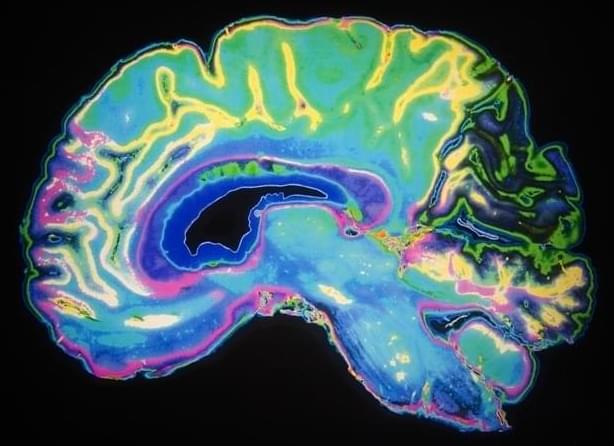
A petavoxel fragment of human cerebral cortex reconstructed at nanoscale resolution

From the article:

“In a 2024 Science study, researchers performed a high-resolution EM reconstruction of the ultrastructure of a cubic millimeter of human temporal cortex. According to the authors, the reconstruction contains roughly 57,000 cells, about 230 millimeters of blood vessels, and nearly 150 million synapses, comprising 1,400 terabytes of data.”


This website uses a security service to protect against malicious bots. This page is displayed while the website verifies you are not a bot.

Natural compound may fight rheumatoid arthritis at its source

A plant-derived compound reduced swelling, inflammation, and joint damage in rats with rheumatoid arthritis. It also helped rebalance immune activity and improve the way certain fats were processed in the body. Researchers say the findings could lead to a new approach for treating the disease.

Dan Barry: Don’t Let Anyone Tell You That You Can’t Reach Your Dreams

For fifteen years, NASA told Dan Barry no.

He kept applying. Then he flew three shuttle missions, walked in space four times, and made two trips to the International Space Station. On the mission that didn’t go there, he was outside the orbiter rehearsing how to build it.

In 2011, I ambushed him with a camera at Singularity University and got 20 minutes.

Dan is not just an astronaut. He holds a doctorate in electrical engineering from Princeton and a doctorate in medicine from Miami, and he left NASA in 2005 to build #robotics for people with disabilities. So when our conversation turned to #ArtificialIntelligence, and specifically to what happens when we arm it, he was not speculating. He was describing machines he understood from the inside.

Armed drones were already flying in 2011. What nobody had done yet was hand the machine the decision to fire. Fifteen years on, that line is thinner than most people realize.

We also got into Asimov’s three laws, the Turing test, his 109 project to improve a billion lives in a decade, and whether we survive the #Singularity at all.

/* */