New research from the Department of Energy’s Oak Ridge National Laboratory, in collaboration with The Ohio State University and Amphenol Corporation, challenges conventional understanding about controlling heat flow in solid materials. The study, published in PRX Energy, shows that applying an electric field to a ceramic material changes how phonons (tiny vibrations that carry heat) behave.
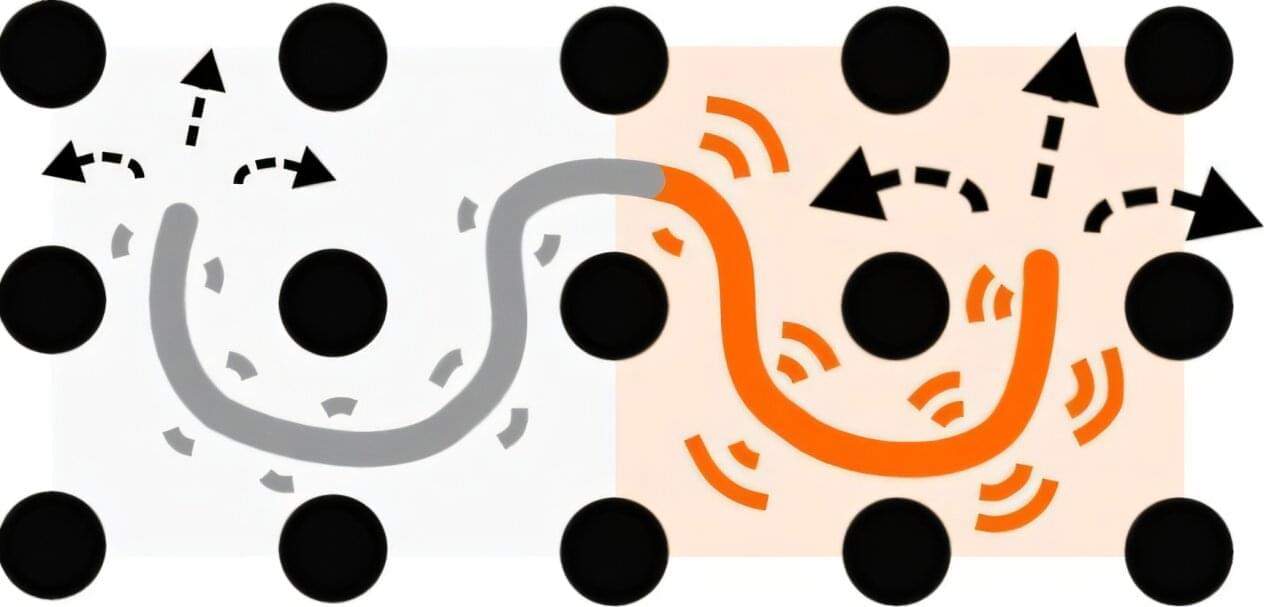
Phonons with atoms moving along the field direction (poling direction) last longer than those with atoms moving perpendicular to the field. As a result, the material conducts heat almost three times more efficiently along the field direction than in perpendicular directions. This promising approach could lead to new solid-state devices that control heat flow in everyday technologies.
“Being able to control both how fast and in what manner heat flows could lead to devices that manage thermal energy far more efficiently,” said Puspa Upreti, an ORNL postdoctoral research associate.