Toggle light / dark theme

Virtual reality boosts brain rhythms crucial for neuroplasticity, learning and memory

This is interesting. 😃


A new discovery in rats shows that the brain responds differently in immersive virtual reality environments versus the real world. The finding could help scientists understand how the brain brings together sensory information from different sources to create a cohesive picture of the world around us. It could also pave the way for “virtual reality therapy” for learning and memory-related disorders ranging including ADHD, Autism, Alzheimer’s disease, epilepsy and depression.

Mayank Mehta, PhD, is the head of W. M. Keck Center for Neurophysics and a professor in the departments of physics, neurology, and electrical and computer engineering at UCLA. His laboratory studies a brain region called the hippocampus, which is a primary driver of learning and memory, including spatial navigation. To understand its role in learning and memory, the hippocampus has been extensively studied in rats as they perform spatial navigation tasks.

When rats walk around, neurons in this part of the brain synchronize their electrical activity at a rate of 8 pulses per second, or 8 Hz. This is a type of brain wave known as the “theta rhythm,” and it was discovered more than six decades ago.

Oculus Quest 2 is getting AR – but could the Quest 3 take it further?

We speak to AR experts about the future of the Oculus Quest.


Oculus is getting into AR, and it has big repercussions for the future direction of the company and its popular line of VR headsets – especially the eventual Oculus Quest 3.

The Facebook-owned company recently announced its intention to open up its Oculus platform to augmented reality developers, allowing them to use the Oculus Quest 2 headset to host AR games and apps rather than simply VR titles – setting the scene for an explosion of both consumer and business applications on the popular standalone headset.

Wearable brain-machine interface turns intentions into actions

A new wearable brain-machine interface (BMI) system could improve the quality of life for people with motor dysfunction or paralysis, even those struggling with locked-in syndrome—when a person is fully conscious but unable to move or communicate.

A multi-institutional, international team of researchers led by the lab of Woon-Hong Yeo at the Georgia Institute of Technology combined wireless soft scalp electronics and virtual reality in a BMI system that allows the user to imagine an action and wirelessly control a wheelchair or robotic arm.

The team, which included researchers from the University of Kent (United Kingdom) and Yonsei University (Republic of Korea), describes the new motor imagery-based BMI system this month in the journal Advanced Science.

Researchers record brainwaves to measure ‘cybersickness’

If a virtual world has ever left you feeling nauseous or disorientated, you’re familiar with cybersickness, and you’re hardly alone. The intensity of virtual reality (VR)—whether that’s standing on the edge of a waterfall in Yosemite or engaging in tank combat with your friends—creates a stomach-churning challenge for 30–80% of users.

In a first-of-its kind study, researchers at the University of Maryland recorded VR users’ using electroencephalography (EEG) to better understand and work toward solutions to prevent cybersickness. The research was conducted by Eric Krokos, who received his Ph.D. in computer science in 2018, and Amitabh Varshney, a professor of and dean of UMD’s College of Computer, Mathematical, and Natural Sciences.

Their study, “Quantifying VR cybersickness using EEG,” was recently published in the journal Virtual Reality.

New type of metasurface allows unprecedented laser control

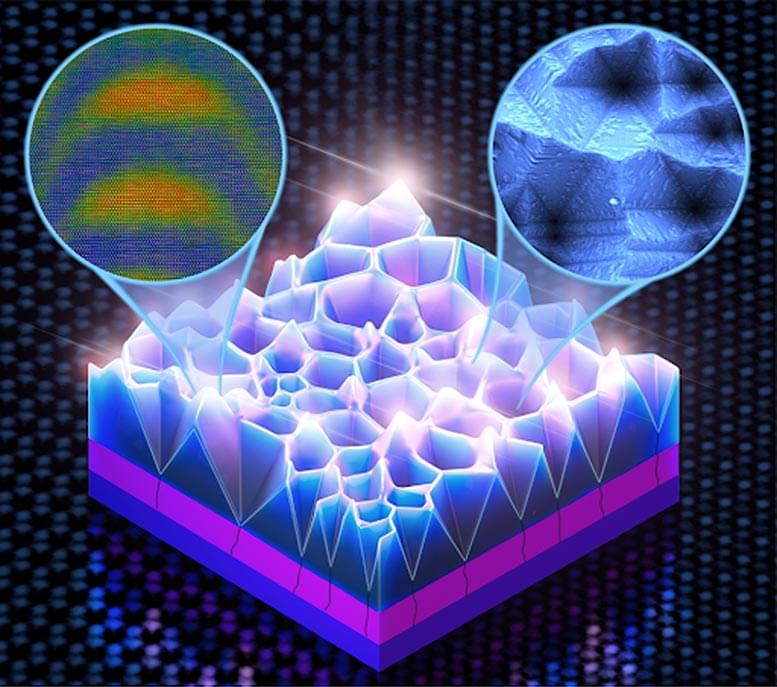
The ability to precisely control the various properties of laser light is critical to much of the technology that we use today, from commercial virtual reality (VR) headsets to microscopic imaging for biomedical research. Many of today’s laser systems rely on separate, rotating components to control the wavelength, shape and power of a laser beam, making these devices bulky and difficult to maintain.

Now, researchers at the Harvard John A. Paulson School of Engineering and Applied Sciences have developed a single that can effectively tune the different properties of light, including wavelength, without the need of additional optical components. The metasurface can split light into multiple beams and control their shape and intensity in an independent, precise and power-efficient way.

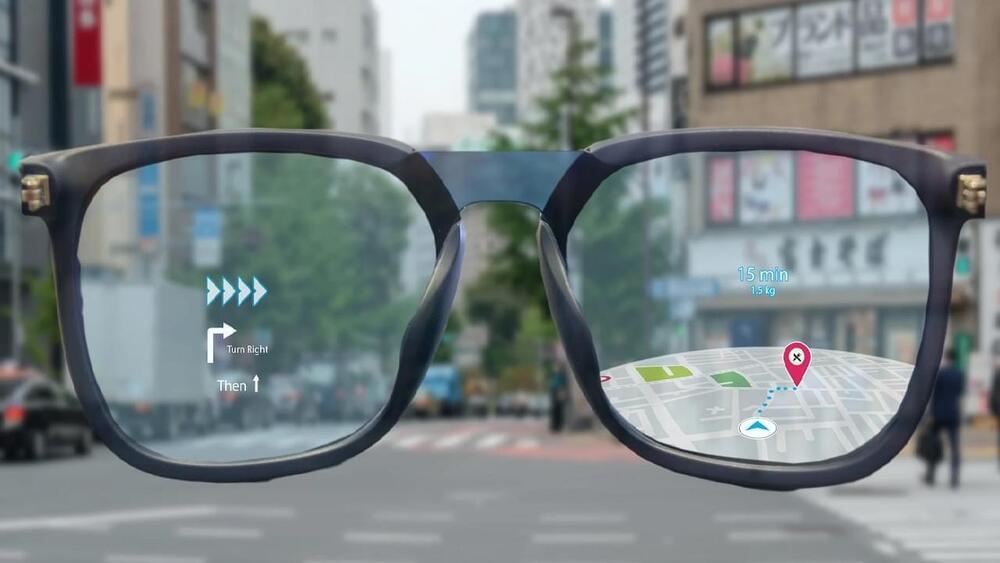
The research opens the door for lightweight and efficient optical systems for a range of applications, from quantum sensing to VR/AR headsets.

Ransomware: Now gangs are using virtual machines to disguise their attacks

Cyber criminals are increasingly using virtual machines to compromise networks with ransomware.

By using virtual machines as part of the process, ransomware attackers are able to conduct their activity with additional subtlety, because running the payload within a virtual environment reduces the chances of the activity being discovered – until it’s too late and the ransomware has encrypted files on the host machine.

During a recent investigation into an attempted ransomware attack, cybersecurity researchers at Symantec found the ransomware operations had been using VirtualBox – a legitimate form of open-source virtual machine software – to run instances of Windows 7 to aid the installation of ransomware.

Commercial Video Games Could Help Treat Mental Illness

Perhaps better than medication.


Summary: Inexpensive, commercial video games may help those suffering from anxiety and depression to combat their symptoms. Researchers found that, in addition to conventional games, virtual reality games could help people overcome mental health problems.

Source: Lero

Popular video games have the potential to provide low-cost, easy access, effective and stigma-free support for some mental health issues, researchers at Lero, the Science Foundation Ireland Research Centre for Software, have found.

The team at Lero, a world leader in connected-health research, said video games could be used where conventional therapies are not available because of cost or location, or as an addition to traditional therapeutic treatments for depression or anxiety.

MIT artificial intelligence tech can generate 3D holograms in real-time

Despite years of hype, virtual reality headsets have yet to topple TV or computer screens as the go-to devices for video viewing.

One reason: VR can make users feel sick. Nausea and eye strain can result because VR creates an illusion of 3D viewing although the user is in fact staring at a fixed-distance 2D display. The solution for better 3D visualization could lie in a 60-year-old technology remade for the digital world: holograms.

Holograms deliver an exceptional representation of 3D world around us. Plus, they’re beautiful. (Go ahead — check out the holographic dove on your Visa card.) Holograms offer a shifting perspective based on the viewer’s position, and they allow the eye to adjust focal depth to alternately focus on foreground and background.

/* */