Toggle light / dark theme

Triple Battery Density in 3–5 Years for Triple Electric Car Range

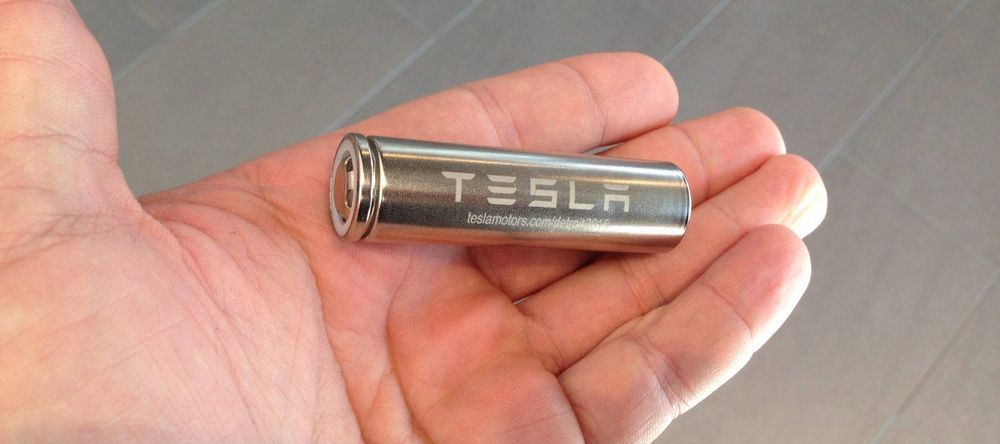
Innolith AG, Swiss maker of rechargeable Inorganic Battery Technology, says they have the world’s first 1000 Wh/kg rechargeable battery. This would triple the range of electric cars. The Innolith Energy Battery would radically reduce costs by not using exotic and expensive materials.

Innolith will make an initial pilot production in Germany and then create licensing partnerships with major battery and automotive companies. Development and commercialization of the Innolith Energy Battery is anticipated to take between three and five years.

It will also be the first non-flammable lithium-based battery for use in EVs. The Innolith battery uses a non-flammable inorganic electrolyte, unlike conventional EV batteries that use a flammable organic electrolyte. The switch to non-flammable batteries removes the primary cause of battery fires that have beset the manufacturers of EVs.

Read more

Woman Found Frozen Solid Makes Incredible Full Recovery

It was a freezing cold morning just before Christmas 1980 when cattle rancher, Wally Nelson, came across the frozen form of a woman in his front yard.

Wally knew who the woman was. It was his friend, 19-year-old Jean Hilliard who had been dating his best friend at the time. The night was 22 below zero, and the teenager had fallen while looking for shelter after a car accident.

Jean was frozen solid as a block of ice, and Wally understandably believed her to be dead. That is of course until he saw a few tell-tale bubbles emerging from her nose.

Read more

The Aero-X

Is our take on the next-generation tandem-duct platform. Flying up to 10 feet off the ground at 45 miles per hour, the Aero-X is a surface-effect craft that rides like a motorcycle — an off road vehicle that gets you off the ground.

The Aero-X can be adapted for a variety of uses: surveying, search and rescue, border patrol, disaster relief, agricultural, ranching, rural transportation and…

Because it responds to your movements just as a motorcycle would, the Aero-X is intuitive to fly. And as it is built with very few moving parts, its cost of ownership is a fraction of even the most basic airplane or helicopter.

Read more

Lightweight Velocité“Maglev” Hidden Motor Electric Bike

Imagine that instead of adding a motor to a bicycle, parts of the bicycle are designed to function as the motor.

In this case the wheel rim contains the motor magnets and the frame houses the inductive coils. The inductive coils use energy from the battery (hidden in the frame downtube) to repel the magnets on the rim to make the wheel spin.

Lightweight calls this “Maglev Transrapid technology” and they claim that this Velocité eBike can go up to 100 kph (62 mph) with its 500 watts of power! They are currently limiting it to 45 kph (28 mph) to fall with in the limits of a speed pedelec.

Read more

Developing roads that can generate power from passing traffic

Circa 2017


Researchers are looking at advanced materials for roads and pavements that could generate electricity from passing traffic.

Engineers from Lancaster University are working on such as ‘piezolectric’ ceramics that when embedded in road surfaces would be able to harvest and convert vehicle vibration into .

The research project, led by Professor Mohamed Saafi, will design and optimise energy recovery of around one to two Megawatts per kilometre under ‘normal’ volumes—which is around 2,000 to 3,000 cars an hour.

Read more

Prototype tire repairs itself instantly when a puncture occurs

Circa 2015


I’m sure many of you have experienced that sinking feeling when you’re running out to your car to drive to work only to discover a flat tire. The cause: usually a nail your drove over the night before. It’s 2015, tires shouldn’t suffer punctures anymore, right? Well, they may not for much longer if this prototype tire from Japan makes it to mass production.

The tire is called Coreseal and it has been developed by Japanese company Sumitomo Rubber Industries Ltd. It looks like any other tire fitted on vehicles today, but it has one big advantage. If you drive over a nail and cause a puncture, the tire won’t deflate. In fact, it will repair itself and you’ll likely never know it happened.

sumitomo_tire_03

Read more

Controlling instabilities gives closer look at chemistry from hypersonic vehicles

While studying the chemical reactions that occur in the flow of gases around a vehicle moving at hypersonic speeds, researchers at the University of Illinois used a less-is-more method to gain greater understanding of the role of chemical reactions in modifying unsteady flows that occur in the hypersonic flow around a double-wedge shape.

“We reduced the pressure by a factor of eight, which is something experimentalists couldn’t do,” said Deborah Levin, researcher in the Department of Aerospace Engineering at the University of Illinois at Urbana-Champaign. “In an actual chamber, they tried to reduce the pressure but couldn’t reduce it that much because the apparatuses are designed to operate within a certain region. They couldn’t operate it if the pressure was too low. When we reduced the pressure in the simulation, we found that the instabilities in the calmed down. We still had a lot of the kind of vortical structure—separation bubbles and swirls—they were still there. But the data were more tractable, more understandable in terms of their time variation.”

Levin conducted the research along with her, then, doctoral student Ozgur Tumuklu, and Vassilis Theofilis from the University of Liverpool.

Read more

/* */