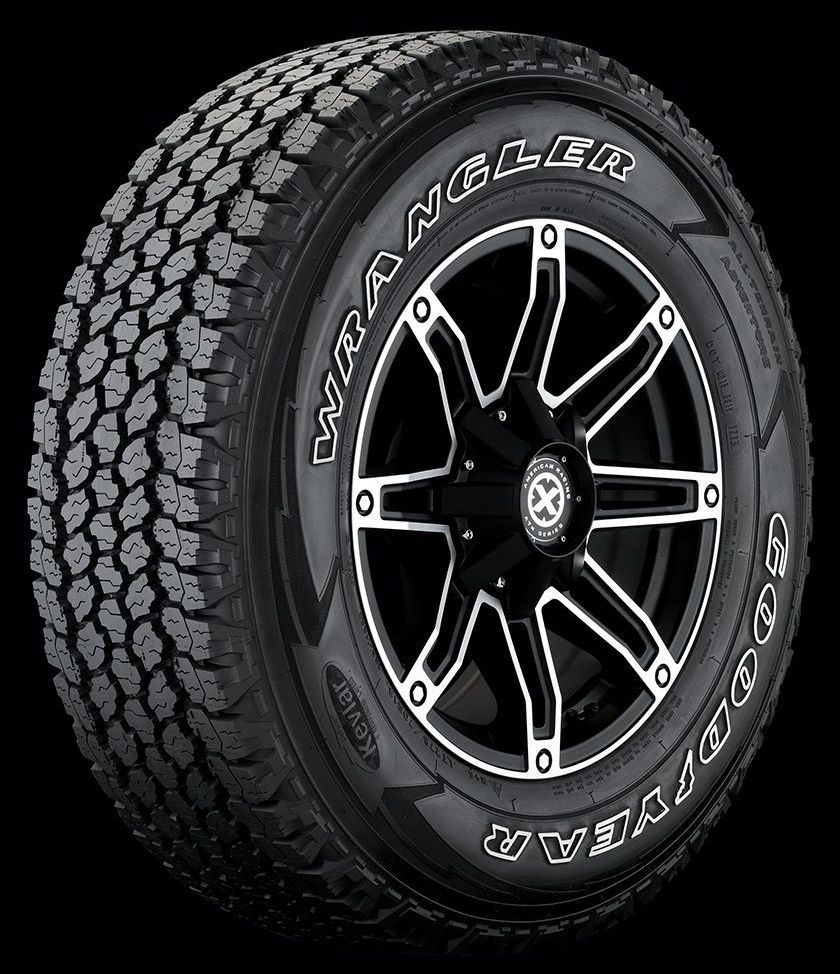
Goodyear’s Wrangler All-Terrain Adventure SUV tires are a great choice for drivers who spend most of their time on the pavement but sometimes venture off-road.
According to the U.S. Centers For Disease Control (CDC), in 2018, over 36,000 people were killed, and over 2 million were injured, from motor vehicle crashes, costing the nation $44 billion in medical expenses and work loss.
The American Automobile Association (pronounced “Triple A”) is a federation of motor clubs throughout North America, and is a privately held, not-for-profit national member association and service organization, with over 60 million members in the United States and Canada, and provides a variety of services to its members, including roadside assistance and others.
The AAA Foundation for Traffic Safety is a not-for-profit, publicly supported charitable research and education organization dedicated to saving lives by preventing traffic crashes and reducing injuries when crashes occur.
Initially emphasizing projects related to safety patrols and driver education, today the Foundation has expanded its scope of work and has long been recognized as a leader in traffic safety, with a focus on four research priorities: Driver behavior and performance, Emerging technologies, Roadway systems and drivers, and Vulnerable road users.
Dr. David Yang, is Executive Director at AAA Foundation for Traffic Safety (and assumed this role in October 2016)
Previously, Dr. Yang worked for the U.S. Department of Transportation and private consulting firms.
Serena Corr looks at the science behind batteries, discusses why we are hunting for new ones and investigates what tools we use to pave this pathway to discovery.
Watch the Q&A: https://youtu.be/lZjqiR0czLo.
The hunt is on for the next generation of batteries that will power our electric vehicles and help our transition to a renewables-led future. Serena shows how researchers at the Faraday Institution are developing new chemistries and manufacturing processes to deliver safer, cheaper, and longer-lasting batteries and provide higher power or energy densities for electric vehicles.
Serena Corr is a Chair in Functional Materials and Professor in Chemical and Biological Engineering at the University of Sheffield. She works on next-generation battery materials and advanced characterisation techniques for nanomaterials.
This event was generously supported by The Faraday Institution.
–
A very special thank you to our Patreon supporters who help make these videos happen, especially:
János Fekete, Mehdi Razavi, Mark Barden, Taylor Hornby, Rasiel Suarez, Stephan Giersche, William Billy Robillard, Scott Edwardsen, Jeffrey Schweitzer, Gou Ranon, Christina Baum, Frances Dunne, jonas.app, Tim Karr, Adam Leos, Andrew Weir, Michelle J. Zamarron, Andrew Downing, Fairleigh McGill, Alan Latteri, David Crowner, Matt Townsend, Anonymous, Andrew McGhee, Roger Shaw, Robert Reinecke, Paul Brown, Lasse T. Stendan, David Schick, Joe Godenzi, Dave Ostler, Osian Gwyn Williams, David Lindo, Roger Baker, Greg Nagel, and Rebecca Pan.
–
The Ri is on Patreon: https://www.patreon.com/TheRoyalInstitution.

Mohsen Fakhrizadeh, Iran’s top nuclear scientist, was killed on November 27 by a “smart satellite-controlled machine gun” that used AI, the country’s Revolutionary Guards commander Brig-Gen Ali Fadavi told local media, as the BBC reports.
The scientist was allegedly killed by a weapon mounted to a pickup truck, which shot Fakhrizadeh inside a vehicle from a distance — but spared his wife sitting right next to him.
The weapon “focused only on martyr Fakhrizadeh’s face in a way that his wife, despite being only 25cm [10 inches] away, was not shot,” Gen Fadavi, Revolutionary Guards deputy commander, told a ceremony on Sunday, as quoted by the BBC.
The three-wheeled, two-person vehicle is curvy and lightweight.
Aptera, the company that shuttered in 2011 after failing to secure funding for its three-wheeled electric car, is back with a new solar electric vehicle it claims never needs charging, at least, for most drivers. And it predicts its top model, with a battery of 100 kWh, can get up to 1,000 miles of range.
The new three-wheeled, two-person (or two adults plus pet, as its specs suggest) vehicle has a solar roof array that can provide up to 45 miles of range per day, so if you have that top model and add the charge from the solar panels while it’s parked, then the 1,000 range seems … possible. Although, as Car and Driver points out, the vehicle doesn’t run just on solar power while driving.
“With Aptera’s Never Charge technology, you are driven by the power of the sun. Our built-in solar array keeps your battery pack topped off and anywhere you want to go, you just go,” Aptera co-founder Chris Anthony said in a press release. “Never Charge is built into every Aptera and is designed to harvest enough sunlight to travel over 11,000 miles per year in most regions.”
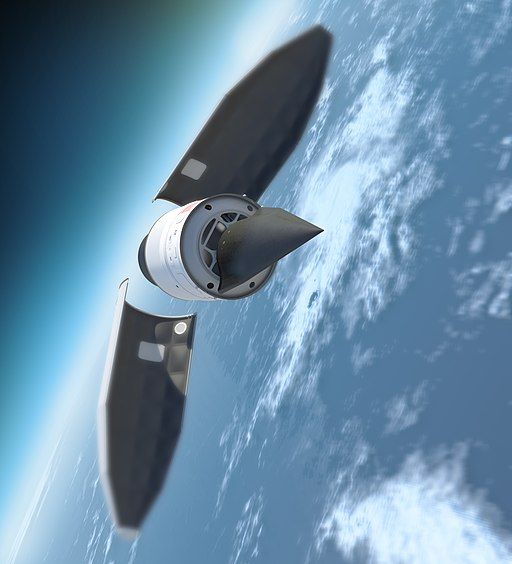
China has made tall claims after testing an advanced aircraft engine prototype. The claim is that the ‘sodramjet’ (short form for ‘standing oblique detonation ramjet)’ jet engine could power an aircraft to such speeds that it can reach anywhere on Earth in two hours.
The engine prototype, tested in hypersonic wind tunnel simulating flight conditions, came off clocking test speeds nine times the speed of sound, the Chinese engineers said, according to the South China Morning Post. The test was conducted in Beijing the report adds.
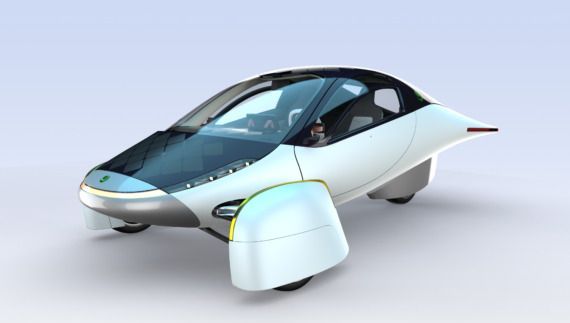
Today, Aptera announced a solar electric vehicle that will not need to be plugged in for most regular uses, and it sports a 1,000 mile range on a full charge.
“With Aptera’s Never Charge technology, you are driven by the power of the sun. Our built-in solar array keeps your battery pack topped off and anywhere you want to go, you just go,” says co-founder Chris Anthony. Aptera says they will achieve this by making the vehicle as efficient as possible, allowing the relatively low amount of energy one can get from solar panels to do a lot more than it could for other electric vehicles.
The biggest thing Aptera does that others don’t is optimize the vehicle for low drag. With an airplane-like design and only three wheels, the car has a drag coefficient of just 0.13. To put this in perspective, a Tesla Model S has a drag coefficient of 0.24. With less “wind resistance,” travel at all speeds requires less energy, with the effect of saving more energy compared to normal cars increasing as the car goes faster. Aptera plans to do this while still having a 100 kWh battery pack, so the car will have great range.

The founder of a startup that helps cars drive themselves just became a billionaire — and he’s barely old enough to rent a car on his own.
Luminar Technologies CEO Austin Russell, 25, secured a hefty fortune after his company’s stock market debut this week. The Florida-based firm — which he founded when he was just 17 — makes so-called lidar scanners that use lasers to give autonomous cars a three-dimensional view of the road and what’s around them.
Luminar’s share price surged nearly 28 percent on its Thursday debut to close at $22.98, giving the company a market value of about $7.8 billion, the Wall Street Journal reported.