Toggle light / dark theme

A new, inexpensive catalyst speeds the production of oxygen from water

An electrochemical reaction that splits apart water molecules to produce oxygen is at the heart of multiple approaches aiming to produce alternative fuels for transportation. But this reaction has to be facilitated by a catalyst material, and today’s versions require the use of rare and expensive elements such as iridium, limiting the potential of such fuel production.

Now, researchers at MIT and elsewhere have developed an entirely new type of catalyst material, called a metal hydroxide-organic framework (MHOF), which is made of inexpensive and abundant components. The family of materials allows engineers to precisely tune the ’s structure and composition to the needs of a particular chemical process, and it can then match or exceed the performance of conventional, more expensive catalysts.

The findings are described today in the journal Nature Materials, in a paper by MIT postdoc Shuai Yuan, graduate student Jiayu Peng, Professor Yang Shao-Horn, Professor Yuriy Román-Leshkov, and nine others.

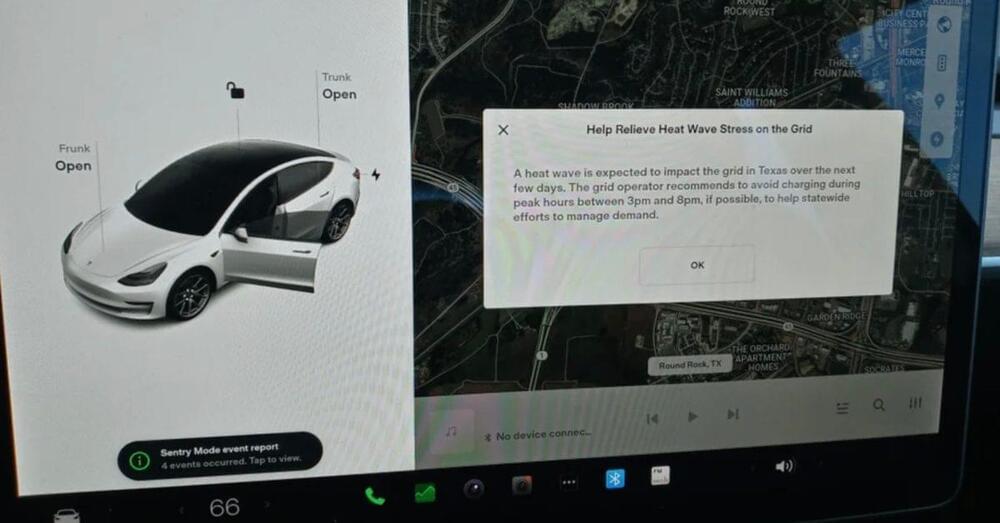
Tesla is rumored to be building new factory adjacent to Gigafactory Shanghai to double production to two million cars

A new report claims that Tesla is starting work on building a new factory adjacent to Gigafactory Shanghai in order to double production capacity to two million cars annually.

Tesla currently operates two main factories, Tesla Fremont and Gigafactory Shanghai, and it has Gigafactory Texas and Gigafactory Berlin slowly starting to ramp up production.

Those four projects alone should push Tesla’s production capacity beyond three million vehicles annually by the end of next year, but the automaker has much greater ambitions for this decade that will require several more factories. The company recently confirmed that it plans to announce a new location for a factory by the end of this year.

Elon Musk’s Lawyer Accuses Government of “Leaking” Information About Him

Elon Musk’s back at it again, folks — and this time, his attorney is accusing the federal government of leaking.

Following up on his claim that the Securities and Exchange Commission was trying to harass him into silence, Musk’s attorney accused the commission of “leaking certain information” in an ongoing retaliation campaign against the Tesla and SpaceX CEO.

This alleged campaign supposedly began back in 2018, when the SEC investigated Musk for tweeting about selling Tesla stock at $420 a share and taking the company private, eventually charging him with misleading investors. Though that case was settled in 2018 after Musk and Tesla paid $20 million each in fines, new reporting about the commission subpoenaing the CEO in recent months has reignited the debacle.

Risks of using AI to grow our food are substantial and must not be ignored, warn researchers

Imagine a field of wheat that extends to the horizon, being grown for flour that will be made into bread to feed cities’ worth of people. Imagine that all authority for tilling, planting, fertilizing, monitoring and harvesting this field has been delegated to artificial intelligence: algorithms that control drip-irrigation systems, self-driving tractors and combine harvesters, clever enough to respond to the weather and the exact needs of the crop. Then imagine a hacker messes things up.

A new risk analysis, published today in the journal Nature Machine Intelligence, warns that the future use of artificial intelligence in agriculture comes with substantial potential risks for farms, farmers and that are poorly understood and under-appreciated.

“The idea of intelligent machines running farms is not science fiction. Large companies are already pioneering the next generation of autonomous ag-bots and decision support systems that will replace humans in the field,” said Dr. Asaf Tzachor in the University of Cambridge’s Center for the Study of Existential Risk (CSER), first author of the paper.

Airliners Could Soon Fly in Formation, Just Like a Flock of Birds

This makes too much sense not to try.


Could passenger planes begin flying in formation to draft each other’s wingtip vortex effects? One Airbus-based startup concept thinks so. The concept uses a formation idea inspired by birds, who commute north to south and back in large V shapes to capitalize on the updraft generated by the birds in front.

✈ You love badass planes. So do we. Let’s nerd out over them together.

Putin Sends BMPT-72 ‘Terminator’ Fighting Vehicles Towards Ukraine l Russia Planning Combat Ops?

The Russian Army has sent its BMPT-72 or Terminator 2 armored fighting vehicle towards the Ukrainian border area. Nearly 150,000 and 200,000 Russian troops are reportedly poised for a possible invasion of Ukraine. Experts say that BMPT-72 could be used for a potential campaign in an urban environment inside Ukraine.

00:00-Introduction.
00:15 — Russia Sends BMPT-72 Towards Ukrainian Border?
01:25 — What Is BMPT-72?
03:00 — BMPT-72’s Firepower?
03:48 — What BMPT-72’s Deployment Shows?

#russia #bmpt72 #terminator2

Follow CRUX on Instagram (@crux.india): https://bit.ly/3qSFx1K
Follow CRUX on Facebook: https://bit.ly/2Lte7iF
#GetCloserToTheNews with latest headlines on politics, sports and entertainment on news18.com https://bit.ly/2Y4QccL

Also watch:
Crux One Take: https://bit.ly/3oNaLWf.
Crux Files: https://bit.ly/3mnbnjW
Crux BTS: https://bit.ly/3oCjbQE

Bend Your Vase Mode Prints

[Stefan] from CNCKitchen wanted to make some bendy tubes for a window-mountable ball run, and rather than coming up with some bent tube models, it seemed there might be a different way to achieve the desired outcome. Starting with a simple tube model designed to be quickly printed in vase mode, he wrote a Python script which read in the G-Code, and modified it allow it to be bent along a spline path.

Vase mode works by slowly ramping up the Z-axis as the extruder follows the object outline, but the slicing process is still essentially the same, with the object sliced in a plane parallel to the bed. Whilst this non-planar method moves the Z-axis in sync with the horizontal motion (although currently limited to only one plane of distortion, which simplifies the maths a bit) it is we guess still technically a planar solution, but just an inclined plane. But we digress, non-planar in this context merely means not parallel to the bed, and we’ll roll with that.

[Stefan] explains that there are quite a few difficulties with this approach. The first issue is that on the inside of the bend, the material flow rate needed to be scaled back to compensate. But the main problem stems from the design of the extruder itself. Intended for operating parallel to the bed, there are often a few structures in the way of operating at an angle, such as fan mounts, and the hotend itself. By selecting an appropriate machine and tweaking it a bit, [Stefan] managed to get it to work at angles up to 30 degrees off the horizontal plane. One annoyance was that the stock nozzle shape of his E3D Volcano hotend didn’t lend itself to operating at such an inclination, so he needed to mount an older V6-style tip with an adapter. After a lot of tuning and fails, it did work and the final goal was achieved! If you want to try this for yourselves, the code for this can be found on the project GitHub.

/* */