Toggle light / dark theme

Intelligent Materials: Science Fiction to Science Fact

Materials that learn to change their shape in response to an external stimulus are a step closer to reality, thanks to a prototype system produced by engineers at UCLA.

Living entities constantly learn, adapting their behaviors to the environment so that they can thrive regardless of their surroundings. Inanimate materials typically don’t learn, except in science fiction movies. Now a team led by Jonathan Hopkins of the University of California, Los Angeles (UCLA), has demonstrated a so-called architected material that is capable of learning [1]. The material, which is made up of a network of beam-like components, learns to adapt its structure in response to a stimulus so that it can take on a specific shape. The team says that the material could act as a model system for future “intelligent” manufacturing.

The material developed by Hopkins and colleagues is a so-called mechanical neural network (MNN). If produced on a commercial scale, scientists think that these intelligent materials could revolutionize manufacturing in fields from building construction to fashion design. For example, an aircraft wing made from a MNN could learn to morph its shape in response to a change in wind conditions to maintain the aircraft’s flying efficiency; a house made from a MNN could adjust its structure to maintain the building’s integrity during an earthquake; and a shirt weaved from a MNN could alter its pattern so that it fits a person of any size.

The world’s first solar electric car Lightyear 0 now enters production

The facility will produce one car a week, to begin with.

Dutch company Lightyear, which has spent the last six years developing technologies to make the world’s first solar-powered electric vehicle has now entered a very important phase of its lifetime. Its first model, Lightyear 0 has now entered production, a company press release said.

As the world moves toward electric modes of transportation, new challenges are being thrown up. Unlike combustion engine-powered vehicles that can be refueled virtually anywhere and in no time, electric vehicles require dedicated charging infrastructure and time to charge the batteries.

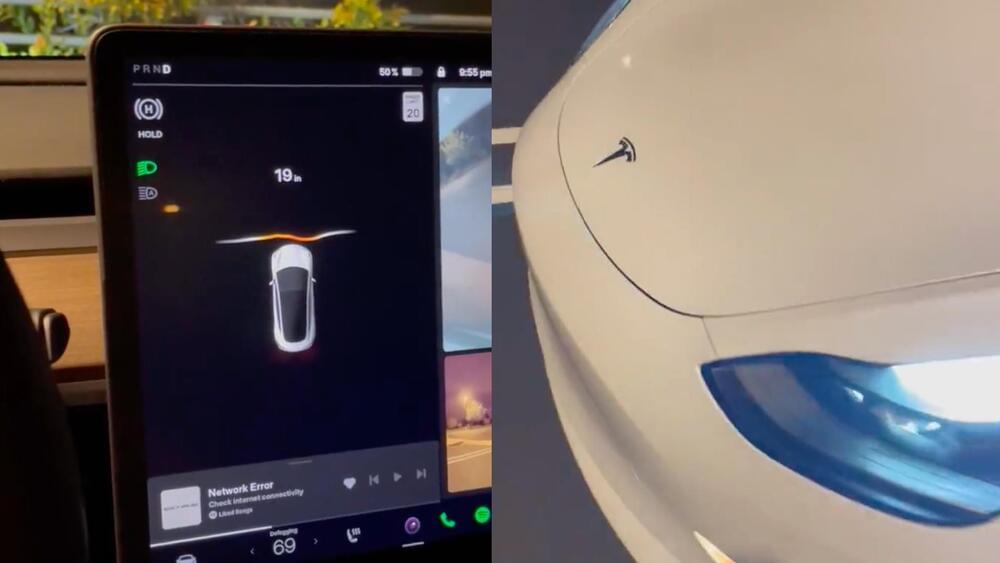
Tesla just delivered its first all-electric Semi truck to PepsiCo and said it can cover up to 500 miles on a single charge

Tesla on Thursday delivered its first electric semitrailer truck to PepsiCo, as the electric vehicle maker expands its offerings beyond passenger cars.

Elon Musk, the CEO of Tesla, drove a Semi to the delivery event, which was held at a factory near Reno, Nevada.

The Semi is the automaker’s all-electric, class-8 cargo trucks with a range between 300 and 500 miles on a single charge, depending on the model.

MIT researchers creating robots that give birth to other robots

Massachusetts Institute of Technology (MIT) researchers are building swarms of tiny robots that have built-in intelligence, allowing them to build structures, vehicles, or even larger versions of themselves.

The subunit of the robot, which is being developed at MIT’s Center for Bits and Atoms, is called a voxel and is capable of carrying power and data.

“When we’re building these structures, you have to build in intelligence,” MIT Professor and CBA Director Neil Gershenfeld said in a statement. “What emerged was the idea of structural electronics — of making voxels that transmit power and data as well as force.”

Four-million-mile battery is now a reality

Dahn, a world-renowned battery scientist and NSERC/Tesla Canada Chair, presented the exciting news during his keynote presentation (titled: More than a million miles and a century of life) at the international battery seminar (IBS) held 28–31 March 2022 in Orlando, Florida.

The term “Million Mile” battery first came to life after Dahn’s 2019 open access publication in Journal of The Electrochemical Society (JES) stating “we conclude that cells of this type should be able to power an electric vehicle for over 1.6 million kilometers (1 million miles) and last at least two decades in grid storage”.

MIT engineers design self-replicating robots capable of assembling giant structures

Researchers advance efforts to create groups of robots that could construct almost anything.

When it comes to the manufacturing of commercial aircraft, different parts are manufactured at various locations. Before finally bringing them all together in a central plant and putting the finished aeroplane together, the tail components, the fuselage, and the wings are made at different plants.

Many other large structures, besides aircraft, are also built in sections.


MIT

Before finally bringing them all together in a central plant and putting the finished aeroplane together, the tail components, the fuselage, and the wings are made at different plants.

Rolls-Royce successfully tests hydrogen-powered jet engine

LONDON, Nov 28 (Reuters) — Britain’s Rolls-Royce (RR.L) said it has successfully run an aircraft engine on hydrogen, a world aviation first that marks a major step towards proving the gas could be key to decarbonising air travel.

The ground test, using a converted Rolls-Royce AE 2100-A regional aircraft engine, used green hydrogen created by wind and tidal power, the British company said on Monday.

Rolls and its testing programme partner easyJet (EZJ.L) are seeking to prove that hydrogen can safely and efficiently deliver power for civil aero engines.

New magnetometer designed to be integrated into microelectronic chips

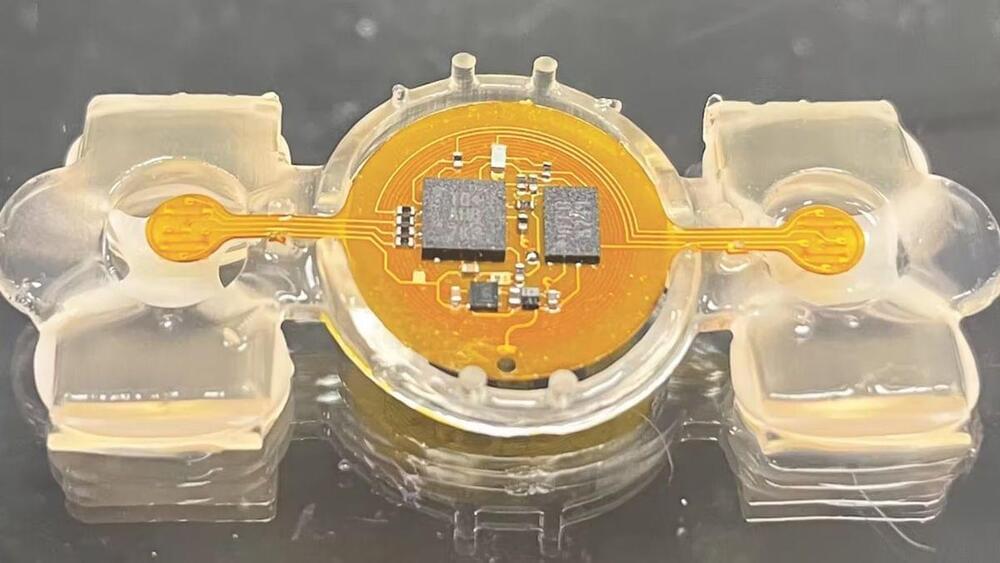
Researchers at the UPC’s Department of Electronic Engineering have developed a new type of magnetometer that can be integrated into microelectronic chips and that is fully compatible with the current integrated circuits. Of great interest for the miniaturization of electronic systems and sensors, the study has been recently published in Microsystems & Nanoengineering.

Microelectromechanical systems (MEMS) are electromechanical systems miniaturized to the maximum, so much so that they can be integrated into a chip. They are found in most of our day-to-day devices, such as computers, car braking systems and mobile phones. Integrating them into has clear advantages in terms of size, cost, speed and energy efficiency. But developing them is expensive, and their performance is often compromised by incompatibilities with other electronic systems within a device.

MEMS can be used, among many others, to develop magnetometers—a device that measures to provide direction during navigation, much like a compass—for integration into smartphones and wearables or for use in the automotive industry. Therefore, one of the most promising lines of work are Lorentz force MEMS magnetometers.

/* */