Toggle light / dark theme

Tesla Day: ‘Optimus’ AI robots may outnumber humans in future, claims Elon Musk

AI-powered robots will be a bigger business than cars, says the business magnet.

Tesla CEO, Elon Musk, has announced the company’s latest development in AI-powered robots during Tesla’s Investor Day event. Musk said the company’s robot, known as “Optimus,” may outnumber humans in the future. This news has created a buzz in the tech community, as many are eager to see how Tesla’s latest innovation will shape the future of automation.

Musk revealed that Tesla is making significant progress in developing its AI-powered robots. The robots, which will be called Optimus, are set to be deployed in the coming years and will be designed to handle various tasks, such as manufacturing and transportation… More.


Tesla.

Musk said the company’s robot, known as “Optimus,” may outnumber humans in the future. This news has created a buzz in the tech community, as many are eager to see how Tesla’s latest innovation will shape the future of automation.

Integrating humans with AI in structural design

Modern fabrication tools such as 3D printers can make structural materials in shapes that would have been difficult or impossible using conventional tools. Meanwhile, new generative design systems can take great advantage of this flexibility to create innovative designs for parts of a new building, car, or virtually any other device.

But such “black box” automated systems often fall short of producing designs that are fully optimized for their purpose, such as providing the greatest strength in proportion to weight or minimizing the amount of material needed to support a given load. Fully manual design, on the other hand, is time-consuming and labor-intensive.

Now, researchers at MIT have found a way to achieve some of the best of both of these approaches. They used an automated design system but stopped the process periodically to allow human engineers to evaluate the work in progress and make tweaks or adjustments before letting the computer resume its . Introducing a few of these iterations produced results that performed better than those designed by the alone, and the process was completed more quickly compared to the fully manual approach.

Tesla teases mysterious “wireless” home charger on Investor Day

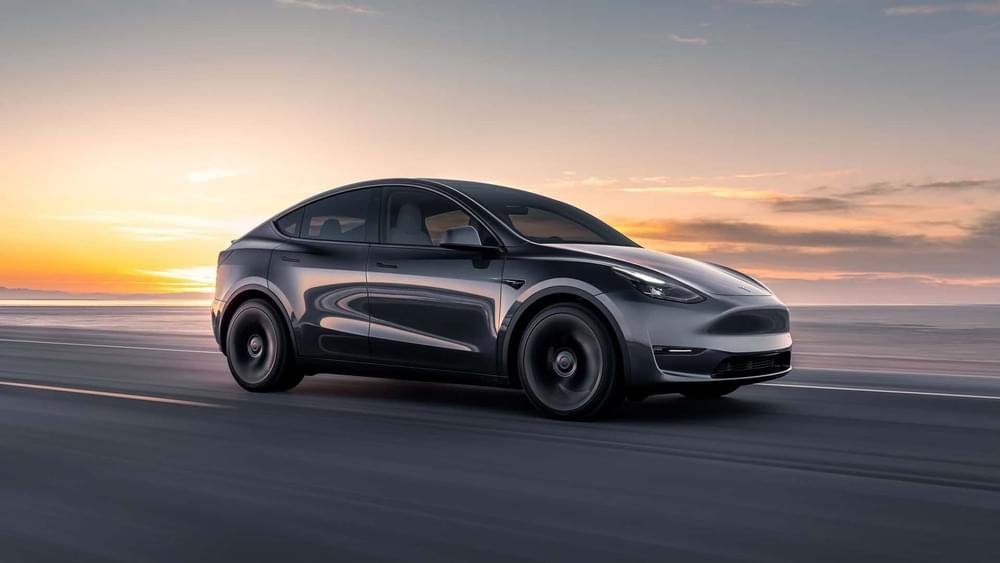
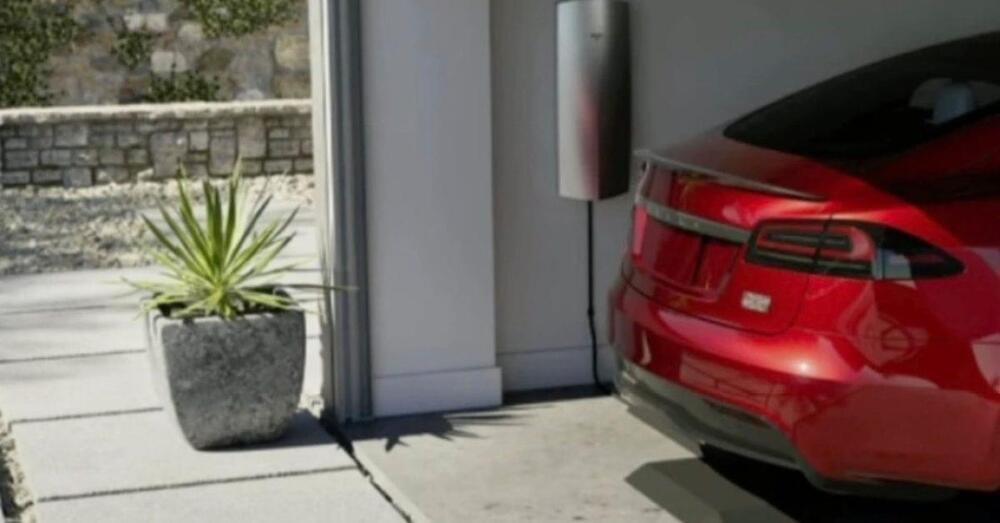
The photo showed the rear end of a red Tesla Model S parked in a home garage. A rather large Tesla home charger could be seen on a wall, but it did not seem to be plugged into the all-electric flagship sedan directly at all. Instead, the Model S was parked over what looked like a wireless charging pad. This promptly fueled speculations that Tesla may be looking to roll out a wireless charging system, at least for residential customers, in the future.

A wireless charging system for Teslas would be nothing short of a game-changer. The company’s Supercharger Network already changed the game thanks to its ease of use and convenience. But even manually plugging in a Tesla to a charger is less convenient than just parking over a charging pad. Of course, there are some notable disadvantages to wireless charging, such as slower charging speeds. But if Tesla can figure out a way to roll out a wireless charging system with at least a decent charging rate, the company’s vehicles would likely become even more attractive to consumers.

Tesla Superchargers will now charge non-Tesla electric vehicles

It took a while, but better late than never.

Tesla has now begun to provide non-Tesla electric vehicle owners in the U.S. with access to some Supercharger stations and has also explained how the stations work, Electrek.

The Superchargers stations are outfitted with an integrated CCS adapter that works with non-Tesla EVs. However, the stations are not available on the app. Nor have the owners of electric vehicles been onboarded.

Tesla is expanding production capacity of power electronics components that convert alternating current to direct current, charging cabinets, posts, and cables.


Tesla.

Tesla to Build a Manufacturing Plant in Mexico

Electric-car maker Tesla Inc. plans to build a manufacturing plant in the northern Mexican industrial hub of Monterrey, President Andrés Manuel López Obrador said Tuesday.

Mr. López Obrador, who spoke several times in recent days with Tesla Chief Executive Elon Musk, added at his morning press conference that details of the investment would be made known Wednesday.

A hydrogen-powered autonomous ship could help decarbonize maritime transport

The ship could be ready by the autumn of 2024.

A consortium of companies in the U.K. has bagged a GBP 5.4 million (US$6.46) government grant to build the world’s first liquid hydrogen-powered autonomous vessel and its allied infrastructure, a press release said. The grant is aimed at helping decarbonize the maritime sector.

With governments keen on meeting the ‘net-zero’ goals, a flurry of changes is being brought to the transportation industry. In the U.S., a roll-out of the national charger network is being planned, while the adoption of electric vehicles (EVs) is being encouraged, while the sale of combustion engines is even being banned in some nations.

Waymo’s L.A. Robotaxi Fleet Is Going Fully Driverless

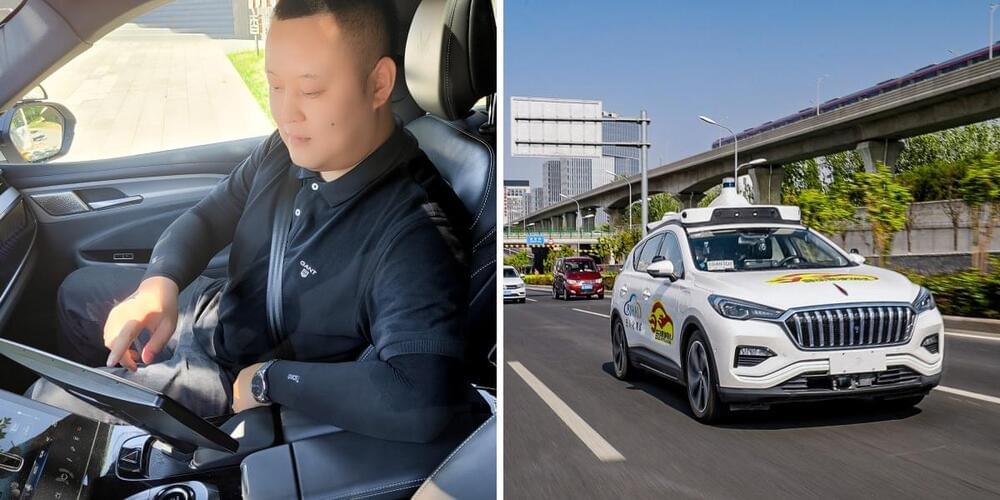
Waymo, Alphabet Inc.’s multibillion-dollar bet on self-driving cars and trucks, is pulling the human safety drivers out of its robotaxi test fleet in Los Angeles as it works to launch a commercial ride service in the second-biggest U.S. city.


Alphabet Inc.’s multibillion-dollar bet on self-driving cars and trucks isn’t ready to launch any paid rides yet, though the second-biggest U.S. city will be its next commercial market after Phoenix and San Francisco.

BMW launches demonstration fleet of hydrogen cars that use fuel cells from Toyota

The BMW Group on Monday launched a pilot fleet of hydrogen vehicles, with the German automotive giant’s CEO referring to hydrogen as “the missing piece in the jigsaw when it comes to emission-free mobility.”

The BMW iX5 Hydrogen, which uses fuel cells sourced from Toyota and has a top speed of more than 112 miles per hour, is being put together at a facility in Munich.


Described by the International Energy Agency as a “versatile energy carrier,” hydrogen has a variety of applications and can be deployed in sectors such as industry and transport.

BMW is one of several automotive firms continuing to look into the potential of hydrogen. Others include Toyota and Hyundai, while smaller businesses such as Riversimple are also working on hydrogen-powered cars.

Hydrogen may have its backers, but some high-profile figures from the automotive industry are not so sure.

Almost-unbeatable AI comes to Gran Turismo 7

Last year, Sony AI and Polyphony Digital, the developers of Gran Turismo, developed a new AI agent that is able to race at a world-class level. At the time, the experiment was described in a paper in Nature, where the researchers showed that this AI was not only capable of driving very fast—something other AI have done in the past—but also learned tactics, strategy, and even racing etiquette.

At the time, GT Sophy—the name of the AI—wasn’t quite ready for prime time. For example, it often passed opponents at the earliest opportunity on a straight, allowing itself to be overtaken in the next braking zone. And unlike human players, GT Sophy would try to overtake players with impending time penalties—humans would just wait for that penalized car to slow to gain the place.

/* */