SpaceX delays its Halloween launch, Tesla defends itself, Elon Musk solves world hunger.
SpaceX delays its first Crew Dragon flight since Inspiration4, Tesla goes on offense against Biden, UAW, Elon Musk offers a conditional $6 billion to the UN.
SpaceX delays its Halloween launch, Tesla defends itself, Elon Musk solves world hunger.
SpaceX delays its first Crew Dragon flight since Inspiration4, Tesla goes on offense against Biden, UAW, Elon Musk offers a conditional $6 billion to the UN.
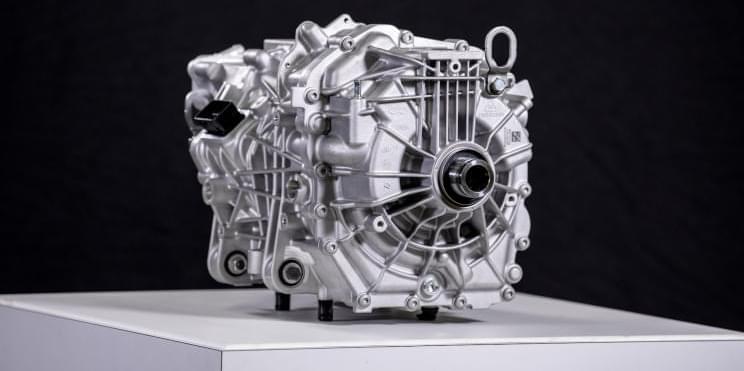
The retrofit-friendly crate motor can be yours for $3,900.
Ford revealed an electric crate motor based on the motor it uses to power the 2021 Mustang Mach-E GT Performance Edition. In a press statement, the automaker revealed that the “Eluminator e-crate motor” provides 281 horsepower and 317 lb.-ft. of torque.
The new motor is already available at online retailers for the price of $3,900, and Ford said it plans to release more individual electric vehicle (EV) parts in the f… See more.
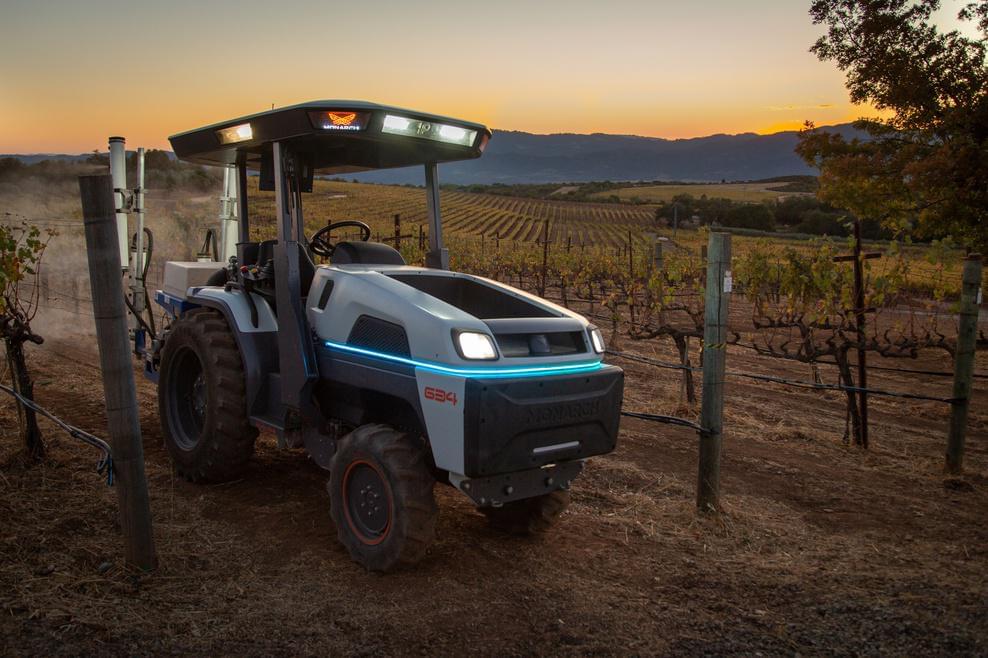

Evolutionary genomics approach identifies genes that enable plants to live in the Atacama Desert, offering clues for engineering more resilient crops to face climate change.
An international team of researchers has identified genes associated with plant survival in one of the harshest environments on Earth: the Atacama Desert in Chile. Their findings, published in Proceedings of the National Academy of Sciences (PNAS), may help scientists breed resilient crops that can thrive in increasingly drier climates.
“In an era of accelerated climate change, it is critical to uncover the genetic basis to improve crop production and resilience under dry and nutrient-poor conditions,” said Gloria Coruzzi, Carroll & Milton Petrie Professor in the New York University (NYU) Department of Biology and Center for Genomics and Systems Biology, who co-led the study with Rodrigo Gutiérrez.

The interest of the US air force has been caught by the tech company Twelve’s project that allows the manufacture of a carbon-neutral aviation fuel called E-Jet. It can be used at any place, and it uses carbon dioxide from the air, water, and renewable energy.
Usually, the supply lines of energy, fuel, and water are the main targets for the opposing forces. The US Air Force stated that the attacks on fuel and water convoys in Afghanistan amounted to 30 percent of coalition casualties.
This process is being called “industrial photosynthesis” and makes use of the polymer electrolyte membrane electrolysis. It is a kind of inverted fuel cell, with a metal catalyst installed on a cathode to break down carbon dioxide and water into their component ions and then convert them into oxygen, hydrogen, and carbon monoxide.
Solar PV panels are now a common site around the world and they do a great job. But they only work on flat surfaces. What about the millions of other surfaces that are not so conveniently shaped? That’s where flexible solar film comes in. The concept is not new but now a UK company has developed a unique Solar PV film that could make the technology accessible to millions more people in remote off grid areas in developing nations.
Power Roll Website.
https://powerroll.solar/unique-solar-film/
Video Transcripts available at our website.
http://www.justhaveathink.com.
Help support this channels independence at http://www.patreon.com/justhaveathink.
Or with a donation via Paypal by clicking here.
https://www.paypal.com/cgi-bin/webscr?cmd=_s-xclick&hosted_b…source=url.
You can also help keep my brain ticking over during the long hours of research and editing via the nice folks at BuyMeACoffee.com.

I think this might be the answer to the question we’ve all been debating here lately. Provided it ACTUALLY happens, and that it includes others (like Jeff Bezos), and that it happens within a transparent, focused, well structured and effective framework.
It’s not the end all be all to wealth inequity, but it IS a good start and could really help us avoid another tribal political dust up and focus on a worthy, positive, and equitable posthuman (or whatever it is that make… See more.
The billionaire Elon Musk said he’d sell Tesla stock and donate the proceeds if the UN could prove that just a tiny percentage of his wealth could save tens of millions of lives.
Musk was responding to comments by David Beasley, the director of the UN’s World Food Programme, who told CNN’s “Connect the World” last week that a $6 billion donation from billionaires such as Musk and Jeff Bezos could help 42 million people who he said were “literally going to die if we don’t reach them.”
Musk is the world’s richest man and recently became the first person in the Bloomberg Billionaires Index ever to have an estimated net worth north of $300 billion.

Across all sectors, organizations are grappling with rapid transformation. On top of that, there are enormous global shifts and challenges to contend with, such as climate change, and shifting political and economic power. To put it bluntly, our world is changing fast. And organizations must learn to adapt accordingly.
These eight major trends provide a snapshot of how business operations are evolving to suit our rapidly changing world.
Full Story:
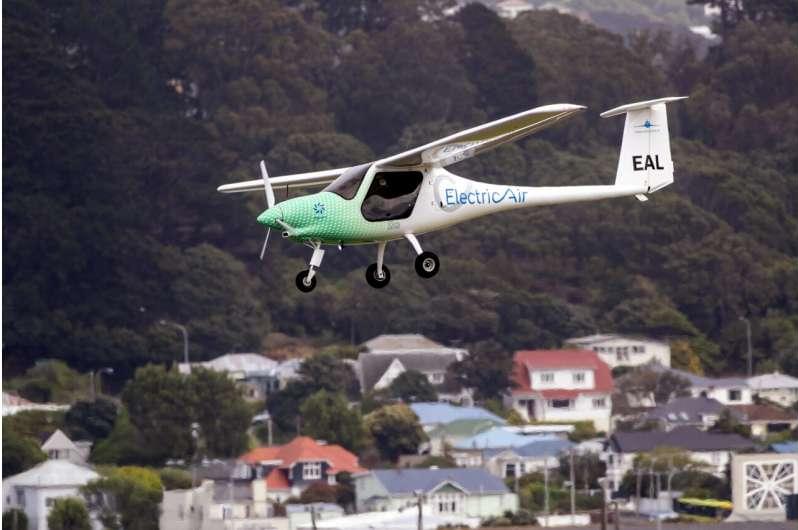
Wellington International Airport officials believe it may be the longest distance flown in an electric plane across any body of water.
“It’s a very exciting day for the airport. A world-record-setting day,” said spokesperson Jenna Raeburn.
Full Story:
As he made history by becoming the first person to fly across New Zealand’s Cook Strait in an electric plane, Gary Freedman thought it only fitting that the first thing he saw when approaching the Wellington coastline was the rotating blade of a wind turbine producing renewable energy.
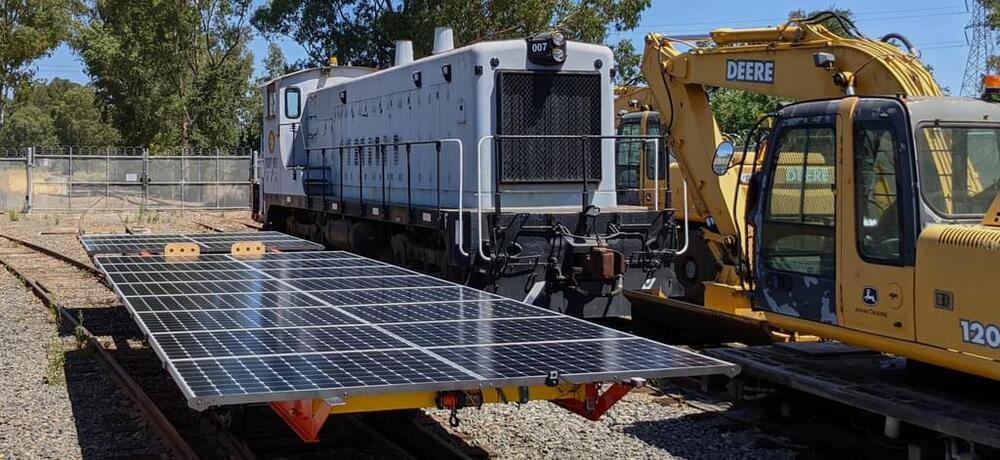
This rolling sheet of solar panels may not look like much, but it could help spark a solar power revolution in the railroad industry.
The creators of the solar-powered locomotive of the future were aiming to set a Guinness record for speed last weekend, and that is more than just your ordinary attention-getting stunt. Demonstrating the functionality of PV panels on rail cars could help set the stage for solar power to knock diesel fuel out of the railroad business. No word yet on the official results, but solar is beginning to wiggle its way into a field dominated by fossil fuel.
The Solar Train Of The Future Hits The Tracks, With Only Solar Power
When people say “solar train,” they usually mean a battery-powered train charged by solar panels parked in a solar farm, such as the UK’s Riding Sunbeams project. In other words, the solar power is there, but it is not actually along for the ride.