Toggle light / dark theme

Japanese supercomputer simulations may explain Webb’s Little Red Dots

Of all the discoveries from the James Webb Space Telescope, the multitude of Little Red Dots it has observed is among the most enigmatic. Now, simulations using the Japanese Supercomputer ATERUI III have explained the nature of the Little Red Dots without requiring any exotic assumptions. The simulations show that the Little Red Dots are black holes growing at a rate that would be impossible today because of conditions in the early universe.

In the study, published in the journal Nature, a research team led by Sunmyon Chon at the Max Planck Institute for Astrophysics used the ATERUI III supercomputer at the National Astronomical Observatory of Japan to conduct the most detailed cosmological simulations to date of conditions in the early universe.

The team’s simulation started with the conditions surrounding a galaxy in the early universe, then zoomed in to individual gas clouds. These computationally intensive simulations were made possible by ATERUI III’s high-resolution computing power.

Selftaught tinkerer demos working roomsized Cold Warera supercomputer with vacuum tubes minutes to warm up and smells like burning dust, 8bit design uses 460 recycled 1950s Soviet tubes

True retro computing eschews transistors for glowing, white-hot vacuum tubes.

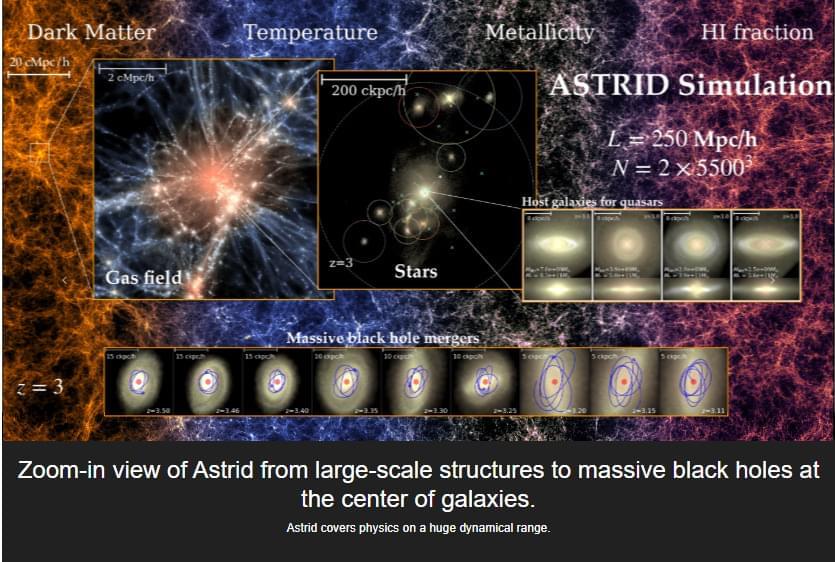
ASTRID traces 13.5 billion years of black hole and galaxy evolution

In dark skies at night, distant starlight twinkles and speaks to vast cosmic histories almost as old as time itself. New data from instruments such as NASA’s James Webb Space Telescope are helping astrophysicists probe deep cosmic mysteries, including the evolution of black holes and galaxies.

Using supercomputers to help make sense of the data, researchers from multiple institutions worked together to complete the largest cosmological hydrodynamic simulation, called ASTRID—a mind-boggling computational run that traces the evolution of the universe from its earliest times to the present.

Quantum Computers Could Freeze Like Ordinary PCs

How even small but frequent disruptions can cause quantum computers to fail.

Quantum computers are expected to tackle difficult tasks more quickly and with less energy than current supercomputers, including molecular simulations and complex logistics planning.

Progress toward that goal depends partly on increasing the number of qubits, the basic units that store and process quantum information. Yet scaling up may introduce a problem that has received far less attention.

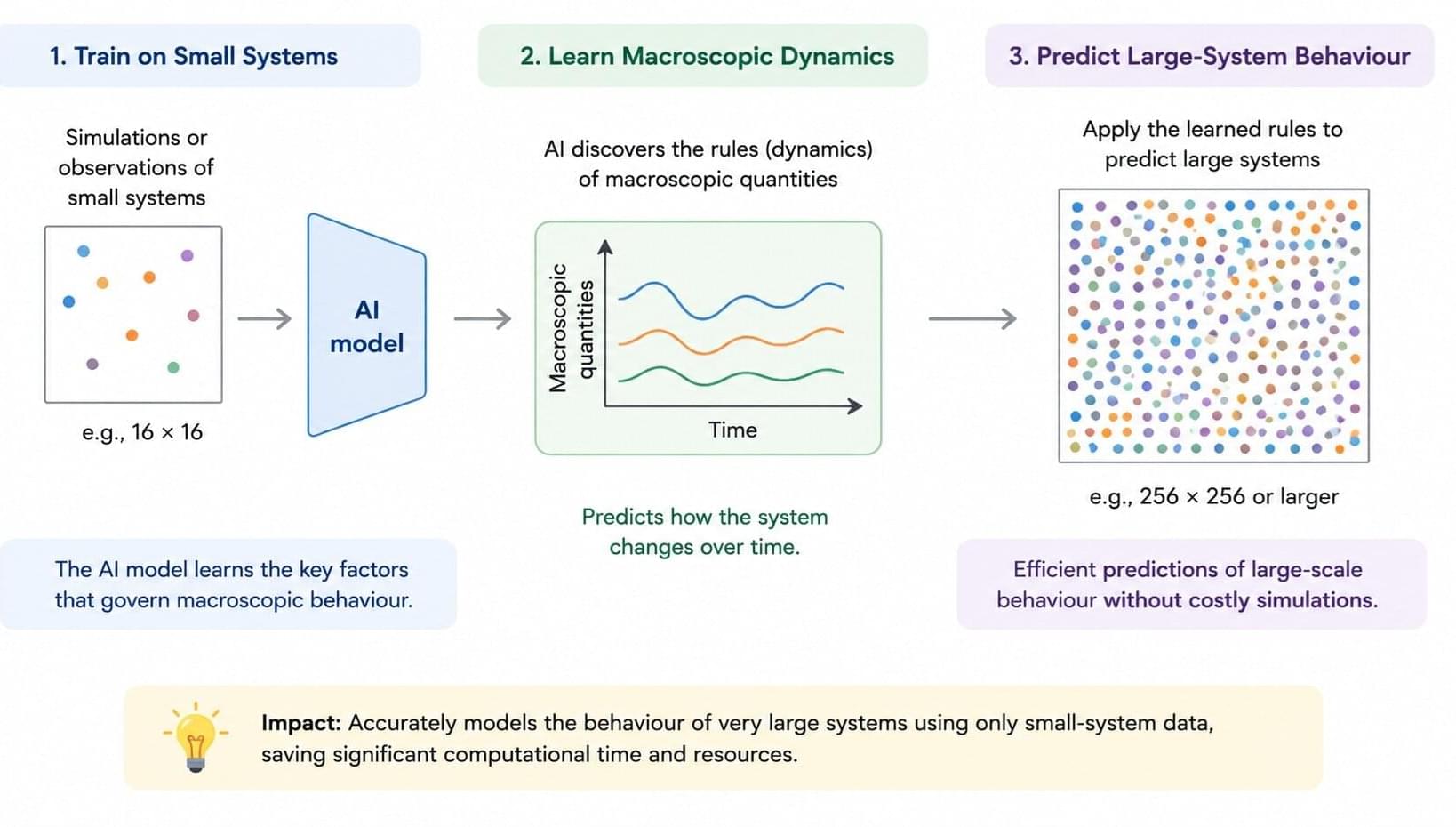
AI extracts hidden material rules from microscopic data to predict large-scale behavior

Researchers from the National University of Singapore (NUS) have developed artificial intelligence (AI) methods that learn the large-scale behavior of complex materials from microscopic data. By automatically identifying a small number of hidden variables that capture the collective behavior of a system, the methods can predict how materials evolve over time while reducing the need for costly simulations.

Understanding the behavior of materials at the macroscopic scale is essential for designing new technologies, from energy-efficient electronics to advanced alloys. However, material properties emerge from the interactions of vast numbers of atoms, and simulating every atom over long periods is often computationally impossible, even on modern supercomputers.

A major challenge in materials science is connecting these microscopic processes, such as atomic motion, to observable material properties. Existing approaches often require large-scale simulations that are prohibitively expensive.

Quantum Zeno effect could freeze computations as qubit systems scale up

The promise of quantum computing is to solve complex problems faster and more energy-efficiently than today’s supercomputers—from optimizing logistics to simulating molecules. This goal is coming within reach as the number of qubits—the computational units of quantum computing—increases.

But in addition to the technological challenges of scaling, there is another, less-considered issue: In the New Journal of Physics, researchers at the Helmholtz-Zentrum Dresden-Rossendorf (HZDR) demonstrate that, in extreme cases, the so-called quantum Zeno effect can nearly halt computational processes as the number of qubits increases—a dreaded phenomenon comparable to a traditional computer “freezing.”

“The quantum Zeno effect is a previously overlooked obstacle to a certain class of quantum computers,” says Dr. Gernot Schaller, head of Quantum Technologies at HZDR’s Institute of Theoretical Physics. These so-called adiabatic quantum computers operate according to a special principle: Their qubits are always in their ground state, the lowest energy state. To solve a computational problem, the qubits’ energy landscape is gradually altered—slowly enough for them to adapt continuously and follow the changing ground state. Once the transformation is complete, the ground state immediately encodes the solution to the problem.

Neural networks unlock larger quantum simulations with lower computational costs

In recent years, research using artificial intelligence to predict material properties has advanced rapidly. Neural network quantum Monte Carlo methods have attracted attention as highly accurate simulation techniques. However, their extremely high computational cost has limited their application to small molecular systems. This study introduces a new computational method that overcomes this limitation.

Methods that simulate electron-level mechanisms on supercomputers are widely used to explore novel materials and understand biological phenomena. There is strong demand for new approaches that can deliver faster predictions while maintaining high accuracy.

Scientists invent new board games to reveal how we tackle the unknown

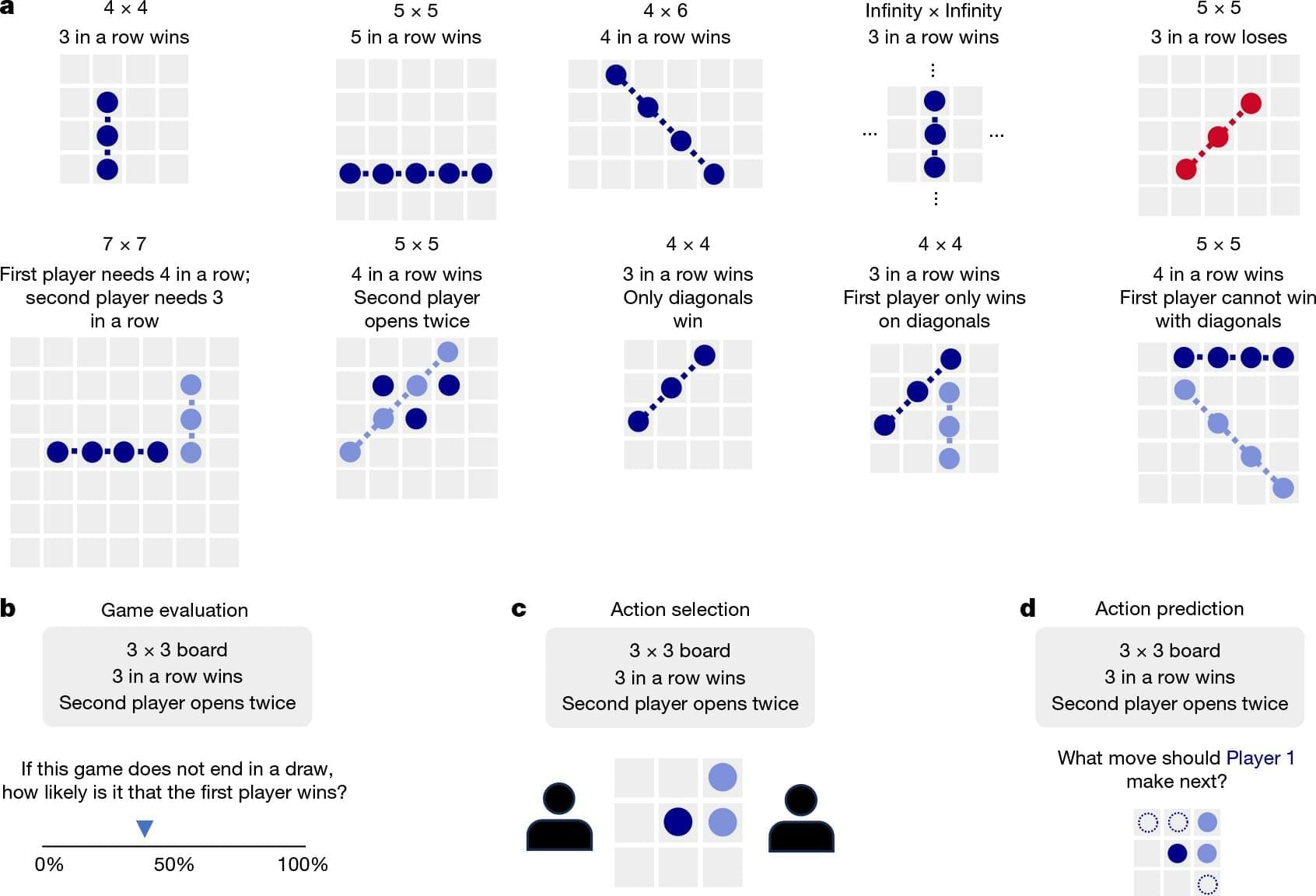
Playing board games can be fun, challenging, infuriating and a great way to pass the time. They can also help scientists understand how we solve new problems.

In a study published in the journal Nature, researchers created brand-new strategy games to see how players reason before tackling games they have no experience with. The goal of this research was to see how people react when they are thrown into an unfamiliar situation.

Most previous studies focused on how experts master games they already know or how massive supercomputers calculate millions of moves. What was missing was how everyday people reason about a game before they play it, which could provide insights into how we make quick decisions about situations we’ve never encountered before.

/* */